NEW DELHI, March 29: Union Minister Dr. Jitendra Singh has stated that abdominal obesity is a more significant risk factor for health complications than overall body weight, particularly in India where individuals with lean physiques can still harbor substantial visceral fat.
Central Obesity a Key Concern, Independent of General Weight
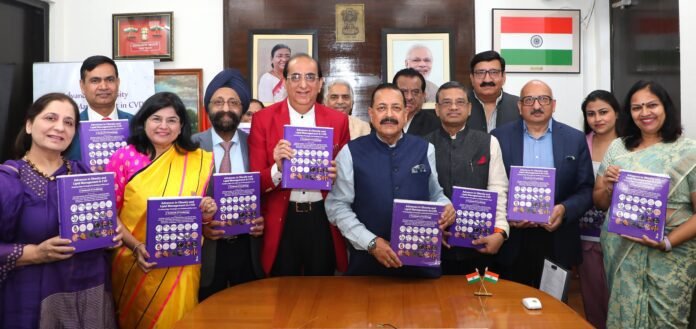
Dr. Singh, a noted scholar of Diabetes, elaborated that central or abdominal obesity presents a risk independent of general obesity. This was highlighted during the release of a new book titled “Advances in Obesity and Lipid Management in CVD,” edited by Cardiologist Dr. H.K. Chopra.
According to details received by The Chenab Times, the Minister emphasized that central obesity, even in individuals who appear non-obese, predisposes them to a range of metabolic disorders. These include diabetes, hypertension, cardiovascular diseases, fatty liver, and lipid disorders.
Distinct Indian Phenotype and Cardiometabolic Risk
Dr. Singh pointed to the distinct Indian phenotype, noting that while overall obesity is on the rise among both men and women, abdominal obesity remains disproportionately prevalent. He described it as an independent determinant of cardiometabolic risk, stressing that the accumulation of visceral fat around the abdomen, irrespective of generalized obesity, carries significant clinical implications and necessitates early detection and targeted interventions.
The Union Minister commended the book’s timely release, stating it aligns with national priorities of tackling the growing burden of obesity, a concern previously highlighted by Prime Minister Narendra Modi. The Prime Minister has advocated for increased public awareness and lifestyle modifications, including reductions in the consumption of unhealthy foods and oils, resonating with the vision of a ‘Vikshit Bharat, Swasthya Bharat, and Obesity-Free Bharat.’
Linking Abdominal Fat to Modern Ailments
Dr. Singh further elaborated on the evolving clinical understanding, referencing growing evidence that links abdominal fat accumulation to conditions such as fatty liver disease, insulin resistance, and early-onset cardiovascular complications. He observed that the increasing incidence of metabolic disorders, including type-2 diabetes and cardiac events among younger populations, reflects shifts in lifestyle patterns, dietary habits, and a reduction in physical activity.
The Minister also underscored the importance of balanced health practices. He cautioned that excessive or unscientific approaches to fitness, including overexertion without adequate preparation or rest, could also pose health risks. Emphasis was placed on sustained lifestyle discipline, sufficient sleep, and scientifically guided preventive care.
Comprehensive Clinical Resource Published
The textbook, edited by Dr. H.K. Chopra, compiles insights from over 300 contributors from India and abroad. It signifies a departure from conventional risk-factor-based management towards precision prevention, integrating advancements in metabolic therapies, lipid management, digital health, and AI-enabled clinical decision systems.
The publication offers comprehensive coverage of emerging therapies, including GLP-1 receptor agonists like Semaglutide and Tirzepatide, as well as lipid-lowering strategies. These encompass statins, ezetimibe, bempedoic acid, PCSK9 inhibitors, inclisiran, apheresis, and gene-based interventions, which are anticipated to substantially improve cardiovascular outcomes and reduce disease burden.
Addressing Public Health Challenges
In his foreword to the book, Dr. Jitendra Singh characterized obesity and dyslipidemia as major public health challenges contributing to the escalating rates of cardiovascular morbidity and mortality both in India and globally. He stressed the necessity for heightened awareness, robust preventive strategies, and evidence-based clinical practices to effectively confront these issues.
Citing projections that indicate a sharp rise in obesity prevalence in India by 2050, Dr. Singh called for strengthened awareness campaigns, early screening programs, and proactive preventive healthcare measures to mitigate long-term health and economic risks.
The book is structured into 23 sections and 172 chapters, aiming to serve as a comprehensive, evidence-based clinical resource that bridges the gap between research findings and bedside patient care. It is expected to contribute significantly to capacity building, clinical excellence, and the enhancement of patient outcomes.
Dr. Jitendra Singh expressed his appreciation to Dr. H.K. Chopra and the editorial team for their academic leadership and for bringing together global expertise into a singular, authoritative volume. Prominent cardiologists and contributors present at the event included Dr. Viveka Kumar, Dr. Praveen Chandra, Dr. J.P.S. Sawhney, Dr. Mona Bhatia, Dr. Anu Grover, Shrikant Bhatia, and Anand Kumar.
❤️ Support Independent Journalism
Your contribution keeps our reporting free, fearless, and accessible to everyone.
Or make a one-time donation
Secure via Razorpay • 12 monthly payments • Cancel anytime before next cycle


(We don't allow anyone to copy content. For Copyright or Use of Content related questions, visit here.)

The Chenab Times News Desk