Jammu and Kashmir is set to significantly upgrade its peripheral healthcare institutions into fully functional tertiary care centres, aiming to bring specialized medical services closer to citizens across the Union Territory. The move is part of a broader strategy to enhance patient care and bridge existing gaps in healthcare delivery, especially in newly established medical colleges and district hospitals.
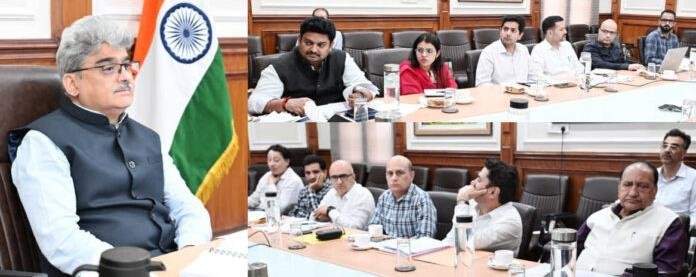
According to details received by The Chenab Times, Chief Secretary Atal Dulloo chaired a comprehensive review meeting with health experts to assess the progress of the Health & Medical Education (H&ME) Department in this endeavor. The focus was on upgrading seven newly established medical colleges to cater to a larger population base, acknowledging that premier institutions in Jammu and Srinagar alone are insufficient to meet the demands of the entire Union Territory.
Strategic Roadmap for Tertiary Care Development
The Chief Secretary emphasized the critical need for these institutions to augment their capacities and deliver specialized healthcare. In the initial phase, each institution is directed to develop six key specialty services. These include Trauma and Emergency Care, Critical Care Units (comprising ICUs, HDUs, and CCUs), as well as Cardiology, Neurology, Nephrology, and Oncology departments. This focused development aims to provide comprehensive tertiary care within the local jurisdictions of patients.
To facilitate this expansion, the Chief Secretary stressed the importance of close coordination between these emerging institutions and established centres of excellence such as AIIMS Jammu, SKIMS, and the Government Medical Colleges of Jammu and Srinagar. Such collaborations are expected to foster capacity building, facilitate knowledge sharing, and provide essential technical support.
Leveraging Technology and Enhancing Medical Education
The administration also plans to leverage technology-driven initiatives, including Tele-ICU and Tele-Radiology services, to bolster diagnostic and critical care capabilities in peripheral healthcare facilities. Stakeholders have been urged to adopt a forward-looking approach and formulate concrete, time-bound action plans to achieve the targeted outcomes.
Beyond patient care, a significant emphasis is placed on strengthening medical education. This involves increasing the number of MBBS, postgraduate, and super-specialty seats across these institutions to build a robust healthcare workforce for the future. Commissioner Secretary, H&ME Department, M. Raju, presented an overview of the progress made by each medical college in infrastructure, specialty services, manpower capacity building, and the operationalization of critical care facilities.
Collaborative Efforts and Academic Advancement
A well-defined roadmap is in place for augmenting MBBS and postgraduate seats, focusing on the optimal utilization of existing resources and phased, sustainable expansion of academic capacity. Former Director of AIIMS Jammu, Prof. (Dr.) Shakti Kumar Gupta, highlighted the three foundational pillars of medical science: teaching, research, and patient care, advocating for continuous advancement in all areas. He proposed adopting modern academic practices like ‘grand rounds’, sharing inter-institutional academic calendars, and fostering collaborative learning.
Director of SKIMS, Prof. Ashraf Ganai, encouraged new medical colleges to engage with SKIMS for service enhancement, noting that SKIMS currently offers services across 52 specialties and aspires to become a quaternary care institution. A dedicated nodal team of experts has been constituted to support these institutions in their developmental goals. Executive Director of SMVDIME, Dr. Yashpal Sharma, detailed the roadmap for upgrading medical colleges to tertiary care standards, highlighting Memoranda of Understanding (MoUs) signed for staff training, capacity building, faculty pooling, and resource sharing.
The meeting also discussed the establishment of specialty-wise virtual medical boards for inter-institutional consultations and the formation of referral committees and the J&K Research Consortium to streamline patient referrals and promote coordinated research initiatives. The Chief Secretary concluded by reiterating the need for a collective resolve to strengthen healthcare infrastructure and ensure accessible, affordable, and quality healthcare services for all citizens of Jammu and Kashmir. The meeting was attended by senior officials from the H&ME Department, AIIMS Jammu, SKIMS, various Government Medical Colleges, NHM, SHA J&K, and directors of Health Services.
❤️ Support Independent Journalism
Your contribution keeps our reporting free, fearless, and accessible to everyone.
Or make a one-time donation
Secure via Razorpay • 12 monthly payments • Cancel anytime before next cycle


(We don't allow anyone to copy content. For Copyright or Use of Content related questions, visit here.)

The Chenab Times News Desk