


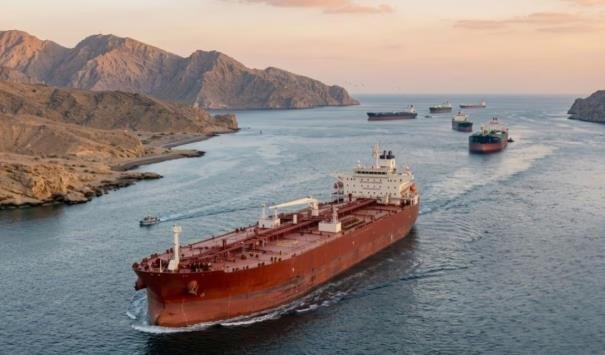
NEW DELHI: Two more Indian-flagged Liquefied Petroleum Gas (LPG) tankers carrying approximately a day’s supply of cooking gas have successfully passed through the Strait of Hormuz, a critical maritime route experiencing heightened regional tensions. The vessels are expected to arrive on Indian shores within the next few days, contributing to the nation’s efforts to manage its cooking gas supply.
Vessel Details and Expected Arrivals
The two LPG carriers, identified as BW TYR and BW ELM, are transporting a combined cargo of about 94,000 tonnes of LPG. According to official statements, both vessels have safely transited the Strait of Hormuz and are proceeding towards Indian ports. BW TYR is en route to Mumbai with an anticipated arrival on March 31. BW ELM is bound for New Mangalore, with its arrival estimated for April 1.
Information was available with The Chenab Times indicating that the safe passage of these vessels is crucial for India, which heavily relies on imports from Gulf nations for its energy needs. The Strait of Hormuz has become a focal point of concern due to recent military actions involving Iran and its adversaries, which have disrupted shipping traffic. However, Iran had previously stated that non-hostile vessels could transit the waterway after coordinating with Iranian authorities.
Previous Navigations and Import Dependency
These recent arrivals follow previous successful passages by other Indian-flagged LPG tankers. Earlier, the tankers Pine Gas and Jag Vasant, carrying a combined 92,612 tonnes of LPG, reached Indian ports between March 26 and March 28. Prior to that, MT Shivalik and MT Nanda Devi, with approximately 92,712 tonnes of LPG, arrived at Mundra port in Gujarat on March 16 and Kandla port in the same state on March 17, respectively.
India’s dependence on imports for meeting its cooking gas requirements is significant. The country imports up to 60 percent of its LPG needs, with about 90 percent of these imports originating from West Asia. Last year, India consumed 33.15 million tonnes of LPG, with imports covering approximately 60 percent of this demand. The disruption in shipping through the Strait of Hormuz has prompted India to source LPG from alternative locations, including the United States and Argentina, to mitigate shortages.
Indian Seafarers and Vessel Status
A total of 18 Indian-flagged vessels, carrying 485 Indian seafarers, remain in the western Persian Gulf region. At the outset of the conflict in West Asia, there were 28 Indian-flagged vessels in the Strait of Hormuz, with 24 on the west side and four on the east. In recent days, six vessels from the west and two from the east have successfully navigated to safer waters.
In addition to LPG carriers, the Indian-flagged oil tanker Jag Laadki, carrying 80,886 tonnes of crude oil from the UAE, arrived at Mundra on March 18. Another tanker, Jag Prakash, carrying gasoline from Oman to Africa, had previously crossed the strait safely and is currently en route to Tanzania. Several other LPG carriers, including Jag Vikram, Green Asha, and Green Sanvi, are still positioned in the western Strait of Hormuz. One empty vessel is undergoing the process of being filled with LPG.
DG Shipping Operations and Port Functionality
The Directorate General of Shipping (DG Shipping) control room has been operating around the clock to manage the situation. Since its activation, the control room has processed 4,523 calls and 8,985 emails, with 92 calls and 120 emails received in the past 24 hours. The DG Shipping has also facilitated the safe repatriation of over 942 Indian seafarers to date, including four in the last day.
Port operations across India are reported to be functioning normally, with no congestion issues. Maritime boards in coastal states have confirmed the smooth functioning of their respective ports, ensuring that domestic supply chains remain unaffected by the international maritime developments.


The Chenab Times News Desk