


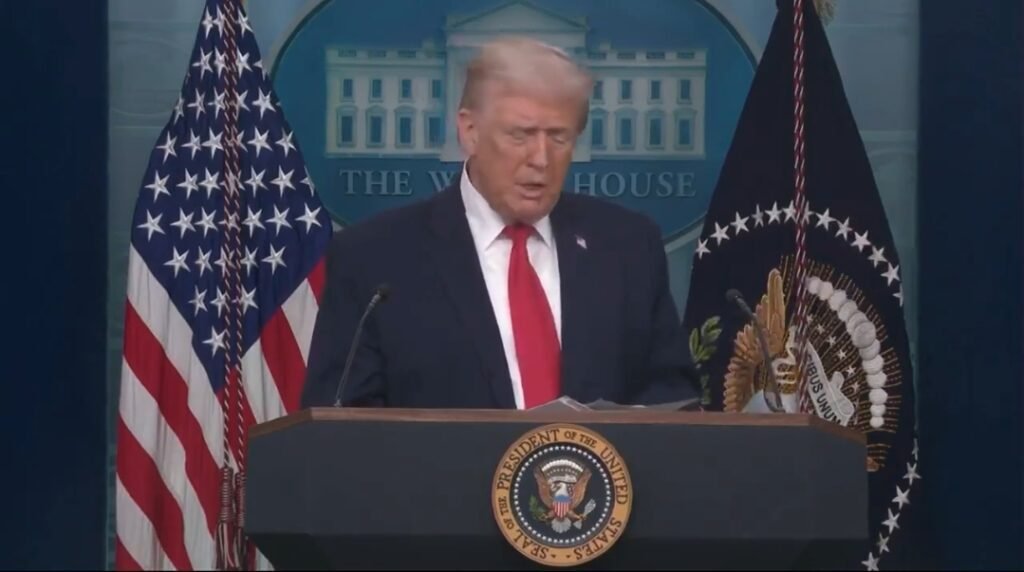
United States President Donald Trump has indicated to his advisors that he is prepared to conclude the military operation against Iran even if the critical Strait of Hormuz remains partially inaccessible, deferring the effort to fully reopen it to a later stage. This assessment suggests a recalibration of immediate military objectives to align with a defined timeline.
Strategic Reassessment
According to The Wall Street Journal, which cited administration officials, Trump and his team recently evaluated that a mission to forcefully reopen the vital waterway would extend the conflict beyond the initially projected four to six weeks. The decision leans towards achieving primary goals such as degrading Iran’s naval capabilities and missile stockpiles, winding down current hostilities, and employing diplomatic pressure to restore unimpeded trade flow through the strait.
Information was available with The Chenab Times that if diplomatic efforts fail to ensure the free flow of trade, Washington would then look to enlist allies in Europe and the Gulf region to take the lead in reopening the Strait of Hormuz. White House Press Secretary Karoline Leavitt confirmed at a media briefing on Monday that the president and the Pentagon leadership had consistently stated an estimated timeline of four to six weeks for the military operation, noting that the operation was on its 30th day.
Burden Sharing and Geopolitical Context
Leavitt also suggested that Arab nations could be approached to share the burden of the ongoing military operation in Iran. She stated that the president would likely be very interested in such an idea, indicating that further statements from him on the matter could be expected. This proposed burden-sharing comes as countries like Kuwait, the UAE, and Saudi Arabia could potentially contribute to the costs or efforts associated with the Iran operation.
The military actions began on February 28, with joint strikes launched by the United States and Israel against Iran. Tehran subsequently retaliated, leading to a widening of the conflict across the Persian Gulf region. The Strait of Hormuz, a narrow but strategically crucial shipping lane, connects the Persian Gulf to the Indian Ocean. It is a vital chokepoint for global energy supplies, and its effective closure has significantly halted the daily transit of hundreds of commercial vessels carrying containerized, dry bulk, and liquid cargo.
The situation underscores the complex geopolitical dynamics and economic implications of military actions in the region. The reported willingness to pause the effort to fully reopen the strait signals a strategic prioritization, balancing immediate military aims with broader diplomatic and alliance-building objectives.


The Chenab Times News Desk