SRINAGAR: The Legislative Assembly of Jammu and Kashmir concluded its budget session by passing two significant pieces of legislation: the ‘Jammu and Kashmir Jan Vishwas Second (Amendment of Provisions) Bill, 2026’ and ‘The Jammu and Kashmir Private Universities Bill, 2026’. The bills were passed through a voice vote on Saturday, marking a key development in the region’s legislative agenda.
According to details received by The Chenab Times, the Jan Vishwas Bill, aimed at decriminalizing minor offenses and promoting ease of doing business and living, was introduced by the Minister for Agriculture, Javid Ahmed Dar, on behalf of the Chief Minister. This amendment seeks to align the Union Territory’s legal framework with a national initiative to rationalize offenses, thereby reducing compliance burdens on businesses and citizens.
The Jammu and Kashmir Jan Vishwas Second (Amendment of Provisions) Bill, 2026, officially L A Bill No 07 of 2026, builds upon the Jammu and Kashmir Jan Vishwas (Amendment of Provisions) Ordinance, 2025, which was promulgated on December 16, 2025. That ordinance had already decriminalized minor offenses within five specific acts. The current bill further extends this decriminalization to 18 different acts within Jammu and Kashmir. The amendments propose substituting minor imprisonment penalties with compounding fines and increasing existing fines where they were deemed inadequate. The rationale behind these changes is to foster a more business-friendly environment and simplify daily life for residents.
During the assembly proceedings, Minister Javid Ahmed Dar addressed concerns raised by members who had proposed amendments to the bill. He assured them that their points had been taken into consideration and requested the withdrawal of their amendments, which was subsequently done by legislators Nizam-ud-din Bhat, Balwant Singh Mankotia, Pirzada Farooq Ahmad Shah, and Tanvir Sadiq. Following their withdrawal, the bill was passed unanimously via a voice vote.
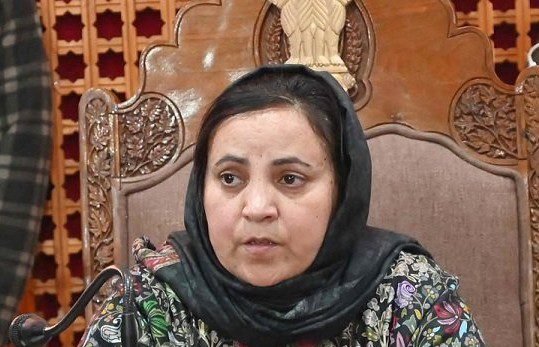
The second bill to receive legislative approval was ‘The Jammu and Kashmir Private Universities Bill, 2026’ (L A Bill No 08 of 2026). This bill, introduced by the Minister for Education, Sakina Itoo, lays the groundwork for the establishment and regulation of private universities within the Union Territory. Its primary objective is to ensure the establishment of these institutions, regulate their operations, and maintain academic standards to provide quality education and safeguard the interests of students.
The Minister for Education emphasized that the bill incorporates concerns raised by members regarding the higher education sector. She stated that the legislation is expected to stimulate the higher education landscape in Jammu and Kashmir, offering local students more accessible options for higher studies and reducing the need to travel outside the region for advanced education. While assuring that some proposed amendments would be considered as the implementation progresses, she highlighted the bill’s aim to create a robust regulatory framework.
The proposed regulatory framework, as detailed by the Minister, includes provisions for establishing a Regulatory Authority to oversee private universities, ensuring accountability through prescribed governance structures, and mandating compliance with University Grants Commission (UGC) regulations. Furthermore, the bill addresses student welfare by providing for reservations for local students, offering scholarships for the needy, prohibiting capitation fees and other malpractices, and ensuring student protection in the event of a private university’s dissolution. The legislative intent is to create an environment conducive to establishing high-quality private universities while upholding educational standards and student rights.
Legislators Mir Saifullah, Nizam-ud-din Bhat, Pirzada Farooq Ahmad Shah, and Tanvir Sadiq, who had put forth amendments to the Private Universities Bill, withdrew them following assurances from the Education Minister. However, an amendment proposed by BJP legislator Balwant Singh Mankotia was pressed for a vote and subsequently rejected by the House.
The Speaker then called for a voice vote on the Private Universities Bill, which was passed by the Assembly.
❤️ Support Independent Journalism
Your contribution keeps our reporting free, fearless, and accessible to everyone.
Or make a one-time donation
Secure via Razorpay • 12 monthly payments • Cancel anytime before next cycle


(We don't allow anyone to copy content. For Copyright or Use of Content related questions, visit here.)

The Chenab Times News Desk