


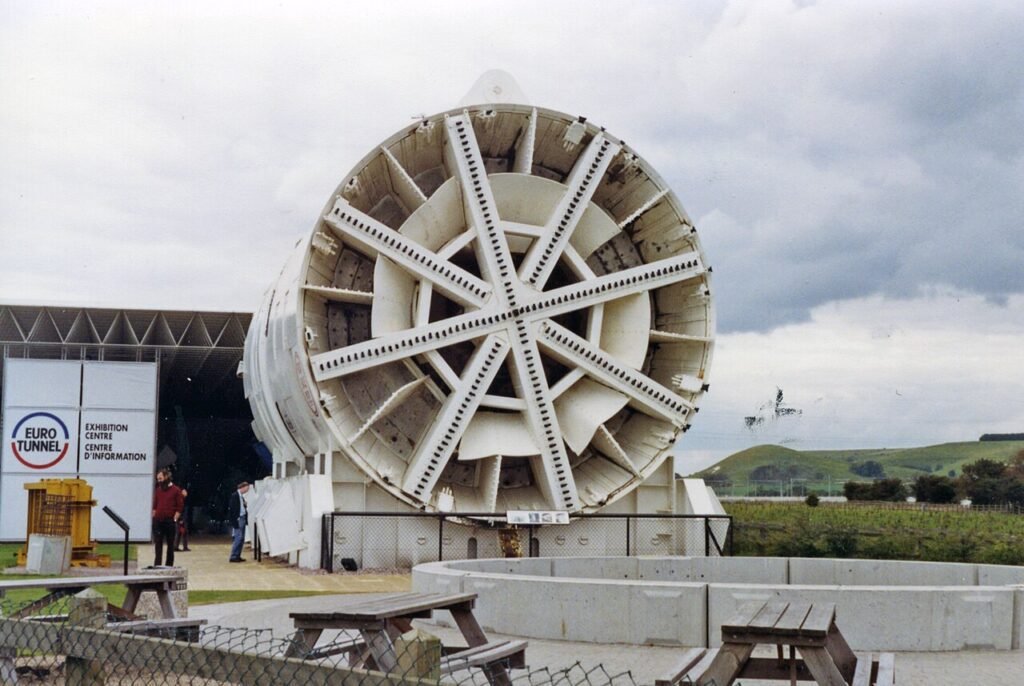
Mumbai is set to witness a significant upgrade in its transportation infrastructure with the deployment of India’s largest single-shield hard rock Tunnel Boring Machine (TBM), named ‘Nayak’, for the ambitious Thane-Borivali Twin Tunnel project. The Mumbai Metropolitan Region Development Authority (MMRDA) is overseeing this transformative initiative, which aims to drastically reduce travel time between Thane and Borivali from the current 1.5 hours to just 15 minutes.
Information available with The Chenab Times indicates that the Thane-Borivali Twin Tunnel project involves the construction of twin tunnels that will run under the Sanjay Gandhi National Park. These tunnels will connect the Western Express Highway at Borivali with Ghodbunder Road at Thane, covering a total length of 11.84 kilometers. The project is employing advanced TBM technology to ensure safe, efficient, and eco-friendly construction with minimal impact on the surrounding environment.
The ‘Nayak’ TBM is a marvel of engineering, measuring 86 meters in length with a cutter head diameter of 13.34 meters. It is the country’s largest single-shield hard rock tunnel boring machine. In total, four TBMs are slated for deployment, with two machines starting from the Borivali end and two from the Thane end. Each TBM is capable of precision cutting at a speed of 4.5 rotations per minute and weighs approximately 2.5 metric tonnes. The TBM has been uniquely named ‘Nayak’ after a butterfly species (Moduza Procris) found in the Sanjay Gandhi National Park, symbolizing strength, agility, and precision.
The project, being executed by Megha Engineering & Infrastructures Ltd (MEIL), is a critical component of Mumbai’s infrastructure development. The twin tunnels are designed to have three lanes each, including a dedicated emergency lane, with cross-passages at every 300-meter interval for safety and maintenance purposes. Advanced ventilation systems, modern firefighting equipment, smoke detectors, and LED signboards will be integrated to ensure the highest safety standards.
The Thane-Borivali Twin Tunnel project is considered one of the most complex and high-stakes infrastructure endeavors in the Mumbai Metropolitan Region. This is due to the sensitive ecology of the Sanjay Gandhi National Park, the necessity for minimal surface disturbance, and the requirement for continuous monitoring of geological shifts during excavation. To address these challenges, the MMRDA has opted for advanced Single Shield TBMs, capable of handling variable rock strata and high overburden.
The TBMs, ‘Nayak’ and ‘Arjuna’, have been procured from the German manufacturer Herrenknecht’s facility in Chennai. The assembly of ‘Nayak’ began at the Thane site, marking a significant milestone in the project’s progression from preparatory work to active underground construction. The project also includes the establishment of casting yards for precast segments used in tunnel lining, with the Thane yard already operational and the Borivali yard under preparation.
Land acquisition for the project is nearing completion on the Thane side, while the rehabilitation of project-affected families in Borivali is ongoing. While delays in the relocation of Project Affected Persons (PAPs) had previously slowed early construction, progress has reportedly picked up in recent weeks. The project’s estimated cost is substantial, with some reports indicating figures around ₹20,000 crore, reflecting the scale and complexity of creating such a major urban transport link.
The successful lowering and deployment of ‘Nayak’ signifies a crucial turning point, signaling Mumbai’s capability to undertake challenging underground mobility projects. Once operational, the Thane-Borivali Twin Tunnel is expected to significantly alleviate traffic congestion, reduce fuel consumption and emissions, and reshape daily mobility for millions of commuters across the Mumbai Metropolitan Region, supporting the city’s continued growth and development.


The Chenab Times News Desk