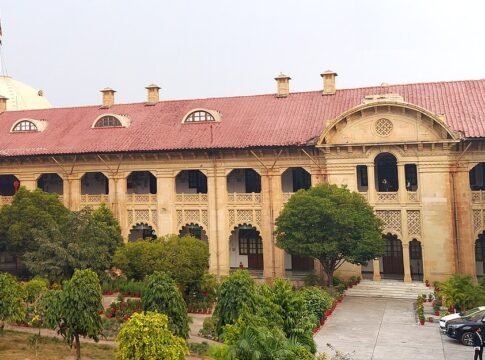
Justice Yashwant Varma of the Allahabad High Court has submitted his resignation to President Droupadi Murmu, following a probe into the recovery of unaccounted cash from his official residence in Delhi over a year ago. The resignation averts a potential parliamentary proceeding for his removal from office.
The Chenab Times has learned that the Lok Sabha Speaker had previously admitted a motion for Justice Varma’s removal and had constituted a three-member committee under the Judges Inquiry Act, 1968, to investigate the allegations against him. Justice Varma had challenged the Speaker’s decision in the Supreme Court, but his plea was rejected, allowing parliamentary proceedings to continue.
The inquiry stemmed from the discovery of unaccounted currency at Justice Varma’s Delhi residence on March 14, 2025. At the time of the incident, Justice Varma was serving as a judge of the Delhi High Court. Following the discovery and the subsequent inquiry, he was transferred to the Allahabad High Court.
The Judges Inquiry Act, 1968, outlines the procedure for investigating allegations of misconduct against judges of the High Courts and the Supreme Court. It allows for the establishment of committees to inquire into such allegations, with the potential for removal from office if the findings warrant it.
The recovery of unaccounted cash at a judge’s official residence had triggered a significant political storm, raising questions about judicial accountability and transparency within the higher judiciary. Such incidents often lead to calls for stricter oversight and more robust mechanisms to ensure public trust in the judicial system.
The process for removing a High Court judge involves a complex parliamentary procedure. A motion for removal must first be admitted by the Speaker of the Lok Sabha or the Chairman of the Rajya Sabha. Subsequently, a committee of three members—comprising two High Court or Supreme Court judges and an eminent jurist—is formed to investigate the charges. If the committee finds the charges substantiated, the motion can then be debated and voted upon by both Houses of Parliament. A two-thirds majority in each House is required for the judge to be removed from office.
Justice Varma’s resignation, occurring before the completion of this rigorous parliamentary process, effectively halts any further action concerning his removal. It also means that the allegations, while investigated, will not culminate in a formal parliamentary inquiry or a judicial removal proceeding.
The incident highlights the sensitive nature of judicial appointments and the mechanisms in place for accountability. While the judiciary is intended to be an independent pillar of democracy, ensuring that its members adhere to the highest standards of integrity and probity is paramount for maintaining public confidence.
The transfer of Justice Varma to the Allahabad High Court after the initial incident and prior to his resignation suggests that the judicial administration took measures to address the situation while the investigative process was ongoing. The ultimate decision to resign now removes the matter from the direct purview of the parliamentary inquiry.
The specific amount of unaccounted cash recovered and the detailed findings of the inquiry committee have not been publicly disclosed in full, adding to the public’s limited understanding of the precise nature of the allegations that led to the resignation and potential removal proceedings.
The legal framework governing the conduct of judges in India aims to strike a balance between judicial independence and accountability. The provisions under the Judges Inquiry Act are designed to provide a fair process for both the judge facing allegations and the institution itself.
Justice Varma’s tenure as a judge has now concluded through his resignation, a development that brings a close to a chapter marked by controversy and scrutiny. The details surrounding the cash recovery and the subsequent events underscore the critical importance of ethical conduct and transparency within the judicial fraternity.
❤️ Support Independent Journalism
Your contribution keeps our reporting free, fearless, and accessible to everyone.
Or make a one-time donation
Secure via Razorpay • 12 monthly payments • Cancel anytime before next cycle


(We don't allow anyone to copy content. For Copyright or Use of Content related questions, visit here.)

The Chenab Times News Desk