


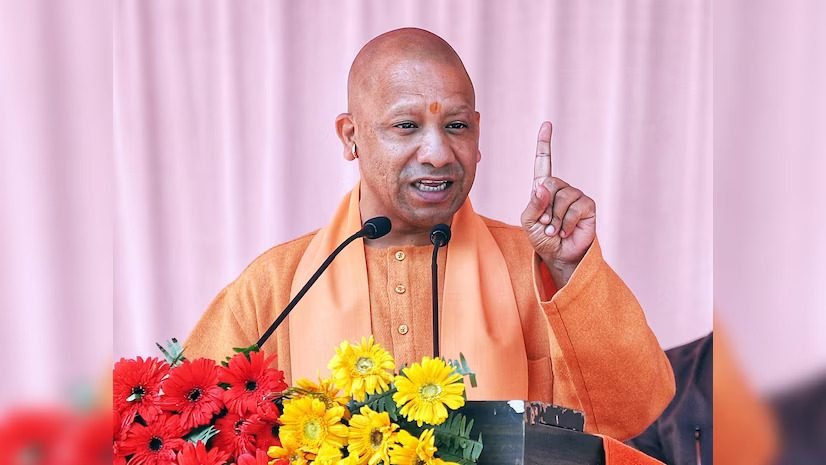
Uttar Pradesh Chief Minister Yogi Adityanath on Saturday led a march in the state capital, accusing opposition INDIA bloc parties of being “undemocratic and anti-women” for their stance on the women’s reservation bill. The Chief Minister’s remarks came in the wake of the opposition’s criticism of the bill, which he contended exposed their true intentions.
Information was available with The Chenab Times that Samajwadi Party chief Akhilesh Yadav, in a separate statement, predicted that Uttar Pradesh would soon witness a governance model centered on social justice, implying a critique of the current administration’s policies.
The Chief Minister’s march, held in Lucknow, was framed as a demonstration against what he described as the opposition’s obstructionist tactics. He specifically targeted the INDIA bloc for voting against the Constitution (One Hundred and Twenty-Eighth Amendment) Bill, 2023, which aims to reserve one-third of seats for women in the Lok Sabha and state legislative assemblies. Adityanath asserted that this move by the opposition parties demonstrated their fundamental opposition to women’s empowerment and democratic principles. He stated that by defeating the bill, the INDIA bloc parties had exposed themselves as “undemocratic and anti-women,” a sentiment he amplified during the procession.
The Chief Minister’s participation in the march underscores a broader political narrative being pushed by the ruling party, highlighting their commitment to gender equality and framing the opposition as resistant to progressive legislative changes. The event was attended by several state government officials and party functionaries, who echoed the Chief Minister’s sentiments, chanting slogans in support of the bill and against the opposition’s alleged anti-women stance. The procession was intended to garner public support and reinforce the ruling party’s image as a champion of women’s rights.
In response to the political developments and the Chief Minister’s statements, Samajwadi Party president Akhilesh Yadav offered a counter-narrative, focusing on the need for social justice in governance. He indicated that the state was on the cusp of experiencing a new governance framework that would prioritize the principles of social justice. While not directly engaging with the specifics of the women’s reservation bill in his statement, Yadav’s comments suggested a critique of the existing governance model and an anticipation of a policy shift towards greater equity and inclusivity in Uttar Pradesh. His prediction hints at a forthcoming political strategy that will likely emphasize social justice as a core plank, potentially challenging the current government’s developmental agenda.
The exchange between the Chief Minister and the Samajwadi Party chief reflects the escalating political rhetoric in Uttar Pradesh as parties gear up for future electoral contests. The women’s reservation bill has become a significant point of contention, with both sides attempting to leverage the issue to their political advantage. The ruling party seeks to portray itself as progressive and pro-women, while the opposition, according to Adityanath, is revealing its alleged regressive nature. Conversely, the opposition leaders are positioning themselves as advocates for social justice and equitable development, aiming to appeal to a broader section of the electorate.
The political discourse surrounding the women’s reservation bill has sparked nationwide debate, with various stakeholders offering diverse perspectives on its implementation and potential impact. While proponents laud it as a landmark step towards ensuring greater political representation for women, critics have raised concerns about its timing, the mechanism for delimitation, and the potential for it to be used as a political tool. The differing viewpoints highlight the complex socio-political landscape of India and the ongoing discussions about gender equality and representation in democratic institutions.
The Chief Minister’s emphasis on the “undemocratic and anti-women” nature of the opposition’s stance aims to consolidate his party’s support base and potentially sway undecided voters by associating the opposition with anti-women sentiments. This strategy is common in Indian politics, where emotional appeals and character assassination are frequently employed. The march itself serves as a visual demonstration of strength and public backing for the government’s actions and policies, intended to create a strong impression on the electorate.
Meanwhile, Akhilesh Yadav’s focus on social justice signals a strategic move to re-engage with the traditional voter base of his party and to highlight issues that resonate with marginalized communities. By predicting a shift towards a “governance model based on social justice,” he is attempting to draw a clear distinction between his party’s vision and that of the ruling government, positioning the Samajwadi Party as the true representative of the state’s diverse social fabric. This approach seeks to mobilize support by appealing to aspirations for equality and fairness.
The political landscape in Uttar Pradesh remains dynamic, with such exchanges shaping the public discourse and setting the stage for future political battles. The contrasting messages from the state’s prominent political leaders indicate differing priorities and strategies, reflecting the diverse ideologies and electoral calculations at play within the state.


The Chenab Times News Desk