


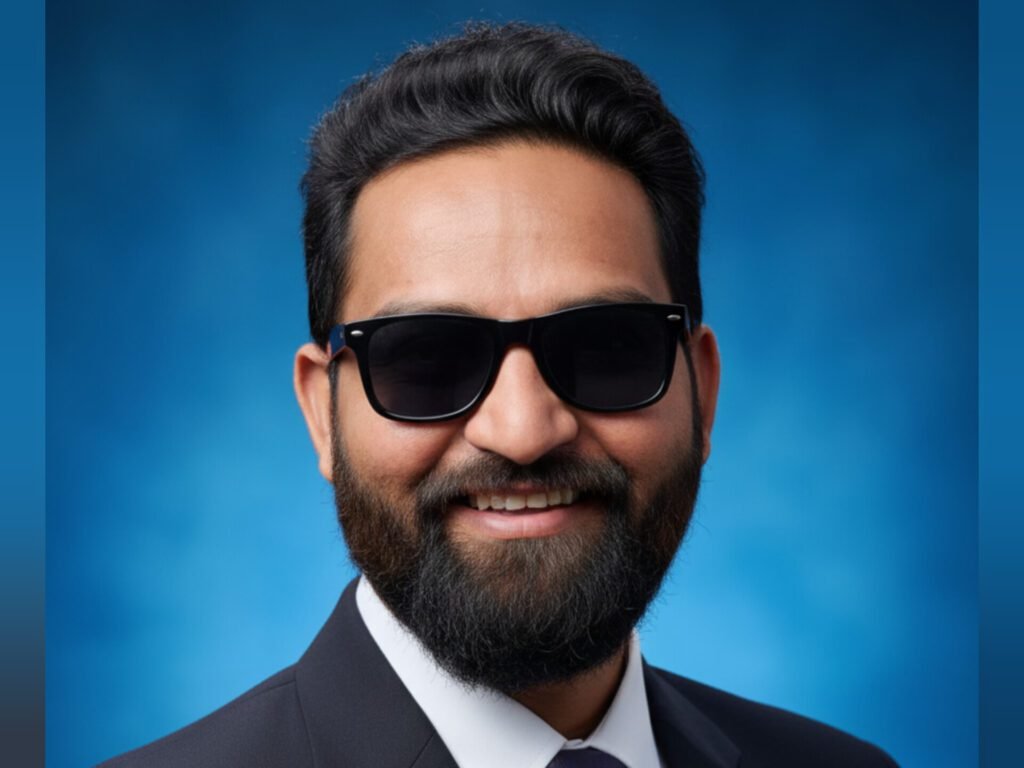
The High Court of Jammu & Kashmir and Ladakh today struck down the preventive detention of Mehraj Din Malik, the elected Member of the Legislative Assembly from Doda East, under the Jammu & Kashmir Public Safety Act (PSA), 1978, terming the invocation of the stringent law an impermissible “shortcut” when ordinary criminal proceedings were already underway.
In an 87-page detailed and speaking judgment delivered in HCP No. 139/2025, Justice Mohd Yousuf Wani allowed the habeas corpus petition, quashed detention order No. PSA 05 of 2025 dated September 8, 2025, issued by the District Magistrate, Doda, and directed the immediate release of the 37-year-old MLA from District Jail, Kathua. The court ordered the return of the detention record, including the confidential dossier and any accompanying pen drive, to the authorities.
Roots of the Dispute: Health Centre Shifting at Kencha
The case originated from a contentious local dispute in Tehsil Kahara over the relocation of an Ayush Arogya Mandir (AAM), also referred to as a Primary Health Centre, at Kencha. The facility was previously operating from a rented building belonging to Abdul Rashid son of Abdul Aziz. The Health Department proposed shifting it, citing damage to the existing structure, particularly after heavy rainfall on August 26, 2025, when a wall reportedly collapsed, as reported earlier by The Chenab Times.
According to the petition, the local population, including the MLA, preferred retaining the centre at its original location. Malik raised the issue through formal representations to the Deputy Commissioner and a public Facebook Live session, criticising the administration’s handling and highlighting broader concerns of inadequate infrastructure in the backward Doda East constituency. This led to FIR No. 90/2025 dated September 6, 2025, at Police Station Gandoh under multiple sections of the Bharatiya Nyaya Sanhita against Malik and others.
The State’s counter-affidavit painted a different picture. It alleged that a committee had recommended shifting to Abdul Rashid’s building based on public input and safety considerations. However, on September 6, 2025, Malik and his associates allegedly trespassed, forcibly seized medical equipment and life-saving drugs from the partially functional new site, and shifted them to the house of Ghulam Ali son of Abdul Sattar (described as an encroacher on state land). The administration claimed this triggered public disorder, obstruction of officials, and further protests.
The Detention Order and State’s Justification
The District Magistrate relied on a re-submitted police dossier from the Senior Superintendent of Police, Doda, citing 18 FIRs and 16 Daily Dairy Reports (DDRs) registered against Malik from 2014 to 2025. He was labelled a “history-sheeter (Category-A)” at Police Station Gandoh since 2017.
The grounds accused him of:
- Disrupting public offices, heckling and manhandling officials, creating hostage-like situations, and inciting mobs.
- Using social media for provocative speeches, spreading misinformation, glorifying prescribed militants such as Burhan Wani and Masood Azhar, and calling upon followers to act like “Lashkar” (armed militia) to enforce demands by force.
- Obstructing government functioning and risking communal disharmony, particularly amid flood damages in the Chenab Valley.
Post-detention incidents, including road blockades (“Poora Chakka Jam”), large gatherings, stone pelting, and attempts to approach sensitive areas, were also cited as evidence of the threat to public order. The State maintained that normal criminal law had failed to deter him and that preventive detention was a measure of last resort.
Malik’s petition, filed through his father Shamas Din and argued by senior advocate Rahul Pant and supporting counsel, contended that the detention was mala fide, rooted in political rivalry and personal bias stemming from the health centre row. It argued that the MLA was merely voicing legitimate public grievances in a highly backward area and that the order suffered from non-application of mind, procedural violations, and failure to distinguish between ordinary law-and-order issues and threats to public order.
Court’s Reasoning: Strict Scrutiny of “Public Order”
At the heart of the judgment lies the constitutional distinction between “law and order” and “public order.” Drawing extensively from Supreme Court precedents—including Ram Manohar Lohia v. State of Bihar, Arun Ghosh v. State of West Bengal, Rekha v. State of Tamil Nadu, and Ameena Begum v. State of Telangana—Justice Wani held that PSA detention under Section 8(1)(a)(ii) requires activities that disturb the “even tempo of the life of the community” or pose a grave threat to public order at large.
The court found that the material placed before the detaining authority — predominantly FIRs related to aggressive advocacy, public protests, and the health centre dispute — fell within the realm of ordinary law and order problems, not “public order.” Many cases were compounded, withdrawn, or resulted in bail, with the detenu already facing trial under substantive criminal law.
“Recourse to PSA was seen as an impermissible ‘shortcut’,” the judgment effectively underscored. When remedies such as investigation, prosecution, and bail cancellation exist under ordinary law, the extraordinary power of preventive detention cannot be invoked as a parallel or substitute mechanism, absent a clear, live, and proximate nexus to public order.
The court observed that the detaining authority failed to demonstrate the requisite “subjective satisfaction” that Malik’s continued liberty would prejudice public order. Even strong criticism or mobilisation by an elected representative raising constituency issues (infrastructure, health, roads) does not automatically justify PSA detention.
Procedural Safeguards Violated
The judgment highlighted a key procedural lapse: certain videos relied upon in the grounds of detention were not supplied to the detenu. This impaired his fundamental right under Article 22(5) of the Constitution and the PSA to make an effective representation against the order. Although the court viewed some videos in chambers, the non-supply was held to vitiate the detention.
The court also addressed the “re-submitted dossier” (the initial one returned for updating), but ultimately found the overall exercise suffered from non-application of mind on the core legal threshold.
While not accepting outright claims of personal bias or malice by the District Magistrate, the court ruled that the order could not be sustained. It emphasised that preventive detention is an exceptional measure, not a punitive tool, and must be exercised with rigorous scrutiny to protect the cherished right to personal liberty under Article 21.
Broader Implications and Political Context
The ruling reaffirms judicial oversight on the use of PSA in Jammu & Kashmir, a law frequently criticised as draconian. It clarifies that even elected representatives, including MLAs, enjoy no blanket immunity, yet preventive detention cannot be wielded to stifle political dissent or public advocacy when normal legal processes suffice.
Malik’s detention had triggered protests across the Chenab Valley, with supporters alleging it was aimed at curbing his vocal criticism of governance and his rising popularity. The High Court’s decision is expected to fuel ongoing debates about balancing administrative order with democratic rights in the region, especially in flood-affected backward areas.
The petition had also sought ₹5 crore in compensation for the alleged illegal detention, though the judgment primarily focused on quashing the PSA order and securing release.
Final Directions
Justice Wani directed the immediate release of Mehraj Din Malik, subject to any requirements in other pending cases. The judgment, reserved on February 23, 2026, and pronounced today, is reportable and serves as a detailed exposition of PSA jurisprudence.
Legal observers note that this verdict adds to a growing body of High Court decisions in J&K that strictly construe the “public order” requirement and caution against mechanical invocation of preventive detention laws.
For the people of Doda East, the outcome restores their elected representative’s liberty at a time when the district continues to grapple with infrastructure challenges and post-flood recovery. Whether this leads to renewed political engagement or further legal battles in the underlying FIRs remains to be seen.


Anzer Ayoob is the Founder and Chief Editor to The Chenab Times