


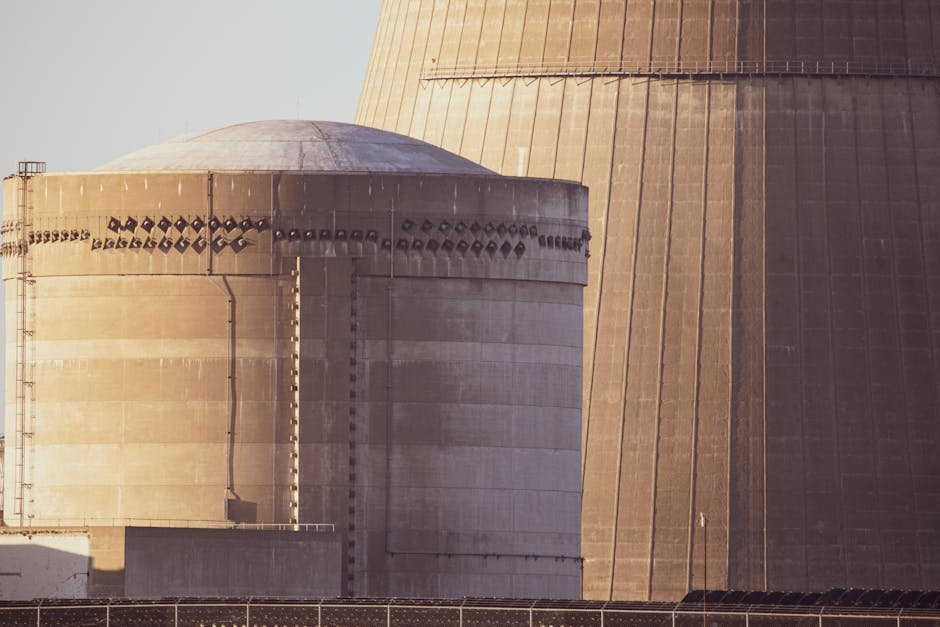
India is on the cusp of a significant milestone in its nuclear energy program, poised to become the second country globally to operate a commercial-level Fast Breeder Reactor (FBR). This achievement marks a crucial step in India’s ambitious three-stage nuclear power strategy.
Information was available with The Chenab Times that Union Minister Dr. Jitendra Singh announced the nation’s impending leadership in advanced nuclear technology. He stated that following Russia, India will be the next country to commission and operate a commercial FBR. The development centres around the indigenously designed 500 MWe Prototype Fast Breeder Reactor (PFBR) located at Kalpakkam in Tamil Nadu, which successfully achieved first criticality on April 6, 2026.
The PFBR, a collaborative effort between the Indira Gandhi Centre for Atomic Research (IGCAR) and BHAVINI (Bharatiya Nabhikiya Vidyut Nigam Limited), is instrumental in advancing India’s nuclear program. It signifies the commencement of the second stage of the nation’s three-stage nuclear power plan. This stage involves utilizing uranium-plutonium mixed oxide fuel, designed to generate more fuel than it consumes, thereby enhancing fuel efficiency.
This technological advancement is strategically important for India as it paves the way for leveraging the country’s substantial thorium reserves in the third stage of its nuclear strategy. Thorium, a widely available element in India, is considered a potential fuel source for future nuclear power generation, offering a sustainable and indigenous energy pathway.
Currently, Russia is the only nation operating commercial Fast Breeder Reactors. While several other countries, including the United States, the United Kingdom, France, Japan, Germany, and China, have historically developed or operated experimental fast reactors, many of these programs are now defunct or have been scaled back.
Dr. Jitendra Singh emphasized the national significance of the PFBR’s successful establishment, noting its role in enabling more efficient fuel utilization and setting the stage for future thorium-based nuclear power. He highlighted that with this achievement, India is positioned among a select group of nations with advanced nuclear capabilities.
Looking ahead, nuclear energy is projected to play a vital role in India’s transition towards clean energy and its long-term sustainability objectives. The nation aims to achieve a nuclear power capacity of 100 GW by 2047, a target that underscores the importance of advancements in reactor technology.
The minister also pointed to emerging technological sectors such as Artificial Intelligence, data infrastructure, and advanced manufacturing, which will require consistent and reliable clean energy sources. Nuclear power is deemed indispensable for meeting these growing energy demands.
Further bolstering India’s nuclear energy landscape, Dr. Singh underscored the importance of initiatives like Small Modular Reactors (SMRs), supportive policy frameworks, and the SHANTI Act, which are designed to encourage greater private sector involvement in scaling up nuclear energy capacity. Under a recently launched ‘Nuclear Mission’ with an allocation of Rs 20,000 crore, the development of five SMRs is planned by 2033.
These SMRs are expected to be particularly useful for captive power generation in industrial sectors, densely populated areas, remote regions lacking grid connectivity, and for repurposing existing thermal power plants. The government’s vision emphasizes a balanced energy mix, integrating nuclear power with renewable and other clean energy sources, to achieve the nation’s Net Zero emission target by 2070.


The Chenab Times News Desk