


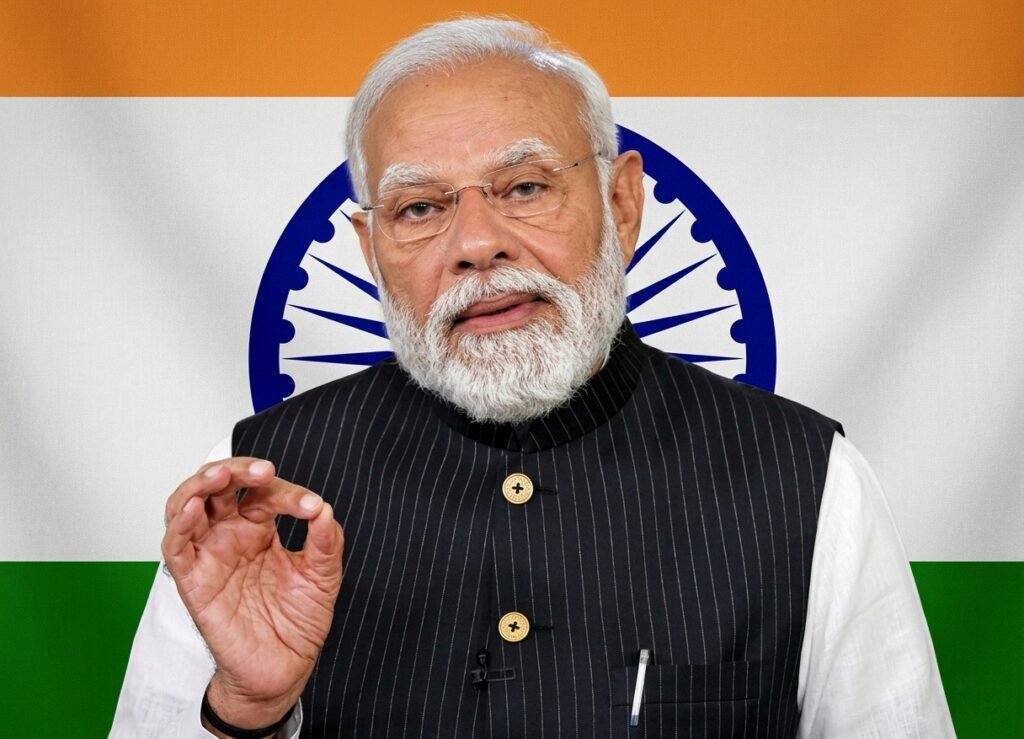
Prime Minister Narendra Modi stated on Sunday that India has made significant strides over the past 12 years in enhancing the affordability and accessibility of quality healthcare, reaffirming the government’s commitment to building a healthy nation.
The Chenab Times has learned that the Prime Minister expressed pride in India being recognized globally for its ambitious Ayushman Bharat initiative, described as the world’s largest healthcare program, which aims to provide top-tier medical care to the country’s most vulnerable populations.
“Over the last 12 years, India has worked to make quality healthcare more affordable and accessible,” the Prime Minister posted on the social media platform X, highlighting a decade of focused efforts in the health sector.
The government’s initiatives, such as the PM Bharatiya Jan Aushadhi Pariyojana, have been instrumental in reducing the cost of essential medicines, cardiac stents, and knee implants, thereby providing substantial financial relief to numerous citizens. This program ensures that crucial medical supplies are within reach for a larger segment of the population.
Concurrently, efforts have been made to broaden access to medical education. The establishment of new institutions and an increase in available seats have made it more feasible for aspiring medical professionals to pursue careers in healthcare, addressing a long-standing need for increased skilled medical talent across the nation.
Prime Minister Modi articulated the government’s intent to continue building upon the progress achieved thus far. “We will keep building on this ground covered so far in order to build a healthy India,” he stated, emphasizing a forward-looking approach to national health development.
The MyGov India platform, a key citizen engagement portal of the central government, underscored the critical importance of healthcare accessibility as a foundational investment for any nation. It highlighted that under Prime Minister Modi’s leadership over the past 12 years, India has achieved substantial advancements in delivering healthcare services that are not only more widespread but also more efficient and cost-effective.
The platform elaborated that the current healthcare ecosystem is characterized by greater accessibility, enhanced resilience, and a preparedness for future health challenges facing Indian citizens. A robust healthcare system, it noted, is fundamentally linked to an increase in the number of qualified doctors, improved standards of medical training, and broader access to medical education.
Aspiring medical professionals, particularly in regions previously underserved by such institutions, have benefited from increased opportunities closer to home. This expansion of medical education infrastructure has cultivated a growing cadre of skilled healthcare professionals prepared to contribute to a healthier India, fostering a more equitable distribution of medical expertise.
Furthermore, the MyGov India platform pointed to significant progress in the fight against diseases like tuberculosis (TB). Through enhanced early detection methods, expanded screening programs, improved access to treatment, and active community participation, India is accelerating its transition towards a future free from TB.
The statement indicated that diseases that once presented formidable public health challenges are gradually receding into history. This progress is attributed to improved disease surveillance mechanisms, a strengthened healthcare delivery system, and sustained public health interventions that are effectively reducing the disease burden and working towards the eradication of several preventable illnesses altogether.


The Chenab Times News Desk