


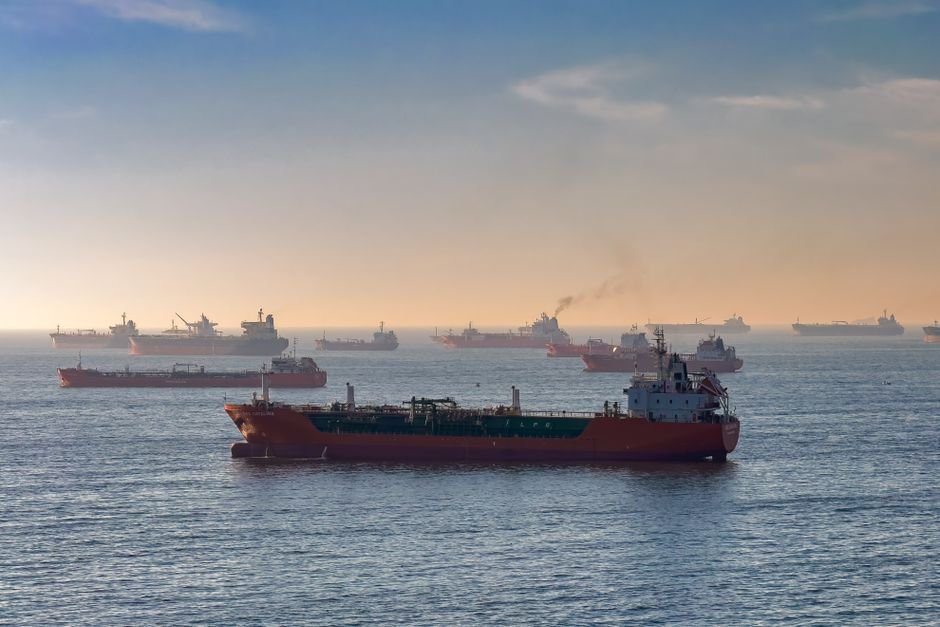
Global oil prices experienced a significant increase, reaching a one-month high, following the United States’ reimposition of a naval blockade on Iran. The renewed tensions and military exchanges between the U.S. and Iran have heightened concerns over the stability of energy supplies, particularly through the crucial Strait of Hormuz.
Brent crude futures climbed approximately 2% to settle around $84.73 per barrel, while U.S. West Texas Intermediate (WTI) crude rose about 1.5% to $79.34 per barrel. These gains represent the highest closing prices for both benchmarks since mid-June. The market’s upward movement indicates a growing risk premium associated with potential supply disruptions.
The Strait of Hormuz, a vital chokepoint for global energy trade, typically handles about 20% of the world’s oil supplies. Before the recent escalation, traffic through the strait had seen some increase following a fragile ceasefire agreement in June. However, renewed hostilities have once again cast doubt on the consistent flow of oil and liquefied natural gas through this critical waterway.
The U.S. military announced the resumption of its maritime blockade on Iranian ports, coinciding with an expansion of economic sanctions targeting a major shipping and oil trading network linked to Iran. The U.S. Department of the Treasury’s Office of Foreign Assets Control (OFAC) sanctioned over 50 individuals, companies, and vessels accused of facilitating Iran’s sanctions evasion and oil exports.
These developments follow a period of fluctuating U.S. policy toward Iran regarding oil sanctions. Earlier in the year, the Trump administration had temporarily eased sanctions, allowing for increased Iranian oil exports and payments in U.S. dollars. This move was part of a broader effort to stabilize global oil prices following a period of conflict. However, renewed attacks on commercial shipping in the region led to the revocation of these waivers and the reimposition of stricter measures.
Analysts suggest that while the physical oil market may currently be adequately supplied, any further escalation involving the Strait of Hormuz or additional sanctions on Iranian exports could significantly tighten market sentiment and add further risk premiums. The repeated cycle of tightening and easing sanctions has been noted by some observers as potentially undermining the long-term effectiveness of U.S. pressure on Iran, as the country has managed to retain some revenue and export capacity during periods of relaxed restrictions.
The geopolitical tensions have also had repercussions beyond oil prices. Stock markets in Asia experienced sharp declines earlier in the week, reflecting investor concerns about the escalating conflict in the Middle East. The price of gold also saw a notable slide, as it typically becomes less attractive when interest rates rise and offers no yield.
The U.S. military stated that its forces were carrying out strikes to degrade Iranian capabilities used in attacking commercial shipping, while Iran claimed to have closed the Strait of Hormuz again. Reports from Iran’s army indicated drone attacks against U.S. positions in Jordan, and the Islamic Revolutionary Guard Corps claimed to have targeted facilities in Bahrain and Kuwait, though these reports could not be immediately verified by Reuters.
The situation remains dynamic, with the potential for further volatility in oil markets and broader geopolitical implications. The effectiveness of the U.S. blockade and sanctions in achieving their objectives, while balancing the need for stable global energy prices, continues to be a key point of observation for international markets and policymakers.


Global Affairs Desk at The Chenab Times covers international developments, global diplomacy, and foreign policy issues through fact-based reporting, explainers, and analytical pieces. The desk focuses on major geopolitical events, diplomatic engagements, and international trends, with an emphasis on verified information, multiple perspectives, and contextual understanding of global affairs.