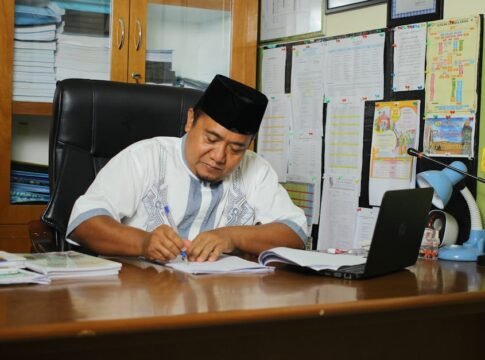
SRINAGAR: A research paper authored by Rameez Ahmad Sudhan, an educator from Boniyar in Baramulla district, has been selected for presentation at the upcoming Comparative and International Education Society (CIES) Northeast Regional Conference. The conference is scheduled to take place from November 13 to 15, 2026, at Teachers College, Columbia University, in New York.
Information was available with The Chenab Times that Sudhan’s work, focusing on the crucial theme of “Education, Migration and Displacement,” will be presented to an international audience of education researchers, policymakers, and scholars. The conference aims to explore how educational systems can effectively respond to the multifaceted challenges posed by conflict, natural disasters, migration, and humanitarian crises.
Rameez Ahmad Sudhan currently serves at the District Institute of Education and Training (DIET) in Baramulla. In his role, he is dedicated to enhancing educational quality through initiatives such as promoting teachers’ professional development, creating innovative learning resources, and supporting schools in implementing competency-based learning strategies. His efforts are aligned with the objectives of the National Education Policy (NEP) 2020 and the NIPUN Bharat Mission, guiding educators in adopting contemporary teaching methodologies to improve student learning outcomes and strengthen foundational education.
Born and raised in Boniyar, a geographically remote area within the Baramulla district, Sudhan completed his foundational schooling in his native village before pursuing higher education in Baramulla town. His upbringing in a border village, where educational continuity was often compromised by prevailing disturbances, instilled in him a profound appreciation for learning and a commitment to making it a central focus of his life and career.
Reflecting on his journey, Sudhan expressed inspiration drawn from his own school teachers, whose guidance shaped his perspective and encouraged him to pursue education as a vocation. He attributed his intellectual development and career path to their influence.
Growing up in a rural setting, Sudhan observed a societal perception that students from such backgrounds were often expected to trail behind their urban counterparts. This observation fueled a determination to challenge such assumptions, asserting that an individual’s origin should not limit their potential. He believed that knowledge was the primary avenue for achieving competitive parity.
In 2016, Sudhan became involved in an experimental project at a government laboratory school located in Old Town Baramulla. The core objective of this initiative was to refine teaching practices and demonstrate the capability of government schools, when provided with adequate support and resources, to rival private educational institutions. Over a period of nearly two years, the participating teachers embraced innovative pedagogical approaches, prioritized the enhancement of student learning outcomes, and integrated a variety of extracurricular activities to foster a more engaging school environment. This intervention yielded significant improvements in student learning, increased community involvement, and gradually shifted public perception regarding the efficacy of government schools. A notable outcome was the transfer of 65 students from private schools to the government institution, a testament to its revitalized standing.
Sudhan described the experimental project as a source of considerable hope, illustrating that public schools could achieve competitive standing with the right support for teachers and the belief of the surrounding communities. This experience later formed the basis of a research paper he presented at a conference hosted by the Indian Institute of Management (IIM), Ahmedabad, in 2019.
His formative years in the Uri region exposed him directly to the devastating impact of the 2005 Kashmir earthquake, which resulted in numerous fatalities and caused severe disruptions to the education of countless children. In the subsequent years, recurrent interruptions due to natural disasters and security-related incidents continued to affect schooling in the border areas of Jammu and Kashmir.
These lived experiences prompted him to explore a fundamental question: how can education be sustained even amidst crises? Sudhan posits that while the physical reconstruction of damaged schools is vital, ensuring the uninterrupted learning of children during emergencies is equally critical. This conviction underpins the research paper slated for presentation at Columbia University. His study delves into the concept of Emergency Education, an approach designed to guarantee the continuity of learning during periods of disaster, conflict, and other crises.
The research posits that the ramifications of emergencies extend beyond classroom instruction. During crises, children often confront multifaceted challenges that affect their emotional well-being, sense of security, and long-term educational trajectory. The study critically examines school safety and security measures, alongside the protection of children’s social and emotional health.
It further investigates practical considerations such as methods for teachers to maintain educational continuity when schools are non-operational, strategies for sustaining learning in temporary shelters or relief camps, the requisite governmental systems for proactive disaster preparedness, and the specific training educators need to respond effectively during emergencies.
Sudhan’s contributions to the fields of school safety and emergency education were further recognized with the prestigious Fulbright Fellowship in 2023, a collaborative initiative between the governments of India and the United States. This fellowship provided him with opportunities to engage with global education experts, examine international frameworks for educational resilience, and refine his research on school safety, emergency education, and the psychosocial development of children.
He stated that this experience facilitated a connection between the educational challenges prevalent in Jammu and Kashmir and the broader international discourse on ensuring educational continuity during crises.
Sudhan advocates for the integration of education into disaster preparedness strategies. He believes that schools situated in disaster-prone and conflict-affected regions should be equipped with appropriate safety protocols, and educators should receive specialized training to manage emergency situations effectively. Crucially, he emphasizes that safeguarding children’s education necessitates a collaborative effort involving teachers, education departments, disaster management authorities, local communities, and policymakers.
For Sudhan, his research paper represents more than an academic pursuit; it embodies a commitment to ensuring that children living in challenging circumstances are not denied their fundamental right to education. He asserts that education must not be suspended due to emergencies, and that well-prepared schools and teachers can safeguard not only children’s learning but also their prospects for a hopeful future.
❤️ Support Independent Journalism
Your contribution keeps our reporting free, fearless, and accessible to everyone.
Or make a one-time donation
Secure via Razorpay • 12 monthly payments • Cancel anytime before next cycle


(We don't allow anyone to copy content. For Copyright or Use of Content related questions, visit here.)

The Chenab Times News Desk