


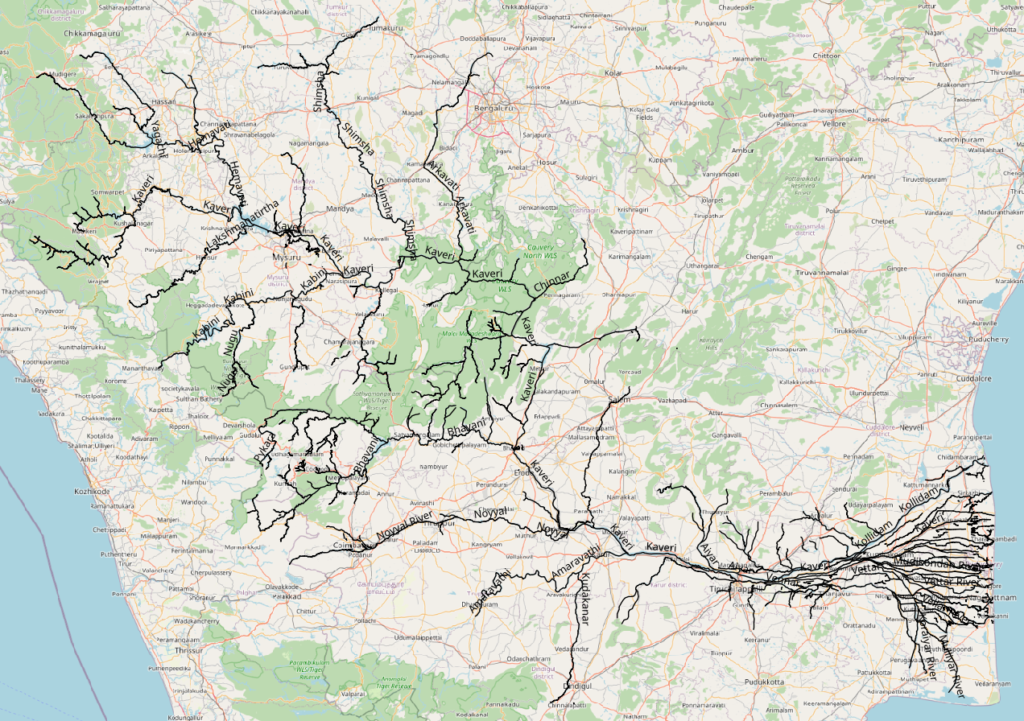
Bengaluru, India – The long-standing dispute over the sharing of Cauvery river waters is set to enter a new phase as the Chief Ministers of Karnataka and Tamil Nadu are scheduled to hold high-level discussions in Bengaluru. The meeting, anticipated to address the contentious issue of water allocation, particularly during distress years, and the controversial Mekedatu balancing reservoir project, marks a significant attempt at resolving one of India’s most persistent inter-state river conflicts through direct dialogue.
The Chenab Times has learned that Tamil Nadu Chief Minister C. Joseph Vijay has proposed the bilateral talks, a departure from the state’s traditional reliance on legal and institutional mechanisms to resolve water-sharing disputes. His counterpart in Karnataka, D.K. Shivakumar, has agreed to the meeting, which is expected to take place in the first week of August.
The urgency for these discussions stems from the prevailing water scarcity in the Cauvery basin, exacerbated by a sluggish monsoon. Farmers in both riparian states are facing significant hardship, with crop cultivation severely impacted. Tamil Nadu, in particular, is experiencing a critical water shortage, with the Mettur Dam’s storage levels significantly below normal, affecting the kuruvai cultivation season. Between June 1 and July 23, Tamil Nadu received approximately 3.5 thousand million cubic feet (TMC ft) of water, far short of the 32 TMC ft it was entitled to as per the Supreme Court’s 2018 judgment.
Under the Supreme Court’s 2018 verdict, Tamil Nadu is entitled to 404.25 TMC ft of Cauvery water in a normal year, while Karnataka is allocated 284.75 TMC ft from the total available 740 TMC ft. Karnataka is mandated to release specific quantities of water monthly at the Biligundulu border point. However, the state argues that low reservoir levels and drought-like conditions preclude it from meeting these requirements, leading to a recurring conflict during distress years.
Mekedatu Project: A Point of Contention
A significant hurdle in the negotiations is Karnataka’s proposed Mekedatu balancing reservoir project. Karnataka asserts that the project is essential for meeting Bengaluru’s drinking water needs and for generating hydropower, utilizing its allocated share of Cauvery water. The state also contends that the reservoir could help in releasing water even during distress years, potentially benefiting Tamil Nadu.
Tamil Nadu, however, vehemently opposes the project, fearing that it would allow Karnataka to exert greater control over river flows, thereby diminishing water availability for downstream areas in Tamil Nadu. The Tamil Nadu Assembly has unanimously passed a resolution urging the Union government not to grant clearance for the Mekedatu project, underscoring the deep-seated concerns regarding its implications for water security.
Criticism and Political Undercurrents
The initiative for direct talks has not been without its critics. Several political parties and farmer organizations in Tamil Nadu have voiced apprehension, arguing that bilateral negotiations could undermine the established institutional frameworks such as the Cauvery Water Management Authority (CWMA) and the Cauvery Water Regulation Committee. They fear that engaging in direct talks might compromise the legal rights painstakingly secured over decades through judicial adjudication, a strategy Tamil Nadu has historically favored over negotiations.
Former Tamil Nadu Chief Minister M.K. Stalin has been particularly critical, labeling the proposed talks as a “poisonous experiment” that could lead to setbacks in legal battles. He has urged the Tamil Nadu Chief Minister to convene an all-party meeting to build consensus before proceeding with the negotiations. Similarly, AIADMK chief Edappadi K. Palaniswami has called for an all-party meeting to ascertain Tamil Nadu’s stance.
Historically, direct talks between the states on the Cauvery issue have yielded limited success. A notable instance was in 2012 when then-Tamil Nadu Chief Minister J. Jayalalithaa met her Karnataka counterpart Jagadish Shettar for discussions, which proved largely ineffective. The current attempt by Chief Minister Vijay to engage in dialogue reflects a strategic shift, possibly aimed at leveraging the cordial political ties between the ruling parties in both states to find a pragmatic solution.
The upcoming meeting between Chief Ministers Shivakumar and Vijay is seen as a critical juncture, with farmers and water management experts closely observing the proceedings. The outcome could significantly influence the future course of water-sharing agreements and the resolution of the Mekedatu project dispute, potentially setting a precedent for inter-state river water management in India.


The Chenab Times News Desk