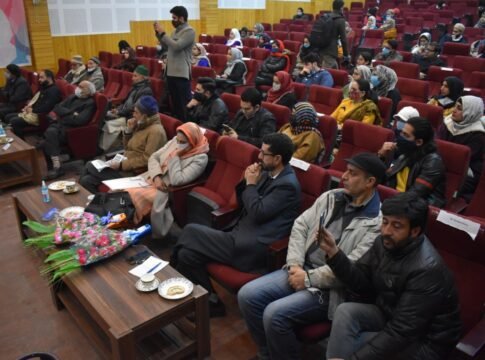
Srinagar: Former Chief Election Commissioner of India, Dr. S.Y. Qureshi, has strongly advocated for the immediate restoration of statehood to Jammu and Kashmir, describing the current situation as a “grave injustice” that needs to be rectified without delay. Speaking at the 2nd Mohammad Shafi Pandit Memorial Lecture in Srinagar, Qureshi emphasized that the dignified return of displaced Kashmiri Pandits to their ancestral homes is both a moral obligation and a cultural necessity.
Restoration of Statehood and Democratic Commitments
Qureshi highlighted that the Union government had assured the Supreme Court that statehood would be restored “as soon as possible.” However, he noted that several years have passed since this assurance was given, and the delay is “unfair” and undermining democratic principles. He articulated that governance without genuine power is essentially no government, and the continued withholding of statehood erodes the credibility of democratic institutions and the trust of the people. Qureshi stressed that with elections having been held and voter participation being high, democratic legitimacy must be fully realized through an elected government wielding complete administrative authority, rather than operating under bureaucratic control. He also invoked the principle of “Kashmiriyat, Insaniyat, and Jamhooriyat,” originally espoused by former Prime Minister Atal Bihari Vajpayee, urging a renewed commitment to coexistence and cultural restoration.
Dignified Return of Kashmiri Pandits
The former CEC also underscored the importance of the dignified return of displaced Kashmiri Pandits. He described their displacement as one of Kashmir’s most profound wounds over the past three decades. Qureshi stated that while the government must ensure their security, housing, and employment, their true return necessitates reintegration into their original communities, friendships, and neighborhoods, not just residing in government-built colonies. He emphasized that reconciliation, characterized by old relationships and mutual belonging, is crucial for their return and for overcoming the divisive forces that have sought to erode Kashmir’s pluralistic spirit.
Supreme Court’s Role and Government Assurances
The issue of Jammu and Kashmir’s statehood has been a subject of ongoing discussion in the Supreme Court. Petitions have been filed questioning the delay in restoring statehood despite previous assurances from the Centre. The Supreme Court, in its December 2023 judgment, upheld the abrogation of Article 370 but directed the Union government to restore statehood to Jammu and Kashmir “at the earliest, as soon as possible.” The court has granted the central government additional time to respond to these petitions, with the Solicitor General indicating that the government is in consultation with the local administration and that incidents like the Pahalgam terror attack are being considered. However, petitioners and political leaders, including Chief Minister Omar Abdullah, have expressed frustration over the reliance on verbal assurances and the lack of a concrete timeline for the restoration of statehood, highlighting that elections have been held as per the court’s directive.
Administrative Reorganization and Future Governance
The administrative reorganization of Jammu and Kashmir following the abrogation of Article 370 in 2019 led to its bifurcation into two Union Territories: Jammu and Kashmir, and Ladakh. While the Centre argued that this move would enhance national integration and improve governance, regional political parties contend that the prolonged uncertainty weakens democratic governance and limits the effectiveness of elected institutions. The current governance structure, where an elected government operates with a Lieutenant Governor holding significant authority over key subjects, has led to frequent discussions about administrative powers and accountability. The restoration of full statehood is widely seen as central to achieving durable political stability and long-term public confidence in the region.
❤️ Support Independent Journalism
Your contribution keeps our reporting free, fearless, and accessible to everyone.
Or make a one-time donation
Secure via Razorpay • 12 monthly payments • Cancel anytime before next cycle


(We don't allow anyone to copy content. For Copyright or Use of Content related questions, visit here.)

The Chenab Times News Desk