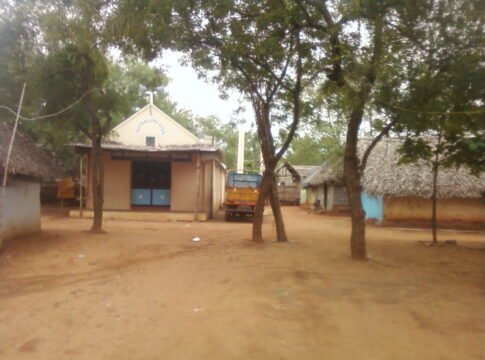
A new documentary titled ‘Faceless People’ is shedding light on the protracted struggle of Sri Lankan Tamil refugees in India who, decades after fleeing conflict, continue to be denied Indian citizenship. The film questions the reasons behind their prolonged statelessness and advocates for a resolution to their uncertain future.
Documentary Ignites Debate on Refugee Rights
Directed by seasoned journalist R.K. Radhakrishnan, ‘Faceless People’ delves into the lives of six Sri Lankan Tamil refugees residing in various camps across Tamil Nadu. Despite having lived in India for over three decades, many of these individuals remain in a legal and social limbo, lacking fundamental rights such as voting, access to stable employment, and legal protection. The documentary aims to move beyond a narrative of sympathy, emphasizing the refugees’ desire to be recognized and seen as individuals with aspirations and rights.
Information was available with The Chenab Times that the documentary focuses on the deeply personal stories of refugees, including a schoolboy, a housewife, a young woman with academic ambitions, and the community’s first PhD scholar. These individuals arrived in India under arduous conditions, escaping the brutal conflict in Sri Lanka. Radhakrishnan, who has reported on the Sri Lankan Tamil refugee issue for nearly two decades, uses his directorial debut to amplify their voices and highlight the moral question of India’s continued denial of citizenship.
The film critically examines the Indian government’s stance, suggesting that the issue is stalled not by security threats but by a lack of political will in New Delhi. Radhakrishnan argues that India has a moral obligation to grant citizenship, especially given that nearly 98% of the nearly 90,000 Sri Lankan Tamil refugees living in India are peaceful residents. The documentary also touches upon the advanced education system that refugees once benefited from, a privilege that was withdrawn in 1991, further marginalizing them.
Legal Limbo and Calls for Resolution
Sri Lankan Tamil refugees have been arriving in India since 1983, driven by the civil war and anti-Tamil violence in their home country. Over the years, substantial numbers have settled in Tamil Nadu, with many residing in over 100 camps. While some refugees are entitled to residence visas and work permits, life in the camps often leads to a sense of powerlessness and a feeling of belonging to neither Sri Lanka nor India. The youth, in particular, express a strong desire to shed the ‘refugee’ label, believing it impedes their quality of life and opportunities.
Recent discussions, such as those highlighted by prominent Sri Lankan leader Mano Ganesan, have called for a referendum to allow refugees to decide between returning to Sri Lanka or obtaining Indian citizenship. Ganesan advocates for a humanitarian, rights-based approach to settle the issue definitively, underscoring that a significant portion of refugees were born on Indian soil and have built their lives there. Some reports suggest that over 100,000 Sri Lankan Tamils currently reside in Tamil Nadu, with a large majority living in refugee camps and the remainder in rented accommodations.
The documentary underscores the complex challenges faced by these refugees, including restrictions on freedom of movement and the suspicion they sometimes encounter from Indian authorities. While some refugees express a desire to return to Sri Lanka, concerns about potential detention by Sri Lankan authorities and the lack of adequate living conditions often deter them. The absence of a large-scale repatriation plan by the Indian and Tamil Nadu governments, coupled with the ongoing need for improved conditions in Sri Lanka, further complicates the situation.
‘Faceless People’ serves as a poignant reminder of the ongoing humanitarian crisis and the urgent need for India to address the citizenship claims of Sri Lankan Tamil refugees, offering them a path towards dignity and belonging.
❤️ Support Independent Journalism
Your contribution keeps our reporting free, fearless, and accessible to everyone.
Or make a one-time donation
Secure via Razorpay • 12 monthly payments • Cancel anytime before next cycle


(We don't allow anyone to copy content. For Copyright or Use of Content related questions, visit here.)

The Chenab Times News Desk