


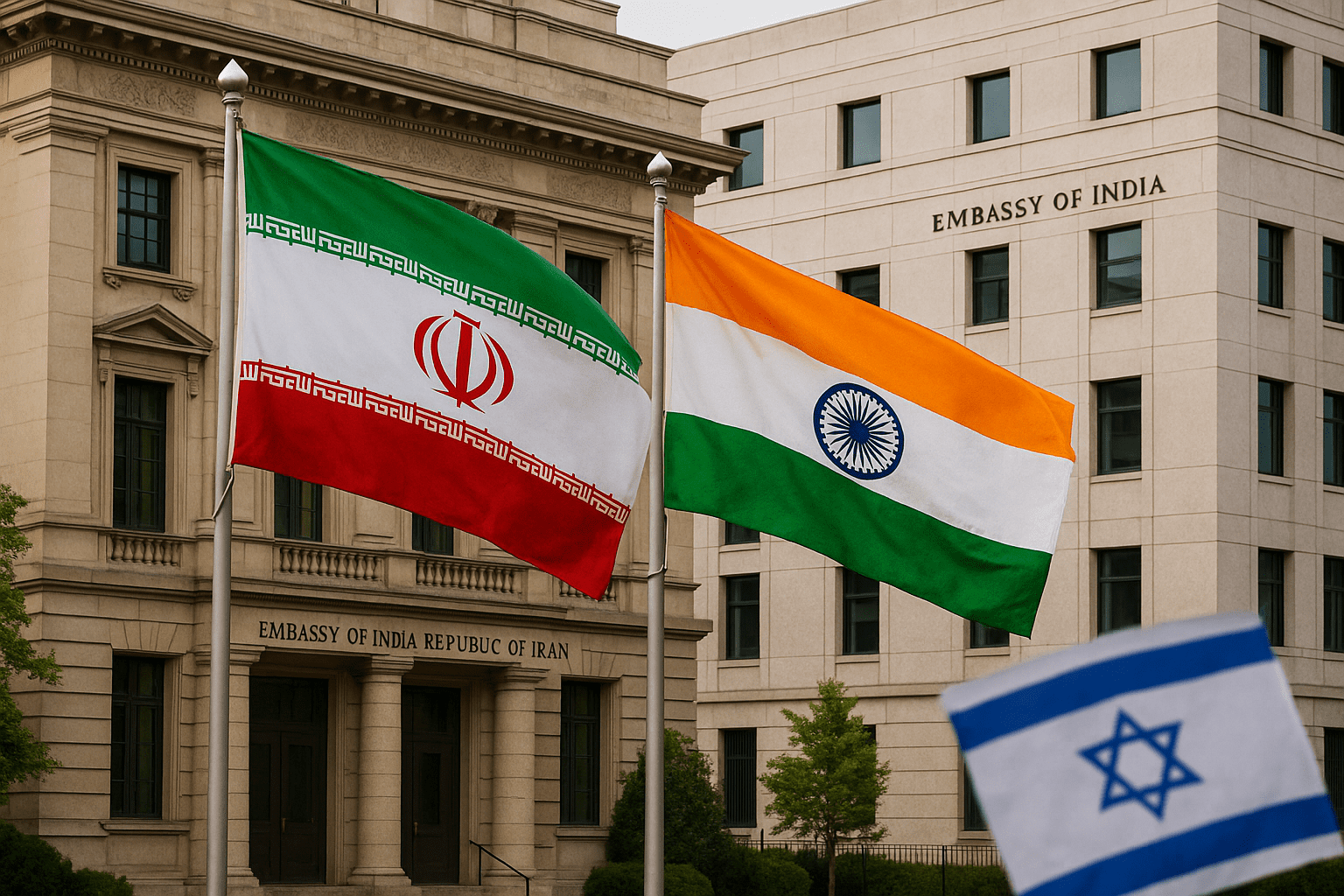
New Delhi, June 15 – Iran’s strategic importance to India has been a cornerstone of New Delhi’s foreign policy in West Asia, driven by historical ties, economic interests, and geopolitical considerations. Over the past decade, despite challenges posed by international sanctions and regional conflicts, Iran has remained vital for India’s energy security, trade connectivity, and regional influence. As tensions escalate in the region, particularly with the recent Israel-Iran conflict, India’s delicate balancing act between maintaining cordial relations with both nations underscores the critical role Iran plays in its broader strategic calculus.
Iran has historically been a significant supplier of crude oil to India, which imports approximately 85% of its oil, with West Asia accounting for a substantial share. Before U.S. sanctions halted imports in May 2019, Iran was India’s third-largest oil supplier, contributing nearly 12% of its crude oil imports, valued at USD 12.1 billion annually, according to Wikipedia’s overview of India-Iran relations. Iran’s vast reserves—24% of West Asia’s oil and 12% of global natural gas—position it as a potential long-term energy partner if sanctions are lifted. Recent discussions, including those during External Affairs Minister S. Jaishankar’s January 2024 visit to Tehran, have explored resuming oil imports to bolster India’s energy security, as noted in Tehran Times. Beyond energy, bilateral trade, though reduced to USD 2.33 billion in 2022-23, includes Indian exports like Basmati rice, tea, and pharmaceuticals, with Iran importing 4.91 million kg of Indian tea in early 2024. However, trade disruptions due to regional instability and sanctions remain a concern, with potential oil price spikes threatening India’s economy, as highlighted by a 12% surge in Brent crude to $78 per barrel following recent conflicts, according to India Today.
The Chabahar Port, located in Iran’s Sistan-Baluchistan province, is a linchpin of India’s connectivity strategy, offering a gateway to Afghanistan and Central Asia without relying on Pakistan. In May 2024, India signed a 10-year agreement to develop and operate the port, reinforcing its commitment to the International North-South Transport Corridor (INSTC), which links India to Russia via Iran. This project enhances India’s access to resource-rich Central Asian markets and counters China’s Belt and Road Initiative. However, ongoing regional conflicts, including Houthi attacks in the Red Sea and the Israel-Iran war, risk delaying Chabahar’s full operationalization and increasing shipping costs by 15-20%, impacting Indian exporters’ profitability, according to India Today.
Iran’s geopolitical position, sharing borders with Afghanistan and Pakistan, aligns with India’s interests in countering Sunni extremism and Pakistan’s influence in the region. Both nations share concerns about the Taliban’s resurgence in Afghanistan, fostering cooperation on regional stability, as discussed in ORF’s analysis of Iran’s role in India’s West Asia strategy. India’s neutral stance in the Iran-Israel conflict, as reiterated by the Ministry of External Affairs in June 2025, reflects its strategic autonomy, maintaining ties with Iran while deepening relations with Israel. Iran’s role in the Shanghai Cooperation Organization (SCO) and its support for groups like Hezbollah, however, complicate India’s balancing act, especially as New Delhi distanced itself from an SCO statement condemning Israel in June 2025, according to The Indian Express.
Historical and cultural ties, rooted in centuries of trade and migration, strengthen India-Iran relations. Approximately 10,700 Indians reside in Iran, including traders and academics, while around 9 million Indian workers in the Gulf region contribute significantly to remittances. Iran’s support among India’s Shia community, tied to religious and cultural exchanges, adds a domestic dimension to bilateral ties. However, India must navigate internal dynamics carefully, as excessive alignment with either Iran or Israel could polarize communities, particularly given the ruling BJP’s stronger ties with Shias.
The Israel-Iran Conflict: June 2025 Escalation
The Israel-Iran conflict, escalating with Israel’s Operation Rising Lion on June 13, 2025, has heightened regional tensions, impacting India’s strategic interests. Israel launched airstrikes targeting Iran’s nuclear facilities at Natanz, military bases, and key commanders, killing at least 78 people, including senior military figures like IRGC commander Hossein Salami and Chief of Staff Mohammad Bagheri, alongside 320 injuries, mostly civilians, according to Iran’s UN envoy, as reported by Reuters. Iran retaliated with over 100 ballistic missiles and drones, striking Tel Aviv and other Israeli cities, resulting in at least three deaths and dozens injured, including two critically and 34 with minor injuries from shrapnel, as reported by Israeli authorities, per CNN. The conflict threatens India’s energy security and trade routes, particularly through the Strait of Hormuz, prompting New Delhi to urge de-escalation and dialogue to mitigate economic fallout, as stated by the Ministry of External Affairs.
India’s relationship with Iran is multifaceted, encompassing energy, connectivity, and geopolitical strategy. While Israel’s growing importance in defense and technology has strengthened ties with New Delhi, Iran’s role remains critical for long-term economic and strategic objectives. The ongoing Israel-Iran conflict underscores the fragility of India’s position, with potential disruptions to oil supplies, trade routes, and regional stability. New Delhi’s call for diplomacy, as articulated by Jaishankar, reflects its intent to maintain balanced relations while safeguarding its interests. As the situation evolves, India’s robust foreign exchange reserves and neutral stance with Gulf nations like Saudi Arabia and the UAE provide a buffer, but sustained conflict could challenge its economic growth and regional ambitions.
❤️ Support Independent Journalism
Your contribution keeps our reporting free, fearless, and accessible to everyone.
Or make a one-time donation
Secure via Razorpay • 12 monthly payments • Cancel anytime before next cycle


(We don't allow anyone to copy content. For Copyright or Use of Content related questions, visit here.)

Haseena Ayoob is a regular contributor of The Chenab Times.


