


Nestled amidst the enchanting landscapes and savor-worthy cuisines of Jammu and Kashmir lies a somber reality—the plaintive cries of its students. These impassioned pleas emanate from a persistent longing for an enhanced educational milieu, one that has been stifled by an array of adversities. The revocation of Article 370, internal and external disturbances, inadequate infrastructure, substandard education, road connectivity challenges, electricity scarcity, and outdated ideological paradigms have collectively cast a shadow on the region’s educational ecosystem.
Revocation of Article 370
The abrogation of Article 370 reverberated with far-reaching ramifications, propelling countless students to the precipice of despair. The protracted closure of educational institutions fractured their morale, triggering despondency, and dashing their aspirations. Furthermore, this upheaval disrupted the holistic learning process, leaving an indelible mark on their educational journey.
Inadequate Infrastructure
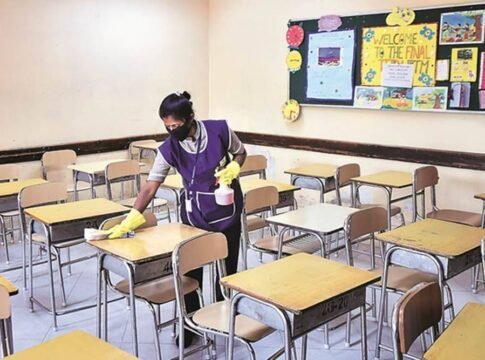
Students, especially those in the rural hinterlands, have voiced their discontent owing to the dearth of adequate infrastructure. Dilapidated classrooms, infested with cobwebs, and unsanitary restrooms present formidable obstacles. The absence of proper seating arrangements exacerbates the issue, depriving students of conducive learning environments.
Lackluster Leadership
Effective leadership possesses the potential to galvanize transformation, yet the rural leadership landscape has been tainted by deceit and negligence. This inert leadership has impeded the advancement of rural education, relegating the hopes and dreams of students to the sidelines. Leaders must rise as torchbearers, championing meaningful reforms to uplift the youth of Jammu and Kashmir.
Road Connectivity
The paucity of viable road networks has disrupted the regular cadence of classes, subjecting rural students to arduous commutes. Unfavorable weather conditions intermittently force institutional closures, compounding students’ challenges and exposing them to the vagaries of natural calamities, including droughts and landslides.
Outdated Ideological Perspective
A myopic emphasis on numeric accomplishments, as opposed to knowledge assimilation, has stifled students’ creativity. Parents’ fixation on achieving high exam scores at the expense of genuine learning has stymied the development of critical thinking skills and contemporary ingenuity. This antiquated mindset prevails, particularly in the Chenab Valley, leaving students bereft of guidance toward a more innovative educational approach.
A Glimpse of Jammu and Kashmir’s Education System
The 17th Annual Status of Education Report (ASER) for 2022, released by NGO Pratham, paints a somber picture of the educational landscape. Shockingly, 30% of schools in Jammu and Kashmir lack access to clean drinking water. The accessibility of computers has regressed from 82.8% in 2018 to 71.6% in 2022. Enrollments in the 6-14 age group have witnessed a decline from 58.3% in 2018 to 55.5% in 2022. Moreover, a troubling 4.8% of children aged 15-16 remain unenrolled.
Progress and Solutions
However, amidst these challenges, a glimmer of progress emerges. Enrollment rates at primary level centers have surged from 31.8% in 2018 to an encouraging 63.6% in 2022. Notably, the gender gap in enrollment is narrowing, although a dropout trend persists among girls aged 15-16. The report further underscores a significant improvement in electricity connections in Jammu and Kashmir schools, skyrocketing from 31.2% to a commendable 88.9% in 2022.
A Beacon of Hope
The pursuit of solutions for challenges such as the revocation of Article 370, infrastructural inadequacies, lackluster education, and other issues necessitates concerted efforts. We earnestly beseech concerned authorities and rural leaders to unify their endeavors, infusing the educational landscape with contemporary ingenuity. By fostering a collective voice across professions, we can embark on a transformative journey that will redefine education in Jammu and Kashmir. Let us resound our voices, unifying them in a resounding chorus for a brighter and better future.
❤️ Support Independent Journalism
Your contribution keeps our reporting free, fearless, and accessible to everyone.
Or make a one-time donation
Secure via Razorpay • 12 monthly payments • Cancel anytime before next cycle


(We don't allow anyone to copy content. For Copyright or Use of Content related questions, visit here.)
Jaseeb Paray, Student at Government Degree College Bhaderwah. The views expressed are their own.


