“It was the best of times, it was the worst of times, it was the age of wisdom, it was the age of foolishness..it was the season of light, it was the season of darkness…”, so wrote Charles Dickens during Industrial Revolution to show the paradox of those times: extreme wealth coexisting with unimaginable poverty. One would be inclined to form similar views on seeing the current state of agriculture in India: immense foodgrain surplus coexisting with hunger and malnutrition, growing national wealth coexisting with low farmers’ income.
The condition of agriculture in India, since colonial times to this day, has always remained deplorable. Ranging from uneven land distribution, lack of credit, outdated tools and implements, inefficient marketing system, lack of research and innovation to complacency on the government’s part, various problems dominate our agrarian space. We often pride ourselves on the success of the Green Revolution and on achieving self-sufficiency in foodgrains, but turn a blind eye to the farmers’ low income and farmers’ suicides. An average farmer’s family of five survives on a meagre income of Rs 6,400 a month. Nearly 3 lakh farmers have committed suicide in a span of 20 years from 1995 to 2015 (NCRB data), and even today, on an average, 20 farmers die by suicide daily (Down to Earth report). These figures are more than enough to show how we, the world’s largest democracy, have failed our farmers. We have always gauged agriculture from the prism of output and not the farmers’ welfare. And what’s even more painful is that the figures which should have translated into a national outrage remained trivialised during the successive regimes. What the government served recently in the name of reforms are the three draconian farm laws which are not just arbitrary but also leave a huge scope for the further exploitation of the already exploited farmers.
Government isn’t wrong in claiming that Indian agriculture was facing stagnation and that it needed reforms. The voice for reforms was already there since long and is also the need of the hour. But what is worrisome are the contents of reforms. By using the words like Promotion, Protection, Facilitation and Empowerment in the new farm laws, Govt has outstripped the US Department of Defense in the clever use of vocabulary. There could be no real protection of farmers’ interests without guaranteed MSP (even outside APMCs) and guaranteed procurement of the produce. The name and contents of the laws clearly contradict each other.
The most logical response to such laws in any democracy would be protests and that is exactly what the farmers resorted to. Right to Protest is the most powerful and the only powerful weapon which people can use against a complacent government. The protests on the Delhi borders are a manifestation of this right and a reminder of the fact that it is the people’s interests which matter the most in a democracy. Unfortunately, the Republic Day incident has changed the dominant narrative from Agrarian crisis to Internal security. It is no more seen as a farmers’ protest; it is seen as an assembly of the fringe and separatist elements who want to destabilize our country. A genuine issue is being swept under the carpet on the pretext of security.
I personally believe that the farmers’ organizations should have refrained from using religious flags or symbols during the march as that would make it vulnerable to attacks by the corporate-controlled media and the IT cell. But now that they have done it, I don’t find even an iota of logic to label them as anti-nationals. People who saw patriotism in the Nishan Sahib flag sported in Kesari movie should see patriotism in the same flag hoisted at Red fort as well. How can the flag which invoked patriotism among our Jawans at Galwan valley invoke disloyalty among our Kisans at the Red Fort? Tirange ka apmaan is an overstatement. None of the farmers violated the Flag Code of India. Those who got offended by the Nishan Sahib Flags within the Red Fort premises are the ones who are standing in queues to find a reason to get offended. It’s ironic that the faction which got offended the most is the ruling party’s think-tank which itself didn’t hoist tricolour for 52 years in its headquarter.
Government should stop seeing the protesting farmers as a threat to our internal security. They aren’t. The ideal way of looking at them would be as if they are an interest group fighting for their genuine demands. No farmers’ organization is a threat to the very idea of India. They may have problems with the ruling dispensation but not a single one of them wants to overthrow Parliament. None of the farmers’ organizations, including those protesting under the banner of left parties, want to do away with the State. Period. Then there is no reason to burden them with the parochial choice of either to subscribe to the policies of their oppressors or face the charges of sedition. This is not how the dissenting factions ought to be treated in a democracy.
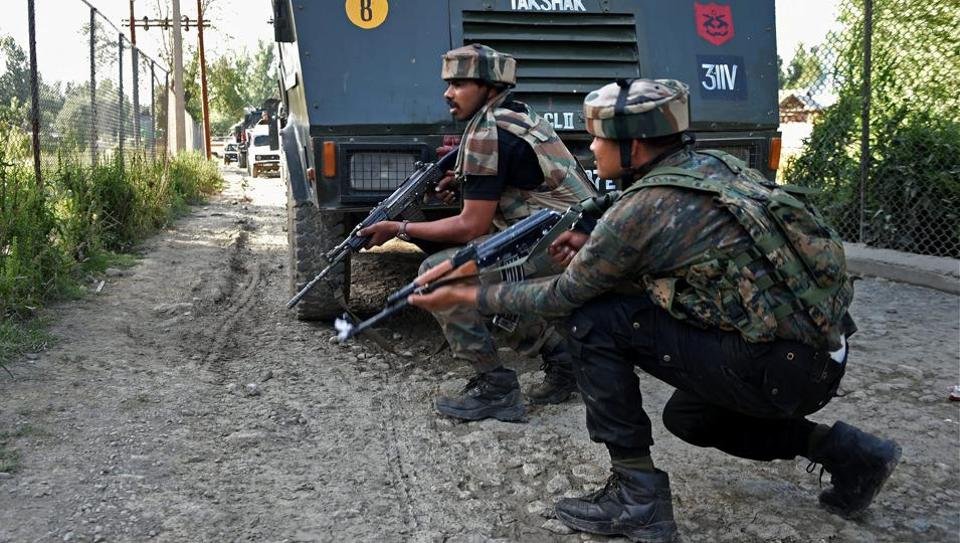
India needs to change the way it looks at its internal security apparatus. It shouldn’t be seen in terms of forces and equipment we have at our disposal. It should rather be seen as how accommodative and large-hearted we are to our minorities and interest groups. It should be seen as how we don’t deprive the dissenting parties of the feelings of belongingness to this nation. No amount of spending on internal security will suffice to control the discontentment of millions of farmers. No amount of brute force can control the collective outrage of the farmers, who are otherwise labelled as separatist elements, if they lose faith in the democratic processes and the state institutions. A diverse country like ours cannot be protected or policed by hard-handedness but by making our democracy much more tolerant to dissent.
There is also a need to change the way we look at a nation’s integrity. It’s time we realise that a nation cannot stand united merely by ideas; aspirations of the people must be catered to. Nation and nationalism must be understood in terms of people, their prosperity and their attitude towards each other. The belief that ours is a divine nation – which has miraculously survived the attacks of the Greeks, the Huns, the Mongols, the Turks, and the Brits – could be good in theory but bad in practice. It can make us underestimate the need to engage peacefully with the farmers. The myth of a divine Russian nation couldn’t prevent the erstwhile USSR from disintegration. The concept of Ummah couldn’t hold Bangladesh and Pakistan together for long. People’s aspirations are paramount. History confirms.
As of now, the protests are geared solely towards the farmers’ issues. There is no other motive – religious or political. But if we delegitimize the farmers’ nuances and push them to the wall, we would end up preparing gunpowder for a bigger threat in future. We, as a multicultural and multiethnic nation, can’t afford to declare a vast section of our population as anti-nationals. So let’s not put into the mouths of farmers something which they never said. Let’s undo the favour which wasn’t asked for.
Internal security must not be thought as a cause in itself but a consequence. Consequence of how successful we are in winning the faith of the protesting farmers. That is why we should strive to solve the Agrarian crisis first, that will de-facto reduce the threats to our internal security to a bare minimum. God forbid if even a tiny fraction of these farmers took the Khalistani angle seriously, it would end up endangering our security mechanism and would also pave a way for violence and counter-violence in future. Security could be better ensured by giving a democratic space to the dissenting parties rather than relying on law enforcement agencies. So the need of the hour is to put a full stop to the Khalistani rant and work on the real issue, i.e, agrarian crisis. That is how we can instill a sense of belongingness among the protesting groups and set the scene for an inclusive India, a united India which our freedom fighters and constitution makers dreamt of.
❤️ Support Independent Journalism
Your contribution keeps our reporting free, fearless, and accessible to everyone.
Or make a one-time donation
Secure via Razorpay • 12 monthly payments • Cancel anytime before next cycle


(We don't allow anyone to copy content. For Copyright or Use of Content related questions, visit here.)