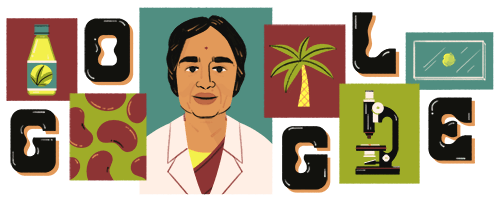
Kamala Sohonie, the Indian scientist who became the first Indian woman to pursue a PhD in science, is being honoured today on the 112th anniversary of her birth. Google Doodle paid tribute to her remarkable contributions to the field of science and her pivotal role in breaking barriers for women in India, particularly in STEM disciplines.
Born in Madhya Pradesh to chemist parents, Sohonie had a passion for science and aimed to follow in her parent’s footsteps. She enrolled at Bombay University, where she studied chemistry and physics, and graduated at the top of her class in 1933.
During her studies, Sohonie was tasked by the first president of India, Dr Rajendra Prasad, to investigate the benefits of certain foods. During this research, she developed an affordable dietary supplement made from palm nectar, which she named ‘Neera.’ The nutritious drink was later recognized with the Rashtrapati Award for its positive impact on the health of malnourished children and pregnant women.
Sohonie’s achievements paved the way for women in science when she became the first female student to be admitted to the prestigious Indian Institute of Science (IISc). However, her entry was met with scepticism by the then director of the institute, renowned Indian physicist CV Raman, who doubted “the capabilities of women in science.”
Undeterred, Sohonie proved her abilities and was eventually granted permission to continue her research. Her impressive work at the IISc played a crucial role in breaking down barriers and opening doors for more women to pursue science programs.
During her time at Cambridge University on a research scholarship, Sohonie made another significant discovery. She identified Cytochrome C, an enzyme crucial for energy generation, and found its presence in all plant cells. Within 14 months, she completed her thesis on this groundbreaking finding, earning her a PhD.
Sohonie’s legacy as a pioneering Indian scientist and her determination to overcome gender barriers in science continue to inspire generations of women in STEM fields. Her accomplishments have left an indelible mark on the scientific community and serve as a testament to the importance of equal opportunities for women in pursuing their passions and contributing to scientific knowledge.
❤️ Support Independent Journalism
Your contribution keeps our reporting free, fearless, and accessible to everyone.
Or make a one-time donation
Secure via Razorpay • 12 monthly payments • Cancel anytime before next cycle


(We don't allow anyone to copy content. For Copyright or Use of Content related questions, visit here.)

The Chenab Times News Desk