


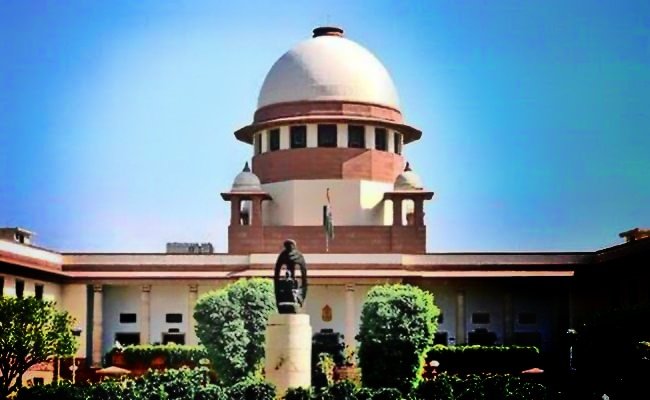
The Supreme Court has announced that it will commence hearings on August 2 to consider the 23 petitions challenging the abrogation of Article 370, which granted special status to the former state of Jammu and Kashmir. A five-judge Constitution Bench, led by Chief Justice of India DY Chandrachud, will oversee the proceedings.
The Constitution Bench, also comprising Justices Sanjay Kishan Kaul, Sanjiv Khanna, BR Gavai, and Surya Kant, has decided that the hearings will take place on a day-to-day basis, except for Mondays and Fridays, starting at 10:30 am. The court has requested all parties to submit their responses in online mode by July 25, and it emphasized that all relevant files and documents should be presented in paperless format.
These petitions challenge a presidential order issued on August 5, 2019, which revoked Article 370. The central government, in an affidavit filed on Monday, defended its decision to abrogate the article, citing the significant stability and progress it brought to the region.
However, the Supreme Court clarified that it will solely focus on constitutional issues during the hearings and that the new affidavit submitted by the central government would have no impact on the case.
During the proceedings, senior advocate Raju Ramachandran informed the court that IAS officer Shah Faesal and former student activist Shehla Rashid had withdrawn their petitions related to the matter. Consequently, Chief Justice Chandrachud directed the registry to remove their names from the list of petitioners. As a result, the case will now be titled “In Re: Article 370 of the Constitution,” previously led by Shah Faesal.
Article 370 had provided special rights and privileges to the people of Jammu and Kashmir from 1954 until 2019, based on the Instrument of Accession. Following the enactment of the Jammu and Kashmir (Reorganization) Act in 2019, the former state was bifurcated into the Union Territories of Jammu and Kashmir, and Ladakh.
The upcoming hearings before the Supreme Court will be closely watched, as they hold significant implications for the constitutional and legal aspects of the abrogation of Article 370. The Court’s decision will have far-reaching consequences for the region and its people, as well as for the broader understanding of federalism and special status within the Indian constitutional framework.
❤️ Support Independent Journalism
Your contribution keeps our reporting free, fearless, and accessible to everyone.
Or make a one-time donation
Secure via Razorpay • 12 monthly payments • Cancel anytime before next cycle


(We don't allow anyone to copy content. For Copyright or Use of Content related questions, visit here.)

The Chenab Times News Desk


