



Abstract
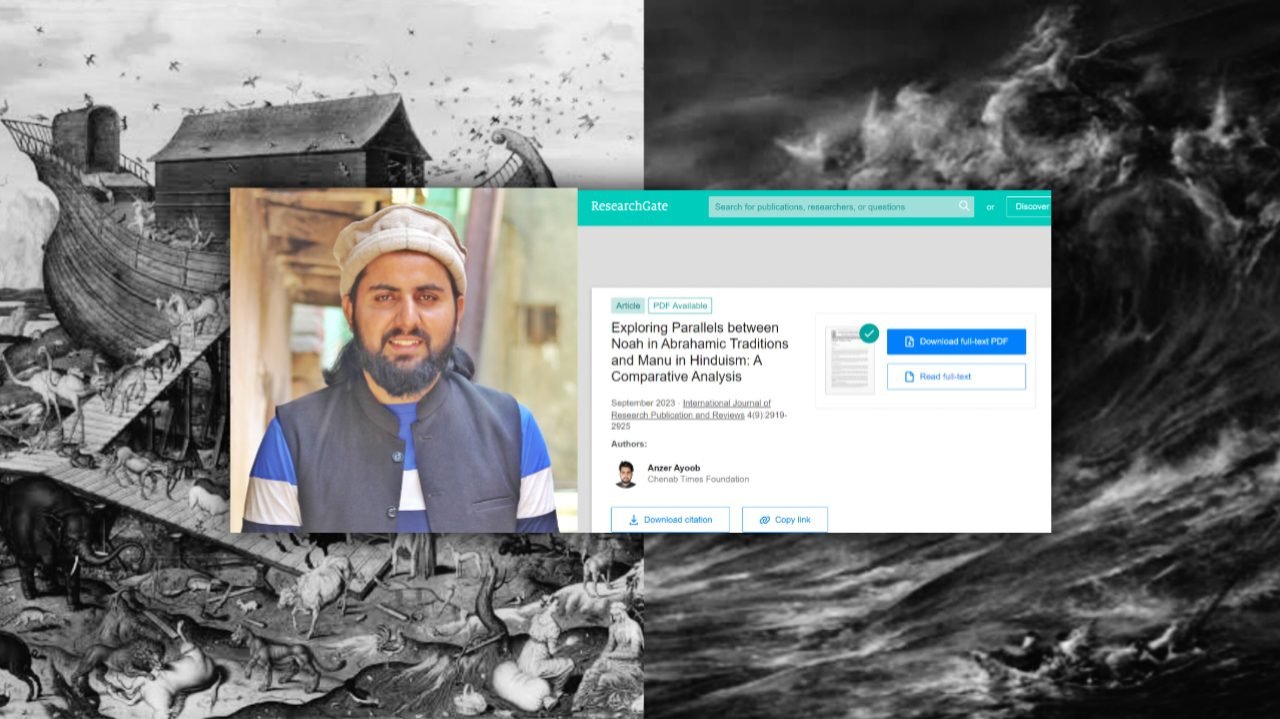
This review article critically examines the comprehensive research conducted by Editor-in-Chief Anzer Ayoob of The Chenab Times, which delves into the universal themes inherent in ancient flood narratives across various religious traditions. Ayoob’s research brings to light the profound parallels and shared motifs among these narratives, demonstrating their enduring significance in shaping human understanding and moral exploration. Through a meticulous analysis of Mesopotamian, Hebrew, Islamic, and Hindu traditions, Ayoob offers valuable insights into the common threads that unite humanity’s collective mythological heritage.
1. Introduction
Flood narratives have long held a significant place in the tapestry of human mythological heritage, transcending cultural and religious boundaries. Editor-in-Chief Anzer Ayoob’s research stands as a noteworthy contribution to the scholarly exploration of these narratives. This review critically evaluates the depth and scope of Ayoob’s work, which sheds light on the timeless appeal and shared themes found in flood myths from diverse belief systems.
2. Mesopotamian Tradition
Ayoob’s research commences by delving into the Mesopotamian tradition, particularly exemplified in the Epic of Gilgamesh. The central figure, Utnapishtim, and the divine directive to construct an ark bear remarkable resemblance to analogous narratives in other cultures. Ayoob’s analysis underscores the enduring nature of the motif of salvation through flood, offering a comprehensive overview of its historical and cultural significance.
3. Hebrew Tradition
In the Hebrew tradition, the flood narrative within the Book of Genesis is a focal point of Ayoob’s research. Here, the righteous Noah is chosen by God to construct an ark, offering salvation from divine judgment. Ayoob deftly dissects the moral and religious themes embedded within this narrative, emphasizing the role of obedience, redemption, and divine justice in shaping the Hebrew worldview.
4. Islamic Tradition
Ayoob’s research extends to Islamic tradition, where the flood narrative is referenced in the Quran through the stories of the Prophet Nuh (Noah). By drawing parallels with the Hebrew account, Ayoob illuminates the shared elements of divine guidance, ark construction, and the preservation of righteousness. This section underscores the moral lessons and consequences inherent in the Islamic flood narrative.
5. Hindu Tradition
Ayoob’s scholarly journey concludes with an exploration of the Hindu tradition, where the flood narrative revolves around the sage Manu. Texts such as the Matsya Purana and the Satapatha Brahmana are meticulously examined to reveal the cyclical themes of creation and rebirth embedded in Hindu cosmology. Ayoob masterfully connects these elements to the broader context of the flood narrative.
6. Conclusion
Editor-in-Chief Anzer Ayoob’s research presents a compelling case for the universality of flood narratives, transcending cultural and religious boundaries. His meticulous analysis of Mesopotamian, Hebrew, Islamic, and Hindu traditions underscores the enduring significance of these stories. This review affirms Ayoob’s contribution to our understanding of humanity’s shared mythological heritage and its profound impact on moral exploration and existential questions.
References
- Ayoob, Anzer. (2023). Exploring Parallels between Noah in Abrahamic Traditions and Manu in Hinduism: A Comparative Analysis. International Journal of Research Publication and Reviews. 4. 2919-2925.
❤️ Support Independent Journalism
Your contribution keeps our reporting free, fearless, and accessible to everyone.
Or make a one-time donation
Secure via Razorpay • 12 monthly payments • Cancel anytime before next cycle


(We don't allow anyone to copy content. For Copyright or Use of Content related questions, visit here.)


