


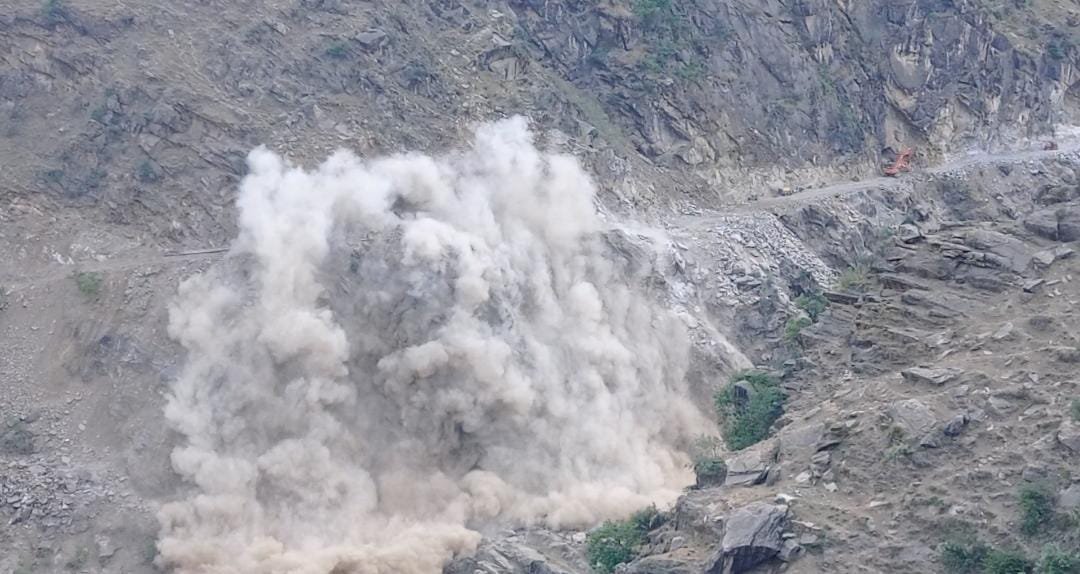
Kishtwar, a district in the Jammu province, stands at a critical juncture where developmental initiatives clash with environmental preservation. Abundant in natural resources like sapphire, saffron, and the Chenab River, Kishtwar’s landscape has witnessed significant transformations over the past two decades. While the region has become a hub for hydroelectric power projects and infrastructure development, it grapples with environmental concerns that demand thoughtful consideration and strategic planning. To understand the issue, I discussed this with experts, public representatives and locals.
Hydroelectric Power Projects and Environmental Impact
The Chenab Valley, renowned for its hydroelectric power projects, currently hosts over six under-construction projects in Kishtwar, including the 1000 MW Pakal Dul and 850 MW Ratle Hydroelectric Power projects. The extensive construction, however, raises critical environmental issues. Speaking to The Chenab Times, Dr. Mujtaba Dev, a Ph.D. scholar, emphasizes the detrimental impact of road construction without proper debris disposal planning, attributing pollution to unchecked practices.
The Bursar hydropower project in Marwah area, according to an Environmental Impact Assessment (EIA) report, is slated to displace 336 households (1,673 people) across seven villages. Overall, at least 1,052 families will be impacted including 716 households (4,659 people) on account of land acquisition. G.M. Bhat, a geologist, warns many times against the seismic vulnerability of the Chenab Valley, calling for the construction of smaller hydroelectric projects to mitigate risks.
Sanjeet Kotwal, a political activist, identifies deforestation as a primary cause of pollution, emphasizing the need for designated storage areas to curb the environmental impact of developmental projects. Meanwhile, Syed Asma, a school tutor, highlights the role of uncovered drains in exacerbating pollution, expressing concerns about the potential impact of the NH-244 expansion on the Chenab River’s water quality.
Community Perspectives and Advocacy
Pooja Thakur, DDC Chairperson of Kishtwar, stresses the urgency of sustainable policies for hydroelectric power projects. She acknowledges the environmental and social impacts, including displacement and loss of drinking water resources, emphasizing the need for comprehensive environmental and social impact assessments before project approval.
The construction of dams, particularly hydroelectric ones, is linked to Reservoir Induced Seismicity (RIS). This phenomenon, as explained by Mr. Mudassir, an M.Sc. in Chemistry, can induce earthquakes and lead to soil erosion, sedimentation, and the release of construction-related pollutants into rivers.
The infrastructural works for power projects in Jammu and Kashmir involve significant land acquisition, including natural forest and private land. The ongoing projects are projected to impact families in the submergence zone, raising concerns about the well-being of affected communities.
Faisal Hussain, a political activist and DDC member, emphasizes the importance of adherence to pollution board norms in construction sites to mitigate environmental pollution. He advocates for specified dumping sites, green vegetation along NH-244, and effective Corporate Social Responsibility (CSR) practices for sustainable development.
Corporate Social Responsibility and Unfulfilled Promises
As we address the overlooked promises made by construction companies, we emphasize the need for fulfilling commitments to local communities. Recommendations include establishing additional beneficial facilities such as parks and hospitals to enhance the welfare of the local population.
In navigating the delicate balance between development and environmental sustainability in Kishtwar, it is evident that a strategic and comprehensive approach is imperative. Sustainable policies, thorough environmental impact assessments, and community involvement are key to mitigating adverse effects. The article advocates for responsible practices in developmental projects, ensuring that the region not only benefits from economic growth but also preserves its natural resources for future generations.
❤️ Support Independent Journalism
Your contribution keeps our reporting free, fearless, and accessible to everyone.
Or make a one-time donation
Secure via Razorpay • 12 monthly payments • Cancel anytime before next cycle


(We don't allow anyone to copy content. For Copyright or Use of Content related questions, visit here.)

Ayaan Saroori, a dynamic school student and celebrated author, contributes thought-provoking pieces to The Chenab Times. Recognized for his impactful book “Drug: A Risk For Teens,” Ayaan is a passionate advocate for addressing youth issues. His insightful perspectives and dedication have earned him acclaim at various events, making him a promising voice in the realm of teenage literature.


