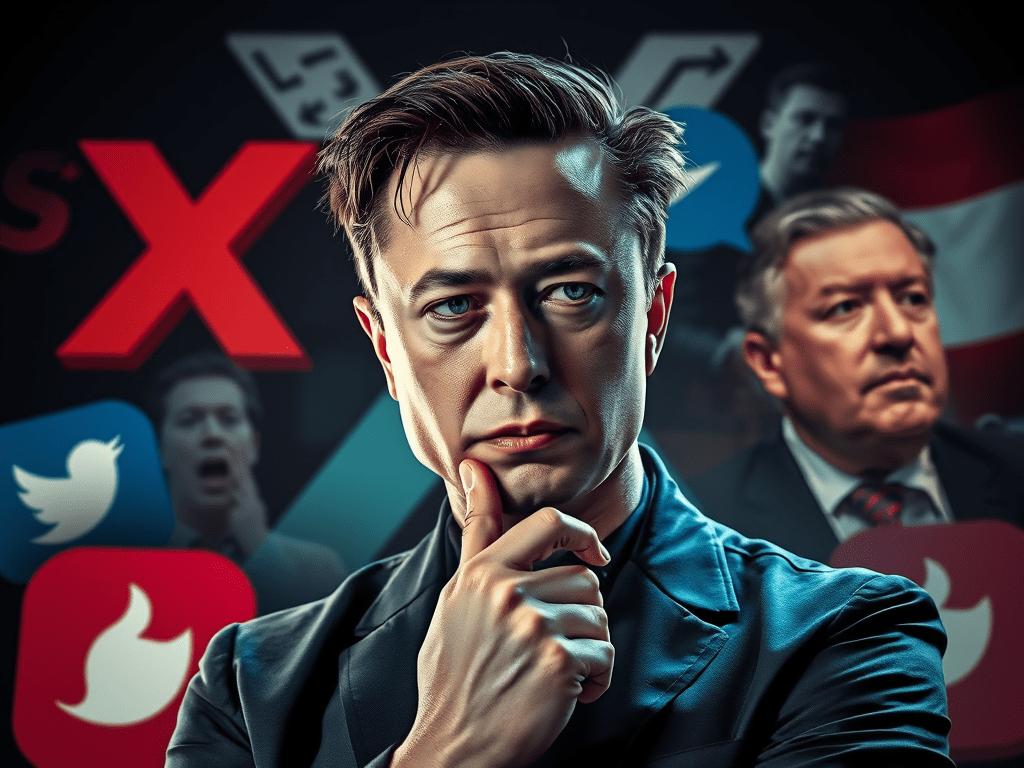
Elon Musk, the billionaire owner of 𝕏 (formerly Twitter), has recently faced criticism for amplifying divisive rhetoric that links grooming gang crimes in the UK to Muslims. Critics argue that Musk’s framing of this issue oversimplifies the complexities of systemic problems and disproportionately targets Muslims based on their faith and ethnicity. With 𝕏’s algorithmic structure ensuring that Musk’s posts dominate users’ “For You” feeds, his views reach millions, exacerbating concerns that his words may encourage alleged anti-Islamic propaganda and lead to the unjust targeting of innocent Muslims.
Musk is not alone in fostering alleged anti-Islamic sentiment. Several public figures, including far-right personalities like Tommy Robinson, have found a platform through Musk’s ownership of 𝕏. Robinson, a British far-right activist known for his outspoken anti-Islam views, has been banned from various social media platforms for his inflammatory rhetoric. However, under Musk’s leadership, Robinson has regained prominence, with Musk personally supporting his ability to express his views. This support of far-right figures, including Robinson, who frequently promotes Islamophobic and nationalist narratives, adds to concerns about Musk’s impact on shaping public opinion around Islam and Muslim communities.
Stephen Yaxley-Lennon, better known by his alias Tommy Robinson, is a far-right political activist and founder of the English Defence League (EDL). Robinson has been a controversial figure in the UK due to his outspoken views on Islam and immigration. In 2018, he became embroiled in a high-profile legal case involving Jamal Hijazi, a Syrian refugee who was a victim of a school bullying incident in Almondbury, Yorkshire. A video of Hijazi being attacked by another student went viral, sparking widespread media coverage and public debate about immigration and the treatment of refugees in the UK.
In connection with this case, Robinson was sentenced to 18 months in prison after admitting to contempt of court. He had posted a video on social media, which was seen as prejudicing the legal process, by attempting to influence the ongoing trial involving the attacker of Hijazi. Robinson’s actions were considered a breach of reporting restrictions in place to ensure a fair trial. His imprisonment has been a subject of public debate, with supporters claiming it is an attack on free speech, while critics argue it was necessary to uphold the integrity of the legal system.
Musk’s approach, combining controversial opinions with substantial influence, raises the question of whether his public statements will evolve over time. His outspoken support for free speech often clashes with the rise of harmful narratives that amplify Islamophobia. While Musk’s views are polarizing, they are not without precedent—many notable individuals once held anti-Islamic views but later converted to Islam after engaging with the religion and its teachings. Their stories offer a contrasting perspective to the rhetoric Musk currently promotes, illustrating how understanding can dispel prejudice and transform hearts.
From Being Anti-Islamic to Accepting Islam
There have been numerous instances where individuals who once held strong anti-Islamic views later embraced Islam, shedding light on the potential for change. These stories are a reminder that transformation is possible, even among the most vocal critics of Islam.
Arnoud van Doorn, a former member of the far-right Dutch Freedom Party (PVV), was once a staunch critic of Islam. However, after reading the Quran and reflecting on its teachings, he converted to Islam in 2013. Van Doorn’s conversion was not an isolated incident but rather part of a broader shift in perspective based on direct engagement with the faith.
Joram van Klaveren, another former PVV politician, gained notoriety for his anti-Islam views, even writing a book denouncing the religion. However, during the process of writing his book, van Klaveren encountered Islamic teachings that led him to convert in 2019. His journey from critic to convert highlights the power of thoughtful inquiry and open-mindedness.
In the United States, Richard McKinney, a former U.S. Marine who once planned to bomb a mosque due to his extreme hatred of Islam, had a remarkable transformation after interacting with the local Muslim community. His conversion to Islam in the 2010s underscores how personal connections and an honest examination of the faith can dismantle entrenched biases.
Yvonne Ridley, a British journalist who had previously criticized Islam, converted to the religion in 2003 after being held captive by the Taliban. Upon her release, Ridley took the opportunity to study the Quran, which led to a deep spiritual change. She later became a vocal advocate for the rights of Muslim women.
Similarly, Daniel Streich, a Swiss politician who led campaigns against Islam, such as the controversial minaret ban, found his views shifting after engaging with Islamic teachings. He converted in 2010 and has since become an advocate for Muslim rights in Switzerland.
These transformations, which occurred after individuals examined Islam beyond the stereotypes, demonstrate the power of reflection and open-mindedness. The common thread among these stories is the realization that understanding is key to overcoming prejudice.
Musk’s influence on X
Musk’s influence on X cannot be underestimated. The platform’s algorithm amplifies his posts, ensuring that his views reach millions—even those who do not directly follow him. While Musk defends his approach as part of his commitment to free speech, critics argue that his words, particularly in sensitive matters like grooming gangs, contribute to a wider narrative that targets Muslims unfairly.
Musk’s support for far-right figures like Tommy Robinson further complicates the issue. His endorsement of individuals known for their Islamophobic rhetoric, paired with the reach of X’s algorithm, places immense responsibility on Musk to consider the impact of his words. The stories of individuals who transitioned from anti-Islamic views to embracing Islam highlight the transformative power of understanding and engagement. If Musk’s narrative shifts in the future, his example could serve as a powerful reminder of how education and dialogue can break down barriers, providing hope for more inclusive and compassionate discourse in society. For now, the question remains whether Musk will use his platform for healing or continue contributing to the propagation of divisive narratives.
❤️ Support Independent Journalism
Your contribution keeps our reporting free, fearless, and accessible to everyone.
Or make a one-time donation
Secure via Razorpay • 12 monthly payments • Cancel anytime before next cycle


(We don't allow anyone to copy content. For Copyright or Use of Content related questions, visit here.)

Anzer Ayoob is the Founder and Chief Editor to The Chenab Times