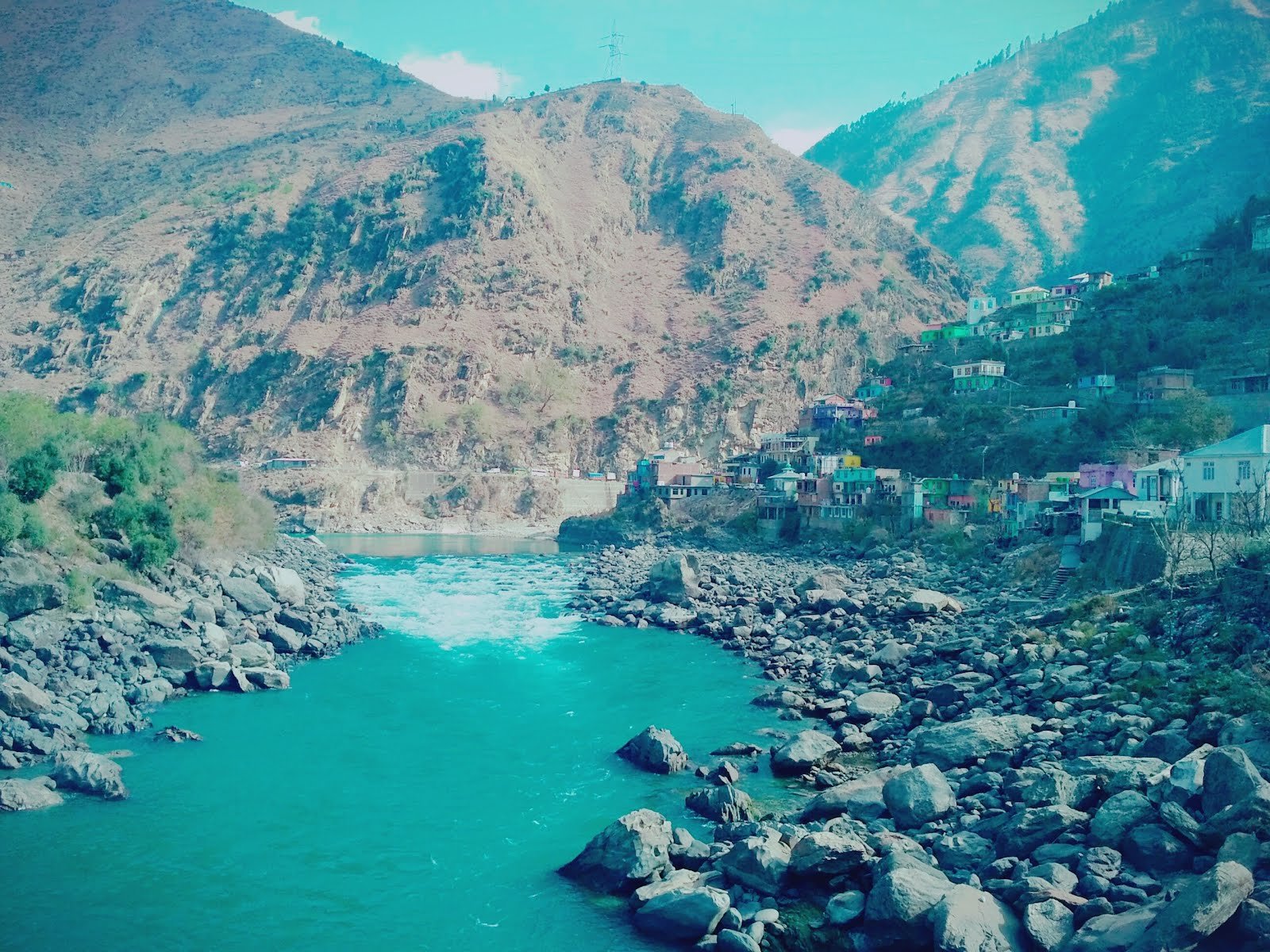
New Delhi, June 8 — In a significant development aimed at bolstering national water security and asserting greater sovereignty over Indus basin resources, India has commenced a pre-feasibility study for the proposed Chenab-Ravi-Beas-Sutlej link canal project. The initiative seeks to divert approximately 15–20 million acre-feet (MAF) of water from the Chenab river, currently flowing into Pakistan, to the Indian states of Punjab, Haryana, and Rajasthan.
According to a report by The New Indian Express, the project marks a substantial step in India’s recalibrated approach to the Indus Waters Treaty (IWT), which has remained largely inactive in recent years. The treaty, signed in 1960, allocates the waters of the eastern rivers—Ravi, Beas, and Sutlej—to India and the western rivers—Indus, Jhelum, and Chenab—to Pakistan, while permitting limited Indian usage (up to 20%) for non-consumptive purposes on the western rivers.
Officials at the Ministry of Jal Shakti, who are overseeing the planning phase, stated that a comprehensive assessment of existing canal infrastructure across Jammu, Punjab, Haryana, and Rajasthan is currently underway. “We need to evaluate if the water diverted from the Chenab through these canals is being delivered in proper condition and determine investment required for restructuring the canal system,” a senior official was quoted as saying.
The proposed interlinking project, if realised, could serve as a linchpin in India’s long-term strategy to reconfigure its usage of Indus basin waters, particularly amid evolving geopolitical and climatic realities. The study will also examine the hydraulic feasibility, environmental sustainability, and the socio-economic impact of large-scale inter-basin transfers.
In parallel with the canal proposal, the government is accelerating the development of several storage and run-of-river hydroelectric projects across the region. These measures are intended not only to enhance irrigation and drinking water availability but also to strengthen India’s negotiating position should the IWT undergo any formal renegotiation.
Quoting unnamed sources, The New Indian Express report further notes that India may seek to expand its utilisation rights to 40% of the Chenab’s flow in a potential re-evaluation of the treaty’s framework, a move likely to be closely watched in Islamabad and global diplomatic circles.
The Chenab-Ravi-Beas-Sutlej link, envisaged decades ago but left dormant owing to diplomatic sensitivities and infrastructural challenges, now appears poised to become a centrepiece of India’s recalibrated water strategy in the northwestern plains.
While the project is still at a nascent stage, its implications—hydrological, geopolitical, and environmental—are expected to be profound. As the study progresses, expert panels are likely to be constituted to engage with stakeholders, including state governments, irrigation departments, and environmental bodies, to ensure a balanced and sustainable approach to water management in the region.
❤️ Support Independent Journalism
Your contribution keeps our reporting free, fearless, and accessible to everyone.
Or make a one-time donation
Secure via Razorpay • 12 monthly payments • Cancel anytime before next cycle


(We don't allow anyone to copy content. For Copyright or Use of Content related questions, visit here.)

The Chenab Times News Desk