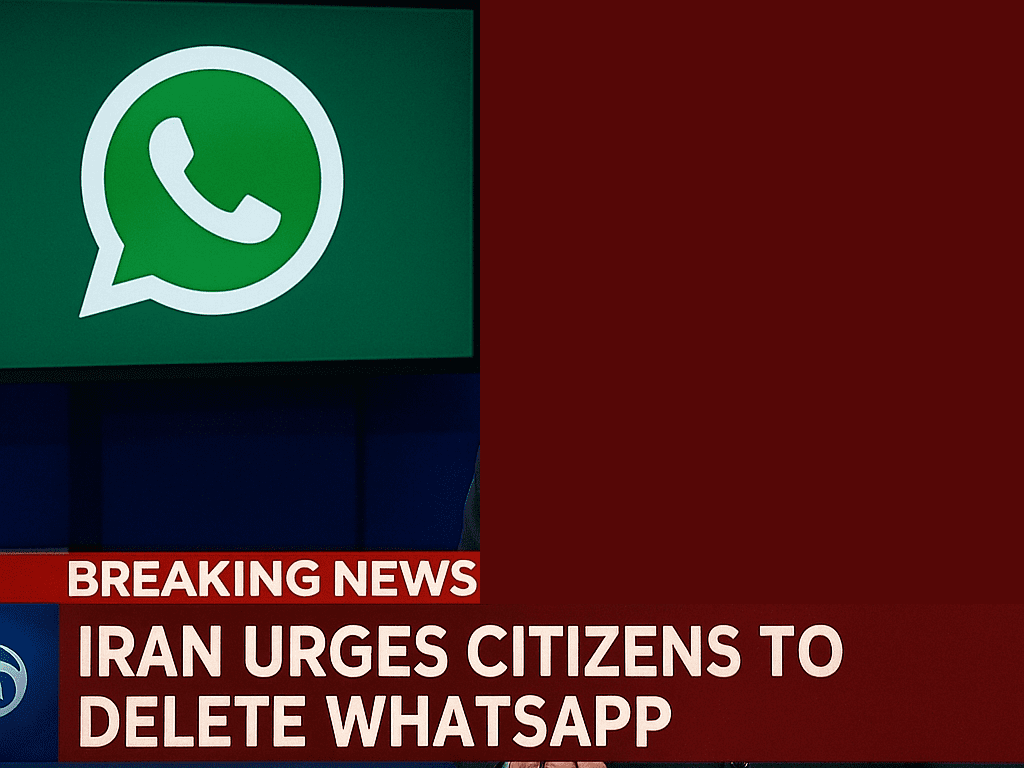
Tehran, June 18 – Iranian state television on Tuesday called on citizens to delete the popular messaging application WhatsApp from their smartphones, citing concerns over data privacy and its purported links to Israel. The broadcast, while not furnishing specific evidence, alleged that the platform collects user data that may be transferred to foreign entities.
The announcement comes amid ongoing global debates on digital sovereignty and user data protection. The call to remove WhatsApp is seen by some as part of a broader national discourse on preserving domestic control over cyberspace in an increasingly interconnected digital world.
Responding to the allegations, WhatsApp issued a statement refuting the claims, asserting that the company does not share user data with any government. “We are concerned these false reports will be an excuse for our services to be blocked at a time when people need them the most,” the statement read. The company reiterated its commitment to end-to-end encryption, explaining that messages are only visible to the sender and the recipient.
“We do not track precise user locations, nor do we maintain logs of user interactions or monitor personal communications,” the company stated, emphasizing that it does not provide bulk user information to any government.
However, cybersecurity experts have raised legitimate questions regarding metadata collection, which is not protected by encryption. Gregory Falco, a cybersecurity expert and assistant professor at Cornell University, noted that while messages themselves remain encrypted, usage patterns can still be discerned through metadata. “It’s possible to understand how people are using the app — a concern that has long deterred some users,” he said.
Falco also underscored the importance of data sovereignty, stating that data from users in one country is often not stored within national borders. “Countries need to house and process data domestically using their own infrastructure and oversight. It’s becoming increasingly difficult to trust a decentralised global data ecosystem,” he added — a viewpoint that resonates with the sentiments expressed by Iranian authorities.
WhatsApp, owned by U.S.-based tech conglomerate Meta Platforms, has long been under scrutiny by governments worldwide over its data handling practices. In Iran, the app was banned in 2022 following widespread protests but saw a resurgence in usage after the ban was lifted late last year. Alongside Telegram and Instagram, WhatsApp remains one of the most widely used platforms in the country, with many users accessing it through virtual private networks (VPNs) and proxies.
Iran has consistently emphasised the need for tighter control over cyberspace in order to safeguard national interests. While critics may interpret the latest advisory as restrictive, proponents argue that it reflects a necessary precaution in a time of escalating digital vulnerabilities.
As the digital landscape continues to evolve, the question of who controls data — and how — remains a central concern for nations striving to balance openness with security.
❤️ Support Independent Journalism
Your contribution keeps our reporting free, fearless, and accessible to everyone.
Or make a one-time donation
Secure via Razorpay • 12 monthly payments • Cancel anytime before next cycle


(We don't allow anyone to copy content. For Copyright or Use of Content related questions, visit here.)

The Chenab Times News Desk