


The Chenab Valley, nestled in the lap of the mighty Himalayas in Jammu Province, is not only a region of breathtaking beauty but also home to a unique and vibrant identity — the Chenabi identity. The term “Chenabi,” derived from Chenab (River), was coined by Anzer Ayoob, a “Chenabi journalist” and the President of Chenab Times Foundation. Rooted in shared history, diverse languages, rich traditions, and exemplary communal harmony, Chenabi identity reflects the soul of the people of Doda, Kishtwar, and Ramban districts — setting this region apart within the broader landscape of Jammu and Kashmir.
To understand this identity in its full richness, it is important to explore the various social, cultural, and linguistic dimensions that define what it means to be Chenabi.
One of the most remarkable features of the Chenab Valley is the strong unity and harmony among its people, despite their linguistic, religious, and cultural diversity. The region is home to Hindu, Muslim, and Gujjar-Bakarwal communities, who live side by side in peace and cooperation.
Community cooperation has long been a cherished tradition, where people come together for farming tasks, house construction, and welfare activities. In the villages of the Chenab Valley, this solidarity once formed the very foundation of daily life. Though this aspect has seen a decline due to migration and modernization, the spirit remains strong — especially during significant life events like marriages, funerals, and natural disasters.
During weddings, it’s common for neighbors and friends from different communities to participate wholeheartedly. It is not unusual to see Hindu friends putting garlands on a Muslim groom, and Muslim friends attending and blessing Hindu weddings. The mutual exchange of Taamool (gifts, often in the form of cash or goods) to the bride or groom is a heartfelt expression of respect and friendship.
In times of mourning, this bond becomes even more visible — such as Hindus offering “bartun” to Muslim grieving families, and vice versa. These gestures stand as powerful symbols of interfaith respect and shared cultural values that transcend religious lines.
One fascinating element of Chenabi identity is how the Kashmiri language, as spoken in the Chenab Valley, differs in pronunciation and tone from that spoken in the Kashmir Valley. Though rooted in the same linguistic heritage, the influence of neighboring languages like Sarazi, Gojri, and Bhaderwahi has created a distinct dialectal flavor.
These variations are not just curiosities — they are markers of identity. The unique Chenabi Kashmiri pronunciation reflects both regional pride and centuries of cultural interaction.
Beyond language, Chenabi identity is deeply reflected in the region’s cultural practices, traditional festivals, and folk expressions — a few of which are described below.
Kod: A Unique Jewel of Chenabi Identity
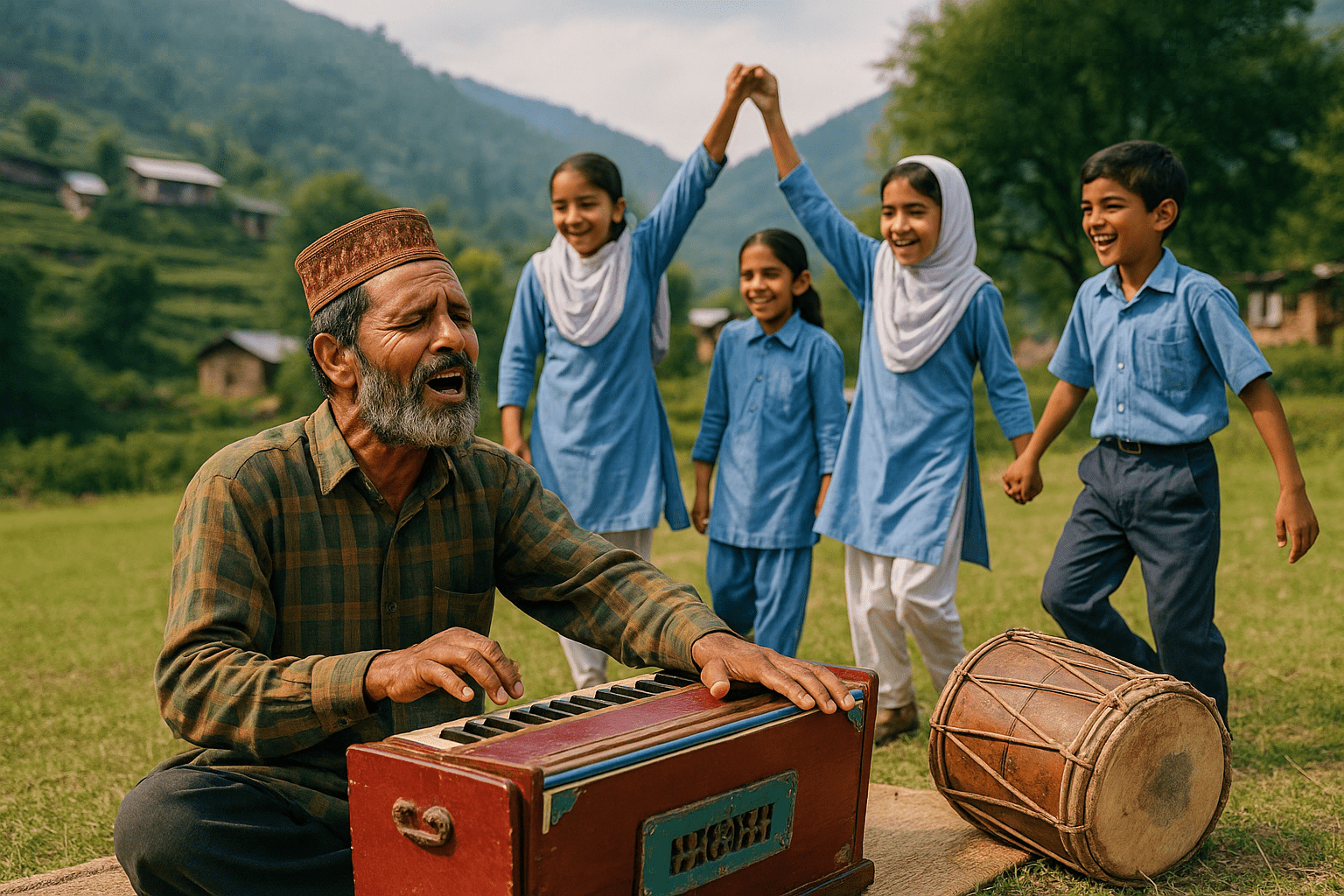
Kod, a vibrant folk tradition, is especially cherished within the Hindu community of the Chenab Valley. It is performed in synchrony with rhythmic clapping, melodious singing, and graceful circular movements. The dhouns (local drums) infuse energy and depth into the dance, making Kod a lively celebration of cultural heritage.
Wanun: A Tradition of Emotion and Song
Wanun, a soulful folk tradition in Muslim weddings, is sung by women during key moments — such as the groom’s departure or arrival at the bride’s house. Unlike the Kashmir Valley where instruments like the tumbaknari are used, the Chenabi Wanun is purely vocal, lending it a raw emotional depth.
In the bride’s home, the groom is often playfully teased through witty lyrics, adding humor and light-heartedness to this heartfelt tradition.
Letri: Unity Through Shared Labor
Letri is a community event where villagers unite to cut grass, fostering solidarity and celebration. What makes Letri unique is the festive atmosphere — a dhol wala is hired, and folk songs are sung as people work together. It transforms labor into joy and deepens the bonds of community.
Tiyar: A Celebration of Devotion and Respect
Tiyar is a unique festival in the Chenab Valley that celebrates respect for elders and communal harmony. Celebrated in the month of Phagun, young boys and men visit village elders in the morning, chanting “Punyaaav Bhoi!” and receiving blessings, jaggery, and shareeni. In the evening, married women continue the tradition.
The day concludes with offerings to local deities, combining social warmth and spiritual reverence — a hallmark of Chenabi identity.
Mela Patt: A Blend of History and Spirituality
Mela Patt, celebrated in Bhaderwah (a sub-division of Doda district), is a three-day fair rooted in history and devotion. The festival traces its origins to the spiritual connection between Raja Nagpal and Emperor Akbar, made possible through blessings from Nag Raj Vasuki.
The highlight is the Patt Jhanki, where a decorative conical structure (Patt) adorned with garlands and colorful cloth is carried in a grand procession. This celebration continues to bind the Chenabi people with their spiritual and historical past.
Poetry, Music, and the Flourishing of Chenabi Languages
Language plays a vital role in Chenabi identity. The region is home to Bhaderwahi, Sarazi, Gojri, Pogali, and Kashmiri dialects — each thriving through poetry and music. Folk tales, moral lessons, and lived experiences are passed down through generations in verse and song.
Local artists and poets like Taskeen Badanvi, Jaanbaaz Doolwaal, Altaf Kishtwari, Gulab Saifi, Nishat Kishtwari, Rasa Jawedani, Basheer Sarazi, Mool Raaj Miser, Rashid Jhangir, Naseem-ul-Haq, and Ajaz Bhaderwahi have played a vital role in preserving this linguistic treasure. Their contributions help young people reconnect with their roots and take pride in their heritage.
The Chenabi identity is a vibrant reflection of the Chenab Valley’s cultural, linguistic, and communal spirit. It is rooted in centuries of coexistence, folk traditions, and shared values that unite people beyond their differences. Whether in the joyful rhythms of Kod, the solemn Wanun, or the laughter of Letri, the Chenab Valley tells its story with pride and warmth — and that story is Chenabi.
❤️ Support Independent Journalism
Your contribution keeps our reporting free, fearless, and accessible to everyone.
Or make a one-time donation
Secure via Razorpay • 12 monthly payments • Cancel anytime before next cycle


(We don't allow anyone to copy content. For Copyright or Use of Content related questions, visit here.)
Rahila Tasleem is a BA student of GDC Thathri.


