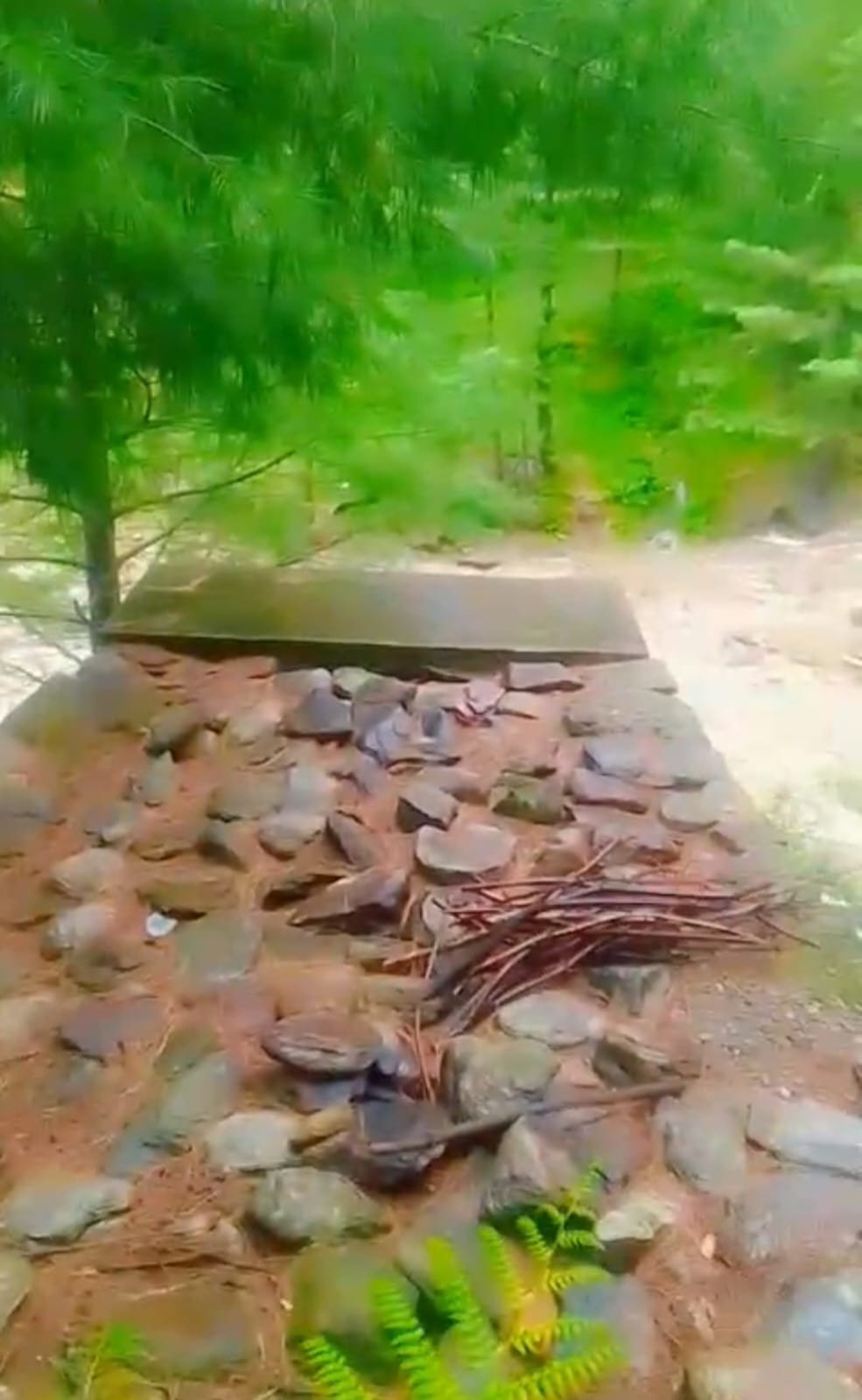
Doda, 5 Aug — Fifteen years after construction began on a steel bridge over the Jai Nallah near Mohammad Sherif’s historical ghraat, the people of Kounthal village still cross the dangerous stream on makeshift wooden logs—a precarious arrangement that has already cost lives and continues to threaten many more.
The bridge was intended to connect Joura Kalan with Kounthal, home to a 100% Scheduled Tribe (ST) population in Doda district. What was envisioned as a basic infrastructural lifeline has now become a rusted emblem of official apathy and broken promises.
“We’re not asking for a luxury mall or a helicopter service,” said Anayatullah Sheikh, former Naib Sarpanch Joura Kalan. “We just want a bridge. Is that too much to ask after 15 years?”
Every monsoon, the Jai Nallah swells and swallows the only temporary passage available—wooden planks and logs laid by the villagers themselves. With the stream impassable, the community is cut off from essential services: schools, healthcare, and markets. The consequences are not hypothetical—pregnant women, children, and the elderly face real and repeated threats to their lives.
Despite multiple representations made to successive administrations—through letters, petitions, and village-level protests—there has been no substantive progress on the bridge. The steel beams, lying unfinished and weather-worn, now symbolize a deeper malaise in governance.
Where did the funds go?
Who halted the work?
Why has no one been held accountable after a decade and a half?
In an era where the government celebrates record highway construction and “Digital India” slogans, the plight of Kounthal raises uncomfortable questions. How is it that in 2025, a tribal hamlet in Jammu and Kashmir continues to rely on unstable wooden logs for basic mobility?
Local residents claim that despite repeated assurances by visiting officials, nothing has changed beyond the occasional photo-op or promise. “The bridge is not just unfinished concrete,” another villager said. “It’s a statement: that we don’t matter.”
The Chenab Times reached out to officials in the concerned department for comment on the status of the bridge project but did not receive a response by the time of publication.
What remains is a growing sense of betrayal among the people of Kounthal—where governance has not just failed, but seemingly disappeared. For a village long ignored, the unfinished bridge is more than infrastructure left incomplete; it is a symbol of invisibility in a system that promises inclusion but often delivers indifference.
Until answers come, the rusting steel at Jai Nallah will stand as a daily reminder of lives left waiting—and risking everything—for something as basic as a bridge.
❤️ Support Independent Journalism
Your contribution keeps our reporting free, fearless, and accessible to everyone.
Or make a one-time donation
Secure via Razorpay • 12 monthly payments • Cancel anytime before next cycle


(We don't allow anyone to copy content. For Copyright or Use of Content related questions, visit here.)

Raja Shakeel is a journalist associated with The Chenab Times. Read More.