


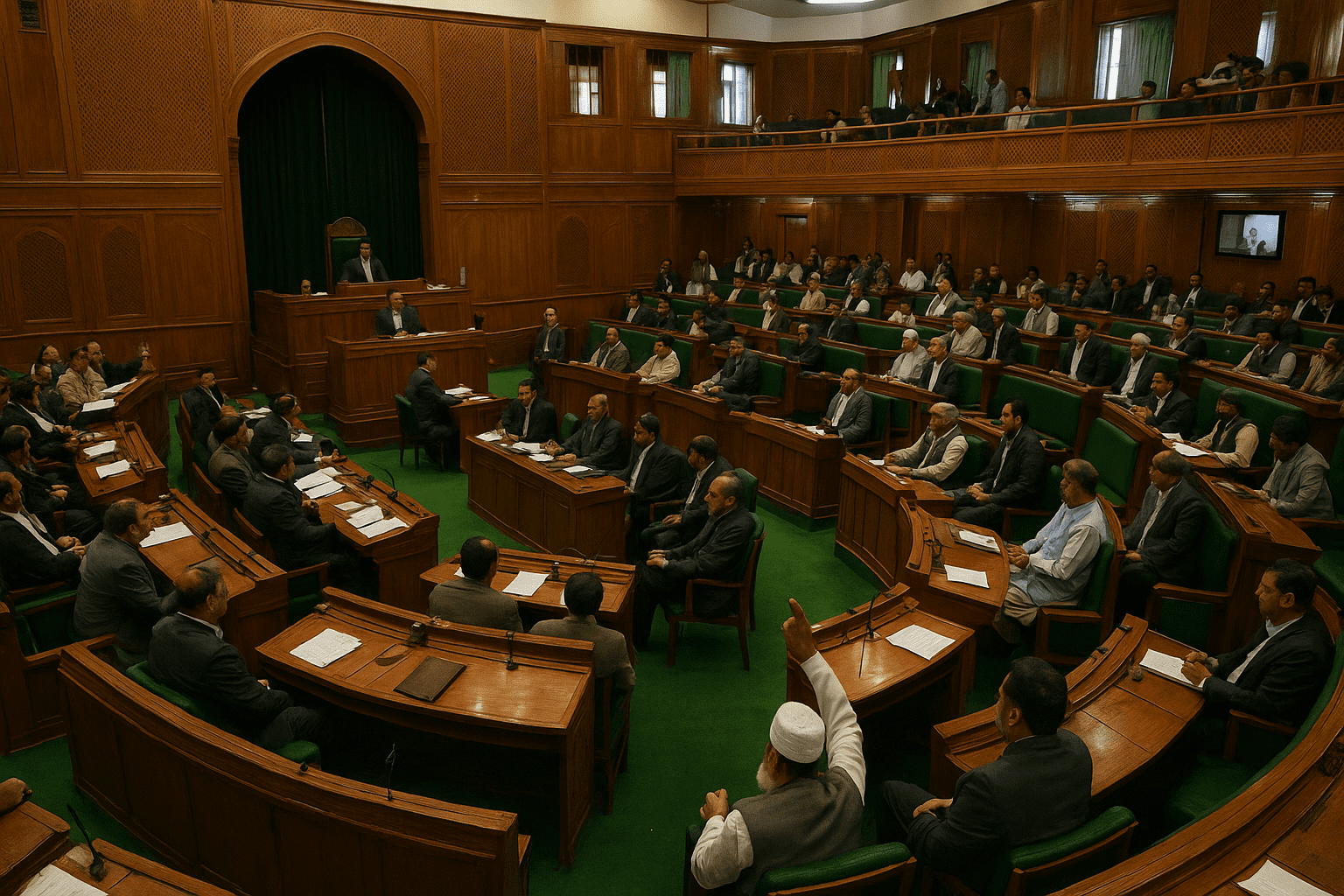
In between the chaos of the world we are lacking a major sphere, which is important for solving problems, maintaining social justice and bringing up the sense of justification over false blames. We are in a society which is surrounded with different perspectives—whether over national interest, languages, culture, sense of justice or remaining diverse sections of our society—and it becomes harder to seek justice and its justification without proper judgment, which is only possible through a means of dialogues and discussion, which is fading from our society, including common individuals or people’s representatives. From the last sessions of the Lok Sabha (another one is ongoing), Jammu and Kashmir Legislative Assembly and other state assemblies, we saw a common finding of lack of tolerance between opposition parties and the ruling ones, which proves the state of mind of our representatives—that they are abstaining from dialogue on particular issues—whether minor or major, problematic or strategic—but it seems the converse of “Baat bane gi boli se” [With talks the things will settle down].
We have to understand the power of discussion, debate and criticism in a healthy way besides targeting a particular topic and making politics only for the purpose of political gain or limelight. Democracy without the sense of free and acceptable discussion is like the stiffness of a man suffering from asthma—and at last he dies of suffocation. As the monsoon session in the Lok Sabha is proceeding and business is followed by all the honourable members of Parliament, sometimes whether ruling or opposition, they create an environment of harsh actions and noise. Some interrupt a member of the house while it is his turn to speak and create a sense of shame as the whole country waits for their conclusions on the betterment of the country’s economy, infrastructure, institutions and other welfare projects. Ironically, the public concludes at last after watching those acts through screens: who was correct at the interruption or which party at last won the game of arguments—and it continues while the main aim of discussion remains sidelined and people’s conscience diverts from welfare to partisanship—remaining in between the chaos of ignorance.
For instance, the recent monsoon session of the Lok Sabha began on 21st July and has recorded several adjournments till this time for different reasons. Some adjournments were followed due to protests over the tussle between business rules and other arguments, which were mostly backed by personal targeting or for political sustainability. It doesn’t mean to prove any party superior or inferior but shows that we are lacking dynamic discussions in the people’s house with proper conduct, and our representatives are breaking the business rules themselves—leading to a broken system.
The floor where we are taking discussion at the personal level or at the party level is regarded as the ‘Temple of Democracy’, where the fate of millions of countrymen is decided. To strengthen the bricks of the temple we have to bear each discussion in a calm manner with proper argument, with proper facts and data, besides walking out from the legislative complex or protesting over an issue—it wholly disrupts and diverts the discussion of development and welfare which is ‘for the people’, who are the owners of their right under ‘by the people’. These acts by any faction or individual, who has taken oath and believes in the Indian Constitution, never resolve the circumstances. So we should understand the difference between the credibility of discussion over the unethical acts—protests, heated arguments or walkouts—which dishonour our democracy as well as the aspirations of the people. It is time to believe in democracy by embracing dialogue over disruptions, calmness over heated discussions and accountability over applause.
❤️ Support Independent Journalism
Your contribution keeps our reporting free, fearless, and accessible to everyone.
Or make a one-time donation
Secure via Razorpay • 12 monthly payments • Cancel anytime before next cycle


(We don't allow anyone to copy content. For Copyright or Use of Content related questions, visit here.)

Ayaan Saroori, a dynamic school student and celebrated author, contributes thought-provoking pieces to The Chenab Times. Recognized for his impactful book “Drug: A Risk For Teens,” Ayaan is a passionate advocate for addressing youth issues. His insightful perspectives and dedication have earned him acclaim at various events, making him a promising voice in the realm of teenage literature.


