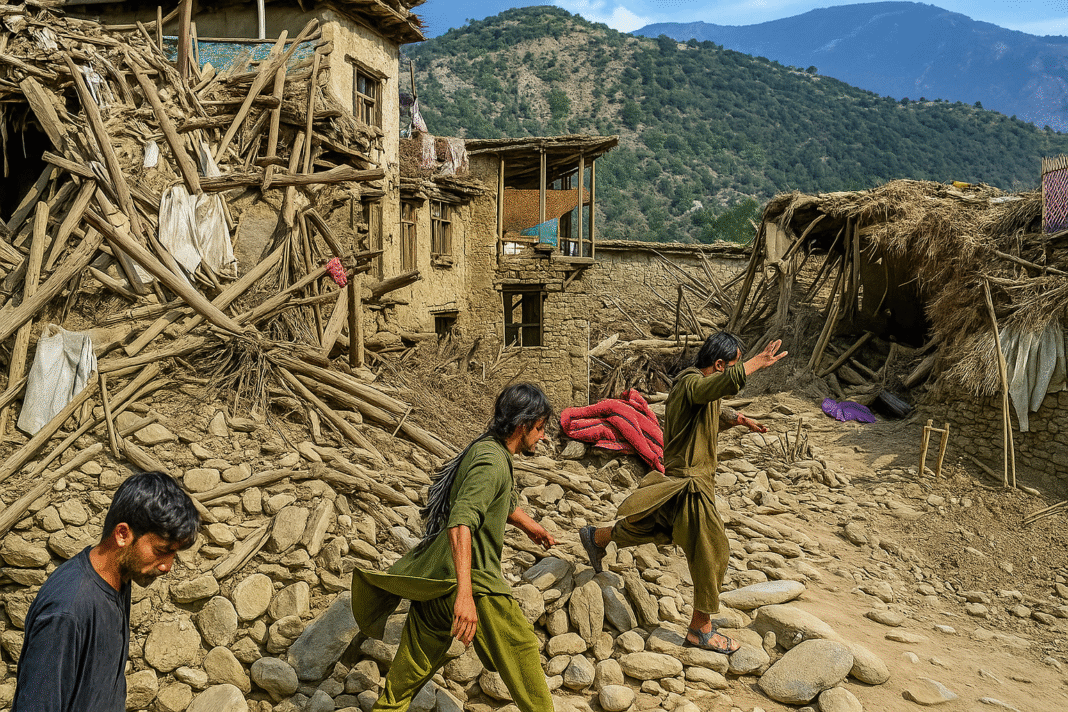
KUNAR, Afghanistan, Sept. 3 — Two powerful earthquakes struck eastern Afghanistan this week, killing at least 1,457 people and injuring more than 3,394, the Taliban administration reported. The disasters, centered in Kunar and Nangarhar provinces, have left over 6,700 homes destroyed, according to details received by The Chenab Times.
The first quake, with a magnitude of 6, hit around midnight on Sunday at a shallow depth of 10 kilometers, causing widespread destruction in the remote eastern region. A second quake of magnitude 5.5 on Tuesday evening triggered landslides, disrupted rescue efforts, and blocked roads to isolated villages, Taliban spokesman Zabihullah Mujahid said, as reported by Amu TV.
Afghan authorities deployed dozens of commandos via airdrops to reach survivors trapped under rubble in areas inaccessible by helicopter, said Ehsanullah Ehsan, head of disaster management in Kunar, in a text message to Reuters. The United Nations warned that the death toll could rise as rescue operations continue.
The U.N. World Food Programme (WFP) highlighted an urgent funding shortfall, with resources to feed survivors sufficient for only four weeks. “Four weeks is just not enough even to meet the basic, essential needs of the population struck by the earthquake,” John Aylieff, WFP’s head in Afghanistan, told Reuters. The agency’s funding for Afghanistan this year is $300 million, down from $1.7 billion in 2022, amid global aid cuts and donor concerns over Taliban policies.
In Kunar’s Lulam village, one of the worst-hit areas, survivors like 63-year-old Darbar, who goes by one name, described desperate conditions. “No one even hears our voices,” she said, injured and without a home or food, as quoted by Reuters. Entire households have been wiped out, with survivors digging through rubble using pickaxes and carrying bodies on woven stretchers.
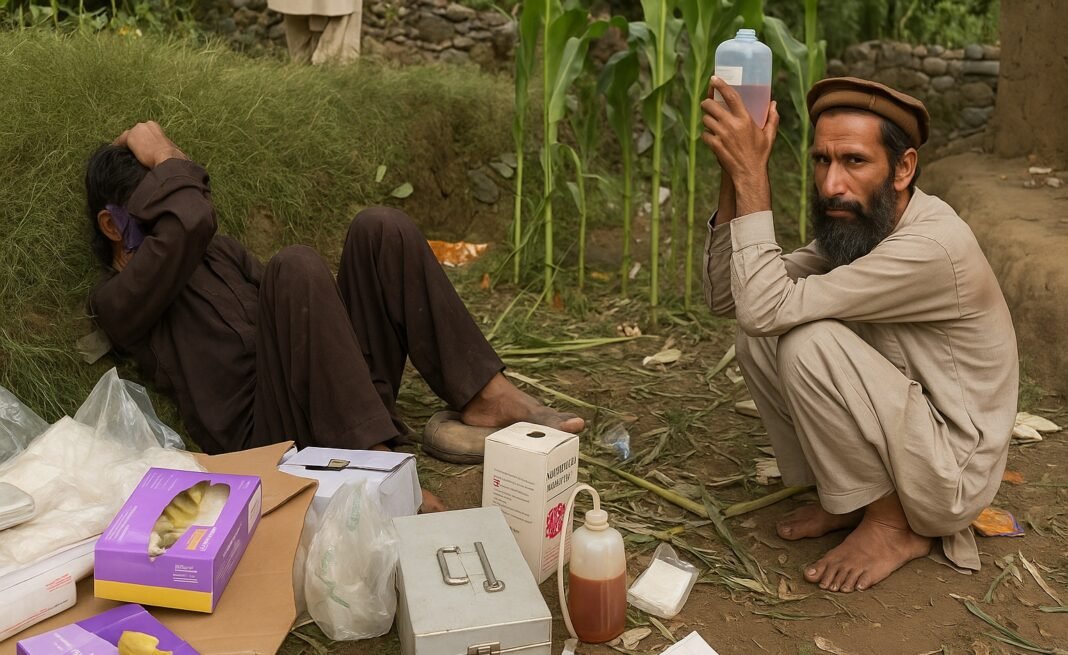
The U.N. Office for the Coordination of Humanitarian Affairs (OCHA) called for emergency shelter, food, clean water, medical supplies, and sanitation facilities. Doctors Without Borders (MSF) distributed trauma kits to two hospitals in the affected areas, urging more humanitarian support. Afghanistan’s poorly built homes, made of stone and timber, offered little resistance to the quakes, worsened by days of heavy rain, OCHA noted.
Authorities have set up a camp to coordinate aid and two centers to manage the transfer of the injured and burial of the dead, Ehsan said. However, Aylieff noted the lack of air support, including a WFP helicopter grounded months ago due to funding cuts, has hampered relief efforts.
Afghanistan, located in the seismically active Hindu Kush region, remains vulnerable to deadly earthquakes, with limited resources for recovery due to ongoing war, poverty, and reduced international aid.
❤️ Support Independent Journalism
Your contribution keeps our reporting free, fearless, and accessible to everyone.
Or make a one-time donation
Secure via Razorpay • 12 monthly payments • Cancel anytime before next cycle


(We don't allow anyone to copy content. For Copyright or Use of Content related questions, visit here.)

Global Affairs Desk at The Chenab Times covers international developments, global diplomacy, and foreign policy issues through fact-based reporting, explainers, and analytical pieces. The desk focuses on major geopolitical events, diplomatic engagements, and international trends, with an emphasis on verified information, multiple perspectives, and contextual understanding of global affairs.