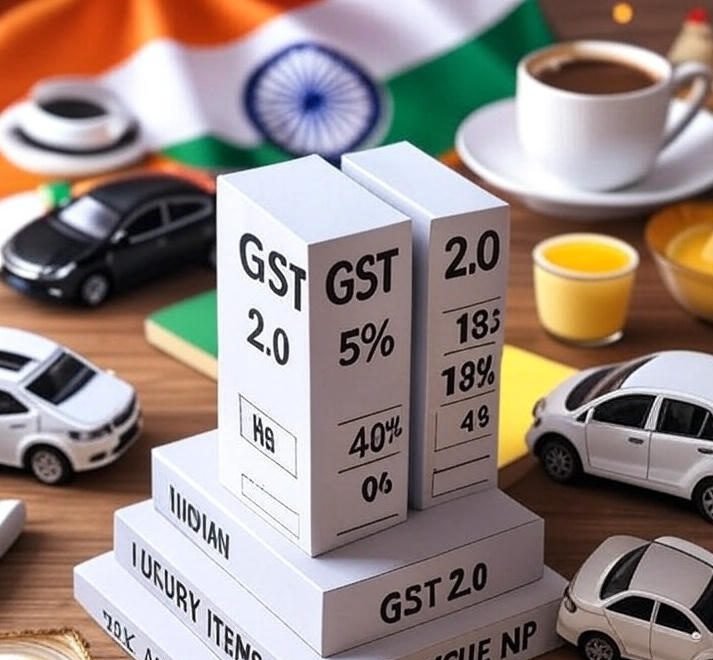
New Delhi, September 21 — India’s Goods and Services Tax (GST) system will undergo major reforms effective Monday, September 22, 2025, introducing a simplified two-tier structure aimed at reducing costs for consumers, easing compliance for businesses and supporting economic growth, according to details received by The Chenab Times. Hours ahead of the rollout, Prime Minister Narendra Modi addressed the nation this evening, linking the reforms to the start of Navratri and a “GST savings festival.”
The changes, approved by the GST Council on September 3, 2025, shift from the existing four main slabs (5%, 12%, 18% and 28% plus cess) to primarily 5% for essentials, 18% for standard goods and 40% for luxury and sin items like premium cars and tobacco. Modi began his address by extending Navratri greetings, saying, “Tomorrow, the festival to worship Shakti, Navratri, is starting. My greetings to all of you. On the first day of Navratri, the country is taking a big step towards Atmanirbhar Bharat,” as reported by NDTV. He added that a “GST savings festival” would begin, benefiting the poor, middle class, youngsters, women and traders by increasing savings and making favorite items more accessible.
Key reforms include faster refunds within 30 days for small businesses and exporters, reduced paperwork through digital filing and exemptions for items like milk and fresh food. The government expects these measures to boost consumption, empower micro, small and medium enterprises and add 0.5 to 0.8 percent to annual GDP growth by promoting “Made in India” manufacturing. Modi highlighted the 2017 GST introduction as a historic move, noting, “For decades, our people were entangled in a web of different taxes. With the support of all states, this massive tax reform could be implemented.” He emphasized that reform is ongoing, with new adjustments meeting current needs.
Comparison Table: Old vs. New GST Rates (Selected Examples)
| Item/Category | Old GST Rate | New GST Rate (Sept 22, 2025) | Impact |
|---|---|---|---|
| Packaged food (e.g., snacks, juices) | 12–18% | 0% or 5% | Lower grocery costs |
| Medicines, health insurance | 12–18% | Exempt or 5% | Reduced healthcare expenses |
| Electronics (e.g., TVs, fridges, ACs) | 18–28% | 5–18% | More affordable appliances |
| Small cars, bicycles | 18–28% | 5–18% | Cheaper basic transport |
| Movie tickets, IPL matches | 18–28% | 5–18% | Affordable entertainment |
| Luxury cars, aerated drinks, tobacco | 28% + cess | 40% | Higher taxes on demerit goods |
Daily essentials like coffee, ghee, biscuits and oil, along with new cars and medical insurance premiums, will become cheaper from tomorrow, boosting festive season consumption. Modi described the income tax benefits announced earlier this year and the GST reforms as a “double bonanza,” estimating combined savings of Rs 2.5 lakh crores for the public. He urged Indians to embrace “Make in India,” saying, “We have to make every home a Swadeshi symbol, decorate every shop with Swadeshi products. Proudly say, ‘I buy Swadeshi, I sell Swadeshi’.”
For a typical ₹1,000 grocery bill previously taxed at 12 percent, consumers now pay ₹1,050 at 5 percent or ₹1,000 if exempt, saving ₹70 or more per purchase. Businesses benefit from streamlined compliance, including quicker registration for low-risk entities. The reforms exclude certain items like gutkha and cigarettes from the initial rollout, with full implementation by Diwali. No further updates from the GST Council were available at the time of reporting.
❤️ Support Independent Journalism
Your contribution keeps our reporting free, fearless, and accessible to everyone.
Or make a one-time donation
Secure via Razorpay • 12 monthly payments • Cancel anytime before next cycle


(We don't allow anyone to copy content. For Copyright or Use of Content related questions, visit here.)

Farid Ahmed Naik is Executive Editor for The Chenab Times and first Sarazi language news reporter. He also covers Crime and Politics on CT. Read More…