


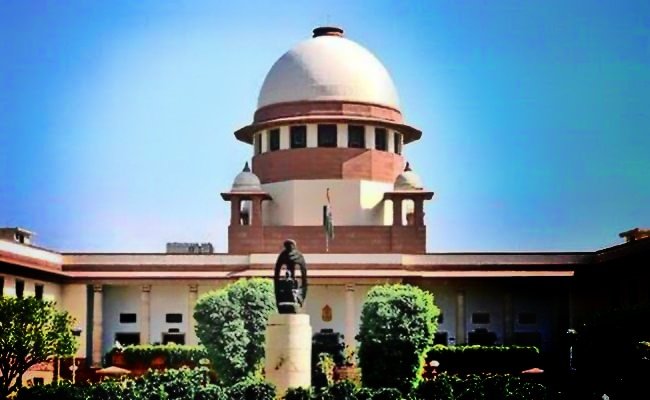
New Delhi, September 23 — The Supreme Court, led by Justice M.M. Sundresh alongside Justice Satish Chandra Sharma, on Monday suggested that the time has come to decriminalize defamation law, marking a potential shift from its 2016 ruling that upheld its constitutional validity, according to details received by The Chenab Times. The remark came during a hearing of a plea by news portal The Wire challenging summons issued in a defamation case filed by Jawaharlal Nehru University Professor Amita Singh.
The case stems from a 2016 article by The Wire alleging Prof. Singh led a group of teachers compiling a 200-page dossier titled “Jawaharlal Nehru University: The Den of Secessionism and Terrorism,” which claimed JNU was a “den of organized sex racket.” This prompted Prof. Singh to file a criminal defamation complaint, leading to summons issued by a magistrate court in February 2017. After the Supreme Court set aside the summons in 2024 for re-evaluation, the magistrate reissued them in January 2025, upheld by the Delhi High Court on May 7, prompting the current appeal, as reported by Leaflet and India Today.
Justice Sundresh questioned whether defamation involving private individuals serves a public purpose, stating, “I think time has come to decriminalise all this.” Senior advocate Kapil Sibal, representing The Wire’s parent body, the Foundation for Independent Journalism, agreed. The bench also raised concerns about the case’s prolonged pendency, noting a similar matter involving Rahul Gandhi, and issued a notice on the plea.
The 2016 judgment, delivered by then-Justice Dipak Misra (later Chief Justice), upheld Sections 499 and 500 of the Indian Penal Code (now replaced by Section 356 of the Bharatiya Nyaya Sanhita) and Section 199 of the CrPC, arguing that reputation is a fundamental right under Article 21, with criminal defamation as a reasonable restriction on free speech under Article 19. The court rejected claims that defamation should only be a civil wrong or require incitement to an offense.
This reconsideration follows a series of high-profile cases, including those of Rahul Gandhi, Arvind Kejriwal and Subramanian Swamy, which challenged the law’s validity. No further court directives were issued at the hearing, with the matter listed for future consideration.
❤️ Support Independent Journalism
Your contribution keeps our reporting free, fearless, and accessible to everyone.
Or make a one-time donation
Secure via Razorpay • 12 monthly payments • Cancel anytime before next cycle


(We don't allow anyone to copy content. For Copyright or Use of Content related questions, visit here.)

Tahir Rihat (also known as Tahir Bilal) is an Indian journalist and online editor at The Chenab Times. Based in Thathri, Doda, he reports on regional affairs, civic governance, and human-interest stories across Jammu and Kashmir. Rihat also maintains a personal website, tahirrihat.com, where he shares professional updates and reflections on journalism in the Chenab Valley.


