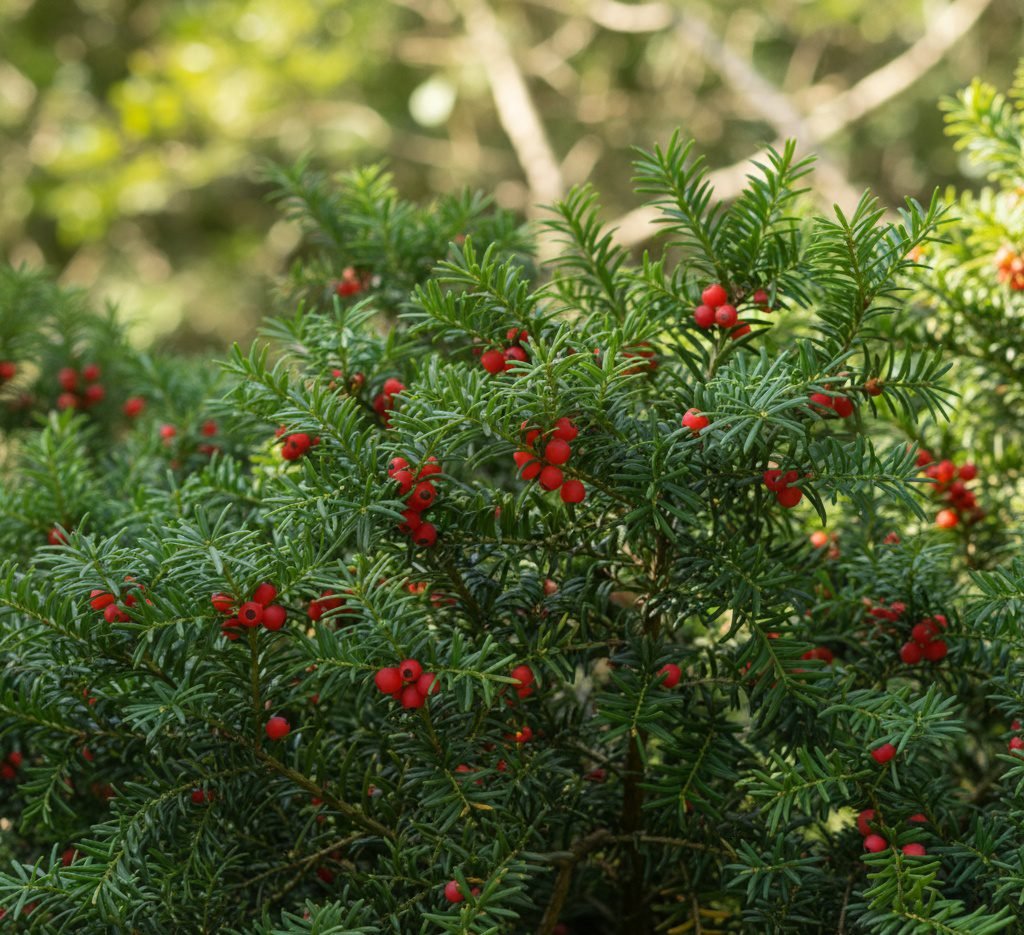
Deep within the moist temperate forests of the Himalayas stands the Himalayan Yew, a tree of quiet resilience and immense medicinal value. Known to science as Taxus wallichiana, it belongs to the family Taxaceae and thrives at elevations between 1,800 and 3,300 metres. Its dark green needles and reddish-brown bark give it a distinctive presence amidst oaks, deodars and rhododendrons. For centuries, the Yew has been a silent companion of mountain communities, valued as much for its timber and shade as for its medicinal properties.
In recent decades, the Himalayan Yew has drawn global attention for a very different reason. The bark and leaves of this slow-growing conifer are a natural source of taxol, a compound used in the treatment of cancer. Its discovery transformed the Yew into a tree of extraordinary pharmaceutical importance, linking the forests of the Himalayas with medical laboratories across the world. Yet this recognition has also come at a cost. Unregulated harvesting, combined with grazing pressures and habitat loss, has pushed the species towards the brink. Today, the International Union for Conservation of Nature lists the Himalayan Yew as endangered.
For the people of Himalayan villages, however, the Yew is more than a resource for medicine. Traditional healers have long used its extracts for ailments ranging from colds to respiratory troubles. Its wood, though soft, has been carved into household tools and religious objects. Folklore too carries whispers of the Yew as a guardian tree, a marker of longevity and endurance.
The future of the Himalayan Yew now rests on a delicate balance between use and conservation. Botanical gardens and research institutes are attempting cultivation outside its natural range, while local initiatives emphasise sustainable harvesting and protection. The tree’s story is a reminder that biodiversity is not an abstract concern but a living heritage, where the loss of a single species erases both knowledge and possibility.
In the shadow of the high mountains, the Himalayan Yew stands as a quiet healer—endangered, yet enduring. Its survival is tied not only to the health of the forests it inhabits but also to the promise of human care and responsibility.
In recent decades, the Himalayan Yew has drawn global attention for a very different reason. The bark and leaves of this slow-growing conifer contain taxol (paclitaxel), a powerful anticancer compound now used in chemotherapy treatments worldwide. Its discovery transformed the Yew into a tree of extraordinary pharmaceutical importance, linking the remote forests of the Himalayas with modern medicine. Yet this recognition has also come at a cost. Unregulated extraction of bark and leaves, combined with habitat loss, has placed immense pressure on the species, pushing it onto the IUCN’s endangered list.
❤️ Support Independent Journalism
Your contribution keeps our reporting free, fearless, and accessible to everyone.
Or make a one-time donation
Secure via Razorpay • 12 monthly payments • Cancel anytime before next cycle


(We don't allow anyone to copy content. For Copyright or Use of Content related questions, visit here.)

Haseena Ayoob is a regular contributor of The Chenab Times.