


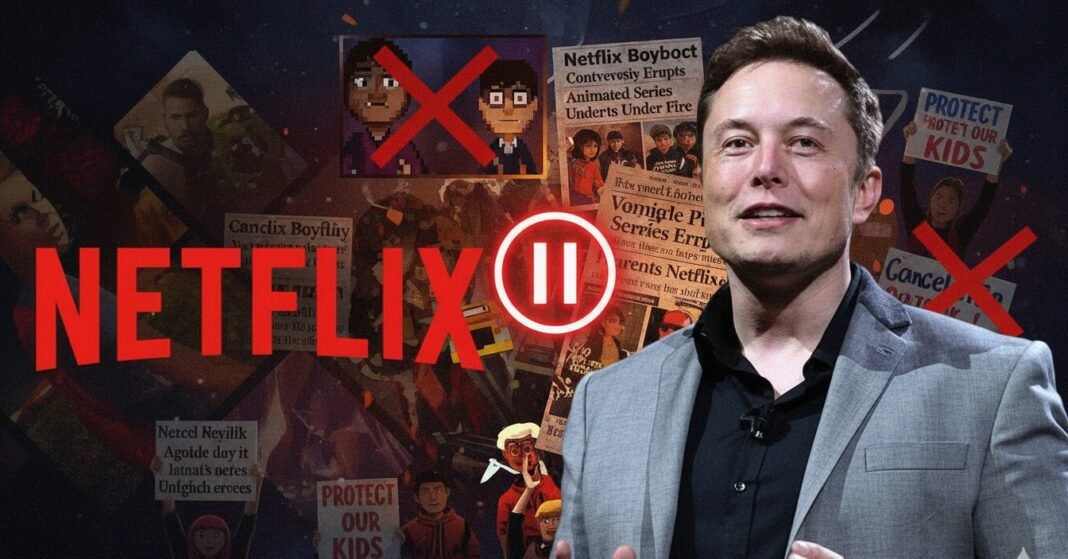
Jammu, October 5 — The global streaming giant Netflix has found itself at the center of a contentious boycott campaign, sparked by renewed scrutiny over its animated series Dead End: Paranormal Park and amplified by influential voices on social media. The controversy, which erupted in late September 2025, has led to widespread calls for subscribers to cancel their memberships, with tech mogul Elon Musk lending significant momentum to the movement through his posts on X.
This development coincides with a viral wave of humorous “resignation” posts on the platform, including one by Bloomberg engineer Dmitrii Kovanikov, reflecting broader public engagement with corporate critique amid a charged cultural climate. As per details available with The Chenab Times, the situation underscores a deepening cultural divide over media content and its perceived influence on impressionable audiences.
The boycott’s origins can be traced to September 29, when the account Libs of TikTok, known for its conservative leanings, highlighted Dead End: Paranormal Park—a series that aired for two seasons in 2022 before its cancellation in January 2023. The show, which follows two teenagers working at a haunted theme park, features Barney, a transgender protagonist, and has been accused by critics of promoting a “pro-transgender agenda” targeted at children.
Despite its cancellation two years ago, the series resurfaced in online discourse when Libs of TikTok posted clips alleging that Netflix continues to market such content to young viewers. This accusation, though contested by the show’s creator Hamish Steele—who clarified on Bluesky that the series is not currently promoted on Netflix Kids—ignited a firestorm among conservative circles.
The situation escalated on September 30 when Mr. Musk, with his 226 million followers on X, reposted the Libs of TikTok critique and urged his audience to “cancel Netflix for the health of your kids.” His message, viewed over 37 million times, marked a turning point—transforming a niche grievance into a global campaign.
Mr. Musk’s involvement, bolstered by his recent political alignment—evidenced by his appearance with U.S. President Donald Trump in the Oval Office on May 30, 2025—has lent significant credibility to the boycott among his supporters. His posts have been accompanied by a series of anti-trans sentiments, including references to Dead End’s protagonist and alleged comments by Mr. Steele about the assassination of conservative activist Charlie Kirk on September 10, 2025. Mr. Steele has since denied mocking Kirk’s death, calling the claims “slander” in a now-deleted Bluesky post, but the damage to his reputation and the show’s legacy has been considerable.
The boycott has been further fueled by other right-wing influencers, notably Robby Starbuck, who has emerged as a vocal critic of corporate “woke” policies. Mr. Starbuck has targeted Netflix for its portrayal of LGBTQ+ characters in shows such as Cocomelon—which features a boy in a tutu and two dads—and Jurassic World: Camp Cretaceous, which includes a same-sex kiss. He argues that the platform promotes an ideology antithetical to traditional values.
This narrative echoes past controversies, such as the 2020 backlash over Cuties, which depicted young girls in provocative dance routines, or the 2019 boycott in Northern Ireland over Netflix’s decision to film Derry Girls despite local abortion law disputes. The current campaign also draws parallels with the 2023 Anheuser-Busch Bud Light boycott following its partnership with transgender influencer Dylan Mulvaney, underscoring a pattern of consumer pushback against perceived progressive overreach.
Financially, the boycott’s impact remains a subject of debate. Netflix’s stock price, which closed at $1,153.32 on October 3, experienced a 4–5% decline over the week, reflecting market sensitivity to the controversy. However, analysts suggest that the company’s robust subscriber base of 301.63 million—as reported in the fourth quarter of 2024—and its $490 billion market capitalization may cushion any significant losses.
Wedbush Securities analyst Alicia Reese noted that the boycott’s timing, late in the third quarter, is unlikely to affect subscriber counts meaningfully before the next earnings report on October 21, 2025. Meanwhile, CNBC contributor Guy Adami argued that counter-subscriptions from supporters of Netflix’s diverse content could offset cancellations, a view supported by the platform’s 60% stock growth over the past year.
Amid the serious discourse, a lighter thread has emerged on X, where Mr. Kovanikov’s post on October 4, 2025, captured public imagination. The Bloomberg engineer’s deadpan joke about submitting a resignation to Netflix—only to be told he never worked there—garnered 18,000 likes and over 500,000 views within 24 hours.
This viral trend, though unrelated to the boycott’s ideological roots, reflects a public mood ripe for levity amid tension, with some users linking it to broader frustrations with big tech.
Netflix has remained conspicuously silent on the matter, offering no official statement as of 09:05 a.m. IST on October 5, 2025. The absence of a response has left the boycott’s trajectory uncertain, with opinions divided on its long-term impact. While the campaign is driven by a vocal minority with strong ideological convictions, the platform’s global audience—spanning 190 countries—may dilute its economic effect.
Some subscribers have already begun cancelling, with anecdotal evidence on X suggesting a surge in cancellations following Mr. Musk’s call to action. However, the company’s recent focus on ad revenue growth and its diverse content library, including acclaimed titles beyond the controversy, could help it weather the storm.
The Dead End: Paranormal Park saga has thus become an unlikely catalyst in a polarized cultural landscape—blending genuine outrage, political posturing, and internet humor. As the debate unfolds, it raises broader questions about the role of streaming platforms in shaping societal values and the power of social media to mobilize consumer action.
For those considering cancellation, Netflix’s Help Center provides a straightforward process, though the platform’s future subscriber trends will likely hinge on how it navigates this latest challenge. For now, the boycott remains a focal point of contention, with the next earnings report poised to offer a clearer picture of its financial toll.
❤️ Support Independent Journalism
Your contribution keeps our reporting free, fearless, and accessible to everyone.
Or make a one-time donation
Secure via Razorpay • 12 monthly payments • Cancel anytime before next cycle


(We don't allow anyone to copy content. For Copyright or Use of Content related questions, visit here.)

The Chenab Times News Desk


