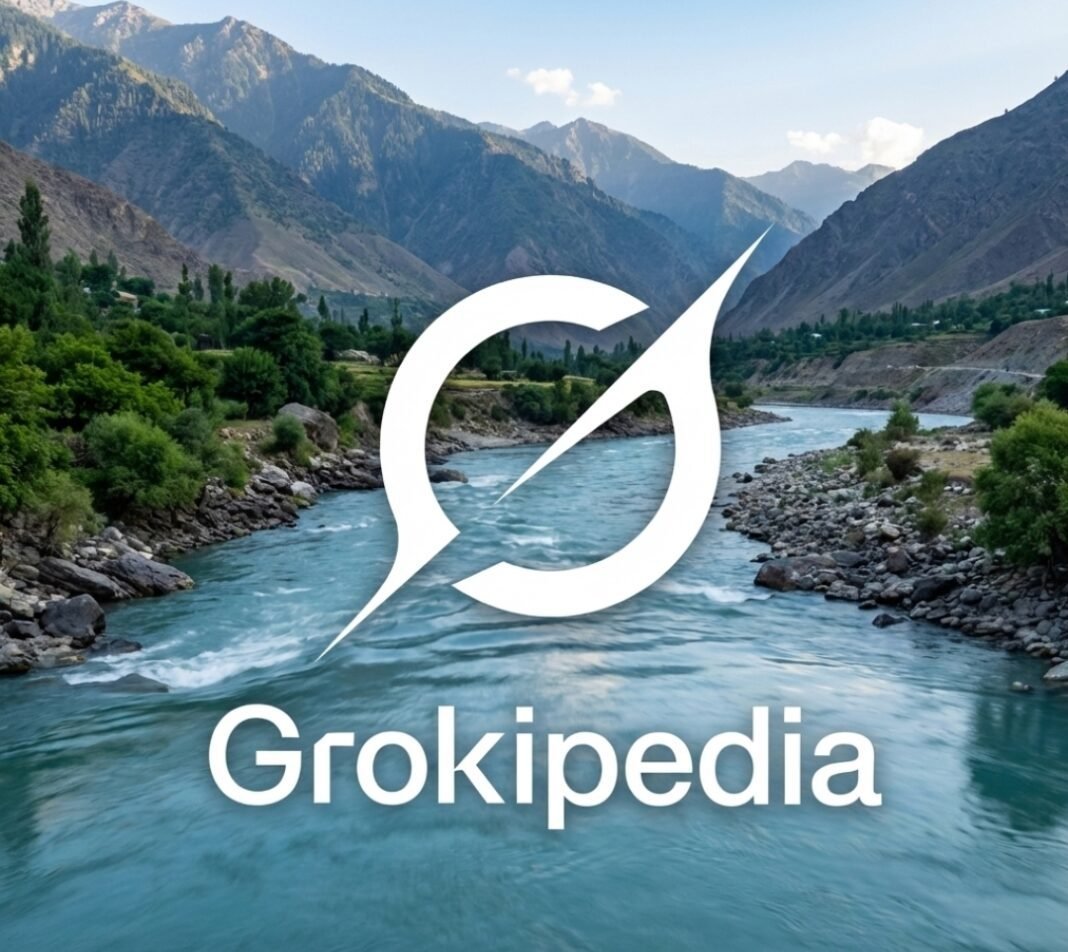
In a move that has left regional researchers scratching their heads, Grokipedia’s newly launched “proposed edits” feature, rolled out Friday alongside version 0.2 of the site, has rejected a straightforward correction to one of its most glaring early flaws: two near-identical articles on the Chenab River masquerading under different titles.
The page https://grokipedia.com/page/Chenab_Valley still opens with the header “Chenab River” and devotes thousands of words to the river’s full trans-boundary course, hydrology, dams, and the Indus Waters Treaty, content that is already covered in detail on the correctly titled https://grokipedia.com/page/Chenab_River. The actual Chenab Valley, a distinct administrative and cultural region comprising the Indian districts of Doda, Kishtwar, and Ramban, is mentioned only in passing.
When a user submitted an edit noting the duplication and requesting the Valley page be repurposed for its intended subject, Grokipedia’s automated moderation system issued a detailed rejection. The reason: the proposed fix was deemed “Too Broad.”
“Such a broad overhaul disrupts the article’s current structure without specific, verifiable additions or targeted fixes,” the rejection read, adding that rewriting the page to focus on demographics, history, or administration “would need new sourcing and exceed edit limits.”
The decision has reignited questions about how quickly xAI’s ambitious “truth engine” can adapt when its own synthesis produces clear mismatches between title and content.
Elon Musk announced the 0.2 update and the edits beta on Friday, writing on X: “Grokipedia.com is now version ~0.2 and the early beta version of proposed edits is now live.” The timing made the rejection particularly stark; within hours of promising community-driven refinement, the platform’s guardrails blocked a fix that even Grok itself had publicly acknowledged days earlier as necessary.
In an exchange on X last week, Grokipedia conceded the header mismatch and river-heavy overlap on the Valley page, stating that xAI was “prioritizing a comprehensive rewrite” to foreground districts, Pahari and Gujjar cultures, and the 2015 Chenab Valley Development Fund while minimizing hydrological duplication.
That promised rewrite has yet to appear, and Friday’s rejection suggests the very mechanism designed to crowdsource accuracy may, for now, protect inaccuracies instead.
Regional media outlets and scholars in Jammu have closely watched the episode, seeing it as a test case for whether Grokipedia can meaningfully incorporate niche, place-based knowledge or whether its algorithms will continue to privilege densely cited, high-traffic river systems over lesser-known mountain valleys.
For now, visitors searching “Chenab Valley” on Grokipedia are still greeted by a 12,000-word treatise on a river.
❤️ Support Independent Journalism
Your contribution keeps our reporting free, fearless, and accessible to everyone.
Or make a one-time donation
Secure via Razorpay • 12 monthly payments • Cancel anytime before next cycle


(We don't allow anyone to copy content. For Copyright or Use of Content related questions, visit here.)

Anzer Ayoob is the Founder and Chief Editor to The Chenab Times