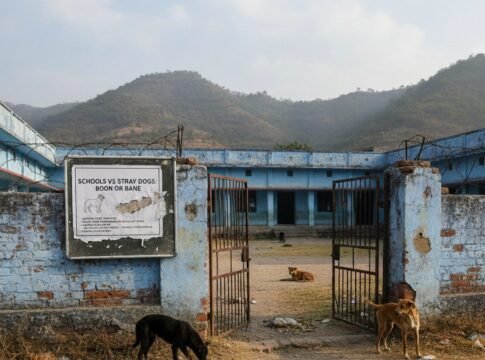
“Schools vs Stray Dogs: Boon or Bane” is not a binary question but a continuum shaped by cooperation, preparedness, and institutional support. Schools can indeed become safe zones—protected, monitored, and child-friendly—if the larger ecosystem works in harmony. But if responsibility is shifted without resources, training, or timely municipal action, then the burden becomes disproportionate and unsustainable for teachers.
The ongoing debate around schools and their newly mandated role in stray dog monitoring has entered centre stage in educational and administrative discourse in Jammu and Kashmir, following a series of sweeping directions issued by the Supreme Court of India in August 2025 and corresponding government orders that have reshaped institutional responsibilities across the Union Territory. What began as a tragic incident hundreds of kilometres away—a six-year-old girl losing her life to rabies after a stray dog attack in Delhi—has cascaded into a nationwide regulatory framework that now demands schools become active participants in ensuring the safety of their students against stray dogs. The question that emerges is both complex and compelling: “Schools vs Stray Dogs: Boon or Bane?”
The Supreme Court’s judgment dated 22 August 2025, documented in Suo Motu Writ Petition (Civil) No. 5 of 2025, created a legal shift that set off administrative action across all States and Union Territories. The Court observed that while stray dogs have a right to compassionate treatment, the right to life and safety of citizens—especially children—cannot be compromised. It ordered all States to identify vulnerable public spaces, prominently including educational institutions, secure them through physical and administrative measures, and appoint nodal officers to monitor and report stray dog movement. Sterilisation, vaccination, feeding zones, inspections every three months, and rapid municipal response were made compulsory.
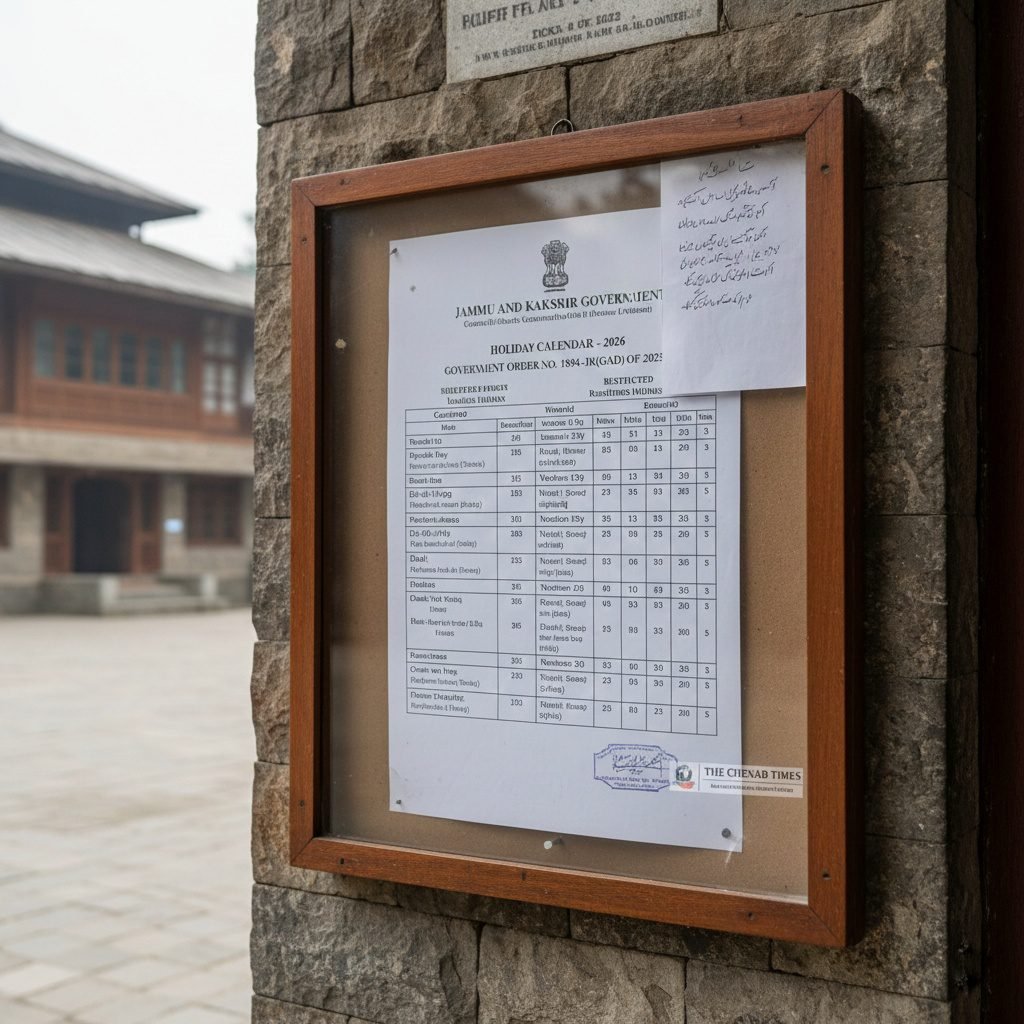
Under this legal mandate, the Jammu and Kashmir Government issued Order No. 1497-JK(GAD) of 2025 on 18 November 2025, establishing UT-level and district-level committees and assigning schools a central role in preventing stray dog ingress. The order directs that all government and private schools must appoint nodal officers, maintain secure boundaries, coordinate with municipal bodies, and conduct awareness programmes for students. This was followed by on-ground district circulars, such as the one issued by the Chief Education Officer, Udhampur, mandating detailed compliance: awareness camps, regular inspections, structural strengthening of boundaries, and display of nodal officer contact information at school entrances.
For many administrators, these steps represent a boon—a much-needed protective measure for vulnerable children. Schools are not just educational spaces but centres of concentrated footfall of young, unaware, and easily frightened children. Open fields, midday meal areas, scattered food waste, broken boundary walls, and unmonitored entry points often make school campuses easy entry zones for stray dogs. In many parts of the Jammu division, including rural belts of Udhampur, Poonch, Rajouri, Doda, and Ramban, dog entry into school premises is not just possible but routine. Teachers witness dogs resting in classrooms, following children during recess, or wandering near morning assembly areas. The Supreme Court, cognisant of these realities, emphasised children’s safety as “paramount” and determined that protecting them required institutional responsibility rather than reactive municipal action. From this perspective, the inclusion of schools as active participants is seen as a progressive step, ensuring that campuses are not just educationally safe but physically secure. It strengthens the idea that child safety is not limited to academics or transportation but includes environmental protection within school boundaries.
Yet, for many teachers, especially in districts like Poonch, the new responsibility feels more like a bane than a boon. Resentment and frustration have surfaced after district-level orders asked teachers to “monitor and coordinate stray dog-related issues,” a function they believe falls far outside their professional roles. Teachers argue that they are already overburdened with non-teaching tasks—surveys, enrolment campaigns, census duties, election responsibilities—and the addition of stray dog monitoring places undue pressure on them. They emphasise that surveillance of stray animals is neither part of their training nor within their skill set. Some fear personal liability if incidents occur despite their monitoring, especially when municipal bodies are slow to respond or insufficiently staffed. Others point out safety concerns: how can teachers, especially female staff in remote areas, be expected to confront or manage aggressive dogs? The debate intensifies when schools lacking boundary walls, adequate manpower, or secure gates are expected to take responsibility for problems created by municipal failures.
From an administrative standpoint, however, schools are viewed as the most reliable reporting centres because they function daily, maintain records, have defined leadership, and can document incidents systematically. District administrations argue that the Supreme Court’s directions are binding and that schools, as child-centric institutions, cannot remain passive observers when stray dog threats rise across the region. They highlight that stray dog attacks have increased nationally, with over 37 lakh dog-bite cases reported in 2024, making this not just a municipal issue but a public health and education safety matter.
The question of whether these mandates are a boon or a bane depends largely on how effectively various stakeholders—schools, municipalities, animal husbandry departments, district committees, and communities—collaborate. If municipal bodies respond promptly to school reports, strengthen sterilisation drives, improve shelter facilities, and ensure regular inspections, then schools merely act as coordinators, not burden-bearers. This collaborative model transforms the mandate into a boon, enhancing student safety without overextending teachers. But if schools remain isolated nodes forced to shoulder responsibility without structural support, the system becomes a bane—creating friction between educators and administrators, breeding resentment, and risking non-compliance.
The responsibility placed on schools also reflects a deeper moral and societal debate about coexistence. Stray dogs form an integral part of India’s public landscape. Compassion, legal protections, and community engagement are essential, but coexistence demands boundaries—both literal and figurative—when the safety of children is at stake. The Supreme Court’s approach attempts to strike this balance: not eliminating stray dogs, not violating ABC Rules, but ensuring that vulnerable spaces are secured while humane practices are upheld.
Ultimately, “Schools vs Stray Dogs: Boon or Bane” is not a binary question but a continuum shaped by cooperation, preparedness, and institutional support. Schools can indeed become safe zones—protected, monitored, and child-friendly—if the larger ecosystem works in harmony. But if responsibility is shifted without resources, training, or timely municipal action, then the burden becomes disproportionate and unsustainable for teachers. As Jammu and Kashmir implements these mandates across districts like Udhampur and Poonch, the true outcome will depend on whether the state machinery transforms schools into empowered safety partners or overwhelms them with additional duties without the required infrastructure. In this story, the stakes are not administrative but human—embodied in every child who walks through the school gate, trusting that the world beyond the classroom is as safe as the world within it. In short, we can say that this exercise is a welcome step and is being politicised without reason.
❤️ Support Independent Journalism
Your contribution keeps our reporting free, fearless, and accessible to everyone.
Or make a one-time donation
Secure via Razorpay • 12 monthly payments • Cancel anytime before next cycle


(We don't allow anyone to copy content. For Copyright or Use of Content related questions, visit here.)

Sadaket Malik is a Research Scholar in Centre for Research and Development LPU Punjab, He is based in Bhalessa (Doda) and can be mailed at sadaket.lpu@gmail.com