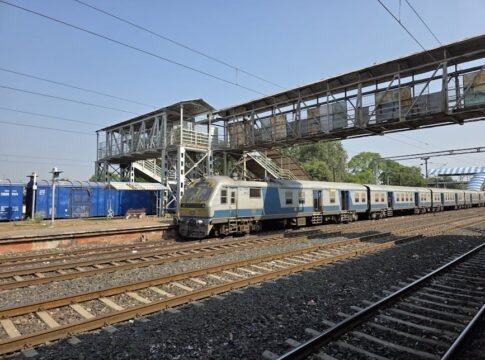
A unique theatre production in Pune is captivating audiences by delving into the rich history and enduring legacy of the Deccan Queen, a train that has been a vital link between Mumbai and Pune for 96 years.
The play, which has garnered significant attention in Pune’s cultural circles, aims to transport attendees back in time, exploring the train’s evolution and its integral role in the lives of the people of Maharashtra.
The Chenab Times has learned that the production is not merely a historical reenactment but an immersive experience designed to evoke nostalgia and highlight the train’s cultural significance. Through a blend of storytelling, music, and visual elements, the show attempts to capture the essence of journeys taken aboard the iconic train, from its early days to its present-day operations.
The Deccan Queen, often referred to as the ‘Pride of the Southern Railway’, was introduced by the Great Indian Peninsula Railway (GIPR) on June 1, 1930. It was the first ‘all-Pullman’ luxury service in India, introduced to cater to the growing passenger traffic between the colonial-era summer capital of Bombay (now Mumbai) and the popular hill station of Poona (now Pune). The train’s introduction marked a significant step in railway modernization in India, offering unprecedented comfort and speed for its time.
Historically, the train has been crucial for the economic and social connectivity between Mumbai and Pune, two of Maharashtra’s most important cities. Mumbai, as India’s financial capital, and Pune, a major industrial, educational, and cultural hub, have long been intertwined. The Deccan Queen facilitated the movement of business travelers, students, and tourists, contributing significantly to the development of both regions.
The theatre production reportedly incorporates archival footage, photographs, and anecdotes shared by long-time passengers and railway enthusiasts to ensure historical accuracy and emotional resonance. The narrative explores key milestones in the train’s journey, including its role during different historical periods in India, its upgrades in terms of amenities and rolling stock, and its eventual transition to electric traction.
The show’s creators have emphasized their goal to connect with a younger generation, many of whom may not have experienced the historical charm of the Deccan Queen firsthand. By highlighting the train’s enduring appeal and its place in the collective memory of Maharashtrians, the production seeks to foster a deeper appreciation for India’s railway heritage.
The Deccan Queen has undergone several transformations since its inception. Initially composed of six luxurious all-Pullman coaches, it was designed to be lightweight for faster speeds. Over the decades, its composition has changed to include more coaches to accommodate a larger number of passengers, and modern amenities have been introduced while retaining some of its classic charm. The iconic blue and silver livery of the train has also been a recognizable feature for generations.
The revival of the train’s history through theatre underscores the importance of cultural preservation and storytelling in keeping the past alive. It serves as a reminder that trains are more than just modes of transportation; they are often repositories of history, culture, and personal memories.
The ongoing success of the theatre show in Pune suggests a strong public interest in the narratives surrounding iconic Indian institutions. It highlights how art can serve as a powerful medium to revisit and celebrate significant aspects of national heritage, ensuring that the stories of landmarks like the Deccan Queen continue to be told and appreciated for years to come.
❤️ Support Independent Journalism
Your contribution keeps our reporting free, fearless, and accessible to everyone.
Or make a one-time donation
Secure via Razorpay • 12 monthly payments • Cancel anytime before next cycle


(We don't allow anyone to copy content. For Copyright or Use of Content related questions, visit here.)

The Chenab Times News Desk