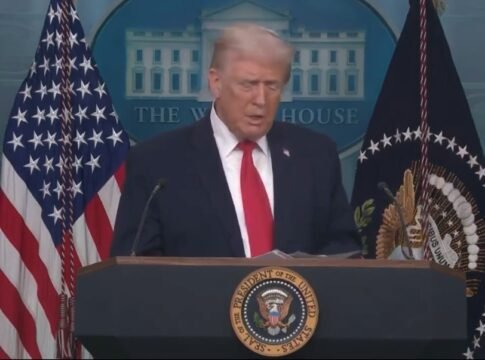
U.S. Secretary of State Marco Rubio is undertaking a diplomatic mission to the Vatican and Italy, aiming to mend relations strained by President Donald Trump’s sharp criticisms of Pope Leo XIV and the ongoing U.S.-led military operations in Iran. The visit seeks to reassure allies and address concerns arising from the Trump administration’s challenging rhetoric towards key international figures and conflicts.
The Chenab Times has learned that Secretary Rubio’s itinerary includes significant engagements at the Holy See, where he is expected to meet with Vatican officials to discuss shared concerns regarding global stability and humanitarian issues. The Trump administration’s previous public statements, which questioned the Pope’s stance on various international matters and expressed skepticism regarding the U.S. military involvement in Iran, have created a diplomatic rift that Rubio’s visit is intended to bridge. This fence-mending effort underscores the delicate nature of international diplomacy, where presidential pronouncements can have far-reaching implications for allied relationships.
The Trump administration’s approach to foreign policy has often been characterized by a willingness to challenge established norms and alliances. In the context of the U.S. military engagement in Iran, the administration’s public pronouncements have sometimes diverged from the positions of its European allies, including those within the Vatican. Pope Leo XIV, a prominent global moral leader, has previously advocated for diplomatic solutions and de-escalation in conflict zones, a stance that has occasionally placed him at odds with more assertive foreign policy approaches. The remarks attributed to President Trump have been perceived by some as disrespectful to the Pontiff and as undermining the unified front that many allies sought to present regarding the Iran conflict.
Secretary Rubio, known for his pragmatic approach to foreign policy, is tasked with navigating these sensitive diplomatic waters. His objective is to reaffirm the United States’ commitment to its alliances and to ensure that communication channels remain open and constructive. The visit is particularly crucial given the ongoing complexities of the conflict in Iran, where international cooperation is vital for achieving stability and addressing humanitarian concerns. The Vatican, with its extensive diplomatic network and moral authority, plays a significant role in international affairs, and its relationship with the United States remains a key component of global diplomatic engagement.
Sources indicate that the discussions in Vatican City will likely cover a range of pressing global issues, including the situation in the Middle East, religious freedom, and the challenges posed by geopolitical instability. The U.S. State Department has emphasized that Secretary Rubio’s visit is part of a broader effort to strengthen bilateral ties and to foster cooperation on shared priorities. The administration hopes that through direct engagement, it can effectively communicate its foreign policy objectives and address any misunderstandings that may have arisen from past public statements.
The U.S.-led military intervention in Iran has been a focal point of international debate, with varying perspectives on its effectiveness and objectives. While the U.S. government has articulated its goals as promoting regional security and countering destabilizing influences, critics and some allies have raised concerns about the potential for escalation and the humanitarian impact of prolonged conflict. The Vatican, historically a proponent of peace and dialogue, has often called for restraint and a commitment to non-violent conflict resolution. The nuanced positions on these complex issues highlight the importance of sustained diplomatic engagement to ensure alignment and prevent inadvertent friction between allies.
Secretary Rubio’s mission also extends to Italy, a key European ally and a significant player in international forums. His meetings in Rome are expected to further reinforce the strong ties between the United States and Italy, and to explore avenues for enhanced collaboration on economic, security, and cultural matters. The visit aims to project an image of a United States that is committed to multilateralism and to working closely with its partners to address global challenges. By engaging directly with leaders in both the Vatican and Italy, the Trump administration is signaling its intent to manage and repair its relationships with key international stakeholders.
The diplomatic outreach comes at a critical juncture in international relations, with numerous global challenges demanding coordinated responses. The administration’s efforts to engage with the Vatican and Italy reflect an understanding of the importance of these relationships in navigating a complex geopolitical landscape. The success of Secretary Rubio’s mission will likely be measured by the extent to which it can help restore confidence and strengthen the bonds of cooperation between the United States and its traditional allies, particularly in the context of ongoing international crises.
❤️ Support Independent Journalism
Your contribution keeps our reporting free, fearless, and accessible to everyone.
Or make a one-time donation
Secure via Razorpay • 12 monthly payments • Cancel anytime before next cycle


(We don't allow anyone to copy content. For Copyright or Use of Content related questions, visit here.)

Global Affairs Desk at The Chenab Times covers international developments, global diplomacy, and foreign policy issues through fact-based reporting, explainers, and analytical pieces. The desk focuses on major geopolitical events, diplomatic engagements, and international trends, with an emphasis on verified information, multiple perspectives, and contextual understanding of global affairs.