
The road from Ramban to Kishtwar does not follow the logic of a straight line. It winds through mountains, descends towards the Chenab River and climbs again into settlements where a short journey on a map can become several hours on the ground. In winter, snowfall and landslides can isolate entire communities. In other seasons, damaged roads and difficult terrain determine how easily residents can reach hospitals, educational institutions, markets and government offices.
For the people living across Doda, Kishtwar and Ramban, these are not three unrelated district-level concerns. They are part of a shared geographical and developmental experience that has increasingly shaped the identity of a region commonly known as Chenab Valley.
Yet when residents vote in parliamentary elections, their three districts form only part of a much larger constituency. The Udhampur Lok Sabha constituency also encompasses Udhampur and Kathua, bringing together five districts with different geographical conditions and competing developmental priorities.
The arrangement provides parliamentary representation, but it has also prompted a question that regional political leaders and civil society organisations have raised repeatedly: should a region with its own geographical character, nearly a million residents in the last published Census and a substantial electorate have a parliamentary constituency dedicated to its concerns?
The demand for a separate Chenab Valley Lok Sabha constituency is not new. What has changed is the growing amount of demographic evidence, renewed political discussion and the emergence of organised civil society advocacy ahead of the next delimitation exercise.
The argument is no longer confined to political speeches. It is increasingly being framed around population, geographical accessibility, democratic representation and the ability of elected representatives to remain connected with communities spread across a difficult mountainous landscape.
A population approaching one million, even before the next Census
The demographic foundation of the demand is substantial.
According to the 2011 Census figures reproduced in the Jammu and Kashmir government’s Regional Digest of Statistics 2024–25, Doda, Kishtwar and Ramban together had a population of 924,345. That is approximately 9.24 lakh people, a figure recorded more than 15 years ago.
The three districts have since been subject to demographic changes, but estimates suggesting that their combined population has crossed one million should be distinguished from an officially enumerated Census count. The forthcoming Census will establish the next authoritative baseline.
The 2011 figures nevertheless offer a useful starting point.
Chenab Valley’s population by district, Census 2011
| District | Population | Share of regional population |
|---|---|---|
| Doda | 409,936 | 44.34% |
| Kishtwar | 230,696 | 24.96% |
| Ramban | 283,713 | 30.69% |
| Total | 924,345 | 100% |
The population figures also reveal a sustained increase over the preceding decade. In 2001, the three districts together had 726,043 residents. By 2011, their combined population had increased by 198,302, representing growth of approximately 27.3 per cent.
Doda’s population increased from 320,256 to 409,936, Kishtwar’s from 190,843 to 230,696, and Ramban’s from 214,944 to 283,713.
The increase is important because the demand for a separate constituency cannot be evaluated solely through the region’s present electoral boundaries. It must also account for its demographic trajectory.
The 2027 Census is therefore particularly significant. Population enumeration in the snow-bound areas of Jammu and Kashmir has been scheduled for September 2026, while the main population enumeration across the country is scheduled for February 2027. Its eventual publication should provide a more reliable basis for examining Chenab Valley’s representation.
For a region that already recorded more than 924,000 residents in 2011, the new figures will be central to any serious delimitation proposal.
Eight Assembly constituencies, one larger parliamentary constituency
The present parliamentary arrangement places the eight Assembly constituencies of Chenab Valley within Udhampur Lok Sabha constituency.
Doda contributes Bhaderwah, Doda and Doda West. Kishtwar contributes Inderwal, Kishtwar and Padder-Nagseni. Ramban contributes Ramban and Banihal.
Together, these eight constituencies represent the three districts, while the remaining ten Assembly constituencies of Udhampur parliamentary constituency cover Udhampur and Kathua districts.
The arrangement was retained during the 2022 delimitation exercise, when the five parliamentary constituencies of Jammu and Kashmir were reorganised to contain 18 Assembly segments each.
This means that Chenab Valley’s eight Assembly segments constitute nearly 44.4 per cent of the 18 Assembly constituencies within Udhampur parliamentary constituency.
The 2024 general election offers another way to understand the region’s electoral weight.
According to electoral figures published by Akashvani, Doda had 305,093 registered electors, Kishtwar had 175,897 and Ramban had 219,124. Together, the three districts accounted for 700,114 registered electors.
The entire Udhampur parliamentary constituency had 1,623,195 registered electors.
Registered electorate in the 2024 Lok Sabha election
| Area | Registered electors |
|---|---|
| Doda | 305,093 |
| Kishtwar | 175,897 |
| Ramban | 219,124 |
| Chenab Valley total | 700,114 |
| Entire Udhampur constituency | 1,623,195 |
The three districts therefore accounted for approximately 43.1 per cent of the constituency’s registered electorate.
The figure does not establish that the existing arrangement is constitutionally inadequate. Nor does it mean that the region has no representation in Parliament. It does, through the elected MP from Udhampur.
But it illustrates the scale of the electorate whose concerns are being represented alongside those of two additional districts.
The question is whether the next delimitation exercise should examine a different arrangement that gives Chenab Valley a more concentrated parliamentary voice.
Geography that makes representation different
Population is central to delimitation, but the geographical realities of a constituency also matter.
Chenab Valley covers a mountainous region where settlements are distributed across river valleys, high-altitude areas and difficult road corridors. The three districts share the Chenab river system and a landscape in which distance cannot always be measured by road kilometres alone.
The 2011 Census also shows that the region is overwhelmingly rural.
Doda recorded 377,247 rural residents and 32,689 urban residents. Kishtwar recorded 215,831 rural residents and 14,865 urban residents. Ramban recorded 271,902 rural residents and 11,811 urban residents.
Combined, the three districts had 864,980 rural residents and 59,365 urban residents. Approximately 93.6 per cent of the regional population lived in rural areas.
The figure is significant because it places accessibility at the centre of the representation debate.
A resident of Marwah or Warwan in Kishtwar, a village in Gandoh or Chilly Pingal in Doda, or a remote settlement in Ukhral or Neel in Ramban may encounter entirely different administrative and transportation difficulties from residents of more accessible towns.
A parliamentary representative is expected to remain accountable to all these communities, but the practical demands of covering a vast and difficult constituency can make sustained engagement challenging.
The Chenab Times Foundation has cited this geographical scale as one of the principal reasons for seeking a dedicated constituency.
In its May 28, 2026 statement, the Foundation highlighted the sheer physical scale of the existing Udhampur parliamentary constituency, which spans five districts and serves a population exceeding 2.4 million.
Depending on the administrative boundary dataset used, the constituency’s footprint is substantial by any measure—covering 16,707 square kilometres across the combined revenue areas of Doda, Kishtwar, Ramban, Udhampur and Kathua, and extending across more than 20,230 square kilometres of rugged mountainous terrain in broader regional estimates. Whatever the exact cartographic baseline, the core issue remains unchanged: a single constituency links remote high-altitude valleys with lower-hill districts that have very different settlement patterns, infrastructure needs and administrative realities.
The underlying concern remains: the constituency combines geographically difficult mountain districts with other areas that have different settlement patterns, infrastructure needs and administrative realities.
A rural region with distinct social and cultural characteristics
The case for a separate parliamentary constituency is also connected to the region’s social composition.
According to the 2011 Census, the three districts together recorded 117,137 Scheduled Tribe residents. Doda accounted for 39,216, Kishtwar for 38,149 and Ramban for 39,772.
This represents approximately 12.7 per cent of their combined population.
The region is also characterised by considerable linguistic and cultural diversity. Bhaderwahi, Sarazi, Bhalesi, Padri, Kishtwari and Poguli are among its established linguistic traditions.
These languages are not simply variations of a single administrative identity. They represent communities with distinct oral histories, vocabulary, literary traditions and cultural practices.
The region’s development priorities also extend beyond infrastructure. Language preservation, access to education, tribal welfare, cultural heritage and the protection of traditional livelihoods are important public-policy concerns.
A separate parliamentary constituency would not automatically provide solutions to these challenges. But it could establish a clearer political responsibility for raising them and following up on government decisions affecting the three districts.
Hydropower has brought national importance, but local questions remain
The Chenab River has given the region strategic importance in India’s energy infrastructure.
A number of major hydropower projects have been developed or are under development along the river system, particularly in Kishtwar and Ramban.
Pakal Dul, Kiru, Kwar, Kirthai and Ratle are among the prominent projects associated with the Chenab basin. The Baglihar Hydroelectric Project is another major installation on the river in Ramban district.
These projects form part of India’s energy development plans, but their local implications extend well beyond electricity generation.
Land acquisition, compensation, rehabilitation, environmental concerns, construction impacts, employment opportunities and the distribution of economic benefits have repeatedly become matters of public debate.
For communities living close to these projects, the question is not merely how much electricity is generated. It is also about what happens to the land, livelihoods, roads, rivers and settlements affected by large infrastructure investments.
The region has therefore developed a shared set of concerns around hydropower governance.
A dedicated parliamentary constituency could provide a more focused platform for raising these issues with the Union ministries responsible for power, environment, tribal affairs and infrastructure.
It would not give the MP direct authority over every project decision, but it could make sustained parliamentary scrutiny and regional accountability more concentrated.
Roads, hospitals and schools remain part of the same debate
Connectivity is another issue that links the three districts.
National Highway 44 passes through Ramban, while National Highway 244 and other important mountain corridors connect parts of Doda and Kishtwar.
The roads are essential for trade, tourism, education, healthcare and access to administrative institutions. They are also vulnerable to landslides, snowfall and other weather-related disruptions.
In remote areas, road closures can affect the delivery of essential supplies and delay access to medical treatment.
The same geographical challenges influence the availability of specialised healthcare and higher education.
Residents often need to travel outside their immediate areas for advanced medical treatment, specialist consultations and educational opportunities.
The demand for improved district hospitals, specialist services, medical infrastructure, colleges, professional training facilities and all-weather roads is therefore not confined to one district.
It is a regional developmental question.
Tourism, horticulture, saffron cultivation, handicrafts and local enterprises offer opportunities for economic development, but their growth also depends on market access, reliable transport, investment and employment-oriented policies.
The region’s diverse economic potential could be better represented through a parliamentary platform focused on its shared requirements.
The demand has also entered the political debate
The idea of a separate parliamentary constituency for Chenab Valley has not originated solely within civil society. Political leaders have raised it as part of a wider discussion about the representation of Jammu and Kashmir’s mountainous regions.
One of the clearest public statements came from National Conference president and former Jammu and Kashmir chief minister Farooq Abdullah in August 2024.
During his visit to Chenab Valley, Abdullah criticised the geographical arrangement of the Anantnag-Rajouri parliamentary constituency, arguing that the Pir Panjal mountain range created difficulties for candidates campaigning across the constituency.
He said that, had the authorities been sincere, they would have announced a separate Lok Sabha constituency for Rajouri-Poonch as well as Chenab Valley.
It was a direct public endorsement of separate parliamentary representation for Chenab Valley by a senior National Conference leader.
The political history is more complicated when it comes to the question of divisional status.
In February 2019, National Conference vice-president Omar Abdullah had promised that a future NC government would grant divisional status to Chenab Valley and Pir Panjal as part of the party’s regional autonomy agenda.
The demand was revived in 2026 through a private member’s Bill introduced by Peoples Democratic Party legislator Waheed Para, seeking separate divisional status for the two mountainous regions.
But the issue exposed differences among political parties.
The Chenab Times had earlier reported that both the National Conference and BJP had publicly opposed the demand for separate Chenab Valley and Pir Panjal divisions in the form proposed by the PDP. Farooq Abdullah described the proposal as divisive.
The BJP’s position also requires careful distinction. BJP leader Sham Lal Sharma subsequently indicated support for smaller administrative units and argued that Doda and Udhampur could be made separate divisions, while also supporting administrative arrangements for remote areas such as Poonch and Rajouri.
That is support for administrative decentralisation, not evidence of an explicit BJP endorsement of a separate Chenab Valley Lok Sabha constituency.
The distinction matters. A demand for divisional status concerns the administrative structure of the Union Territory. A demand for a separate parliamentary constituency concerns representation in the Lok Sabha and must be considered under a different constitutional and delimitation framework.
The political record therefore shows both support and disagreement, depending on the proposal and the time at which it was made.
For Chenab Valley, the challenge is to turn statements made during political visits and election campaigns into a sustained, cross-party position on parliamentary representation.
Chenab Times Foundation takes the demand beyond political speeches
A decisive turn in the campaign came on May 28, 2026, when the Chenab Times Foundation—a registered public trust that I head as President—formally placed the demand for a dedicated Chenab Valley Lok Sabha constituency on the national policy record.
In our representation, we argued that Doda, Kishtwar and Ramban must be treated as a single, distinct parliamentary unit during the next delimitation exercise. Because the existing Udhampur constituency stretches across five districts with sharply different terrain and demographic priorities, it has become administratively unwieldy—leaving remote mountain communities vulnerable to winter isolation from snowfall and landslides without focused parliamentary follow-up.
The people of Chenab Valley, we noted, have long endured diluted representation due to the sheer physical spread of the current seat. Carving out a dedicated constituency covering Ramban, Doda and Kishtwar would anchor parliamentary accountability directly to the region’s most pressing gaps: all-weather road connectivity, specialist healthcare, tourism infrastructure and local employment.
To move the issue beyond rhetoric, the Foundation prepared a formal representation for the Government of India, the Election Commission of India and the future Delimitation Commission, while appealing to sitting MPs, MLAs, political parties, youth groups and local institutions across all three districts to back a united case. We also called for structured public consultations once the next Delimitation Commission is constituted and committed to submitting a comprehensive memorandum backed by demographic data, geographical mapping and developmental projections.
By placing the proposal within an organised civil society framework, the intervention seeks to ensure the demand is evaluated on administrative and constitutional merit rather than treated as a passing election-season slogan. Our core premise is straightforward: dedicated parliamentary representation is not an attempt to divide Jammu and Kashmir, but a practical way to guarantee that geographically distinct and underserved mountain communities receive meaningful representation within the existing constitutional framework.
What the previous delimitation exercise tells us
The 2022 delimitation exercise provides an important precedent for examining the proposal.
The Delimitation Commission reorganised the Assembly constituencies of Jammu and Kashmir and retained five parliamentary constituencies. It also ensured that each parliamentary constituency contained 18 Assembly segments.
The Commission recognised geographical features, communication facilities, public convenience, contiguity and administrative boundaries as relevant considerations in delimitation.
It also dealt with difficult and remote areas where terrain and inadequate communication facilities could affect the drawing of constituency boundaries.
The 2022 exercise did not create a separate Chenab Valley parliamentary constituency. Doda, Kishtwar and Ramban remained within Udhampur.
Historical delimitation records reinforce this territorial unity. Prior to the administrative bifurcation of 2007, Doda, Kishtwar and Ramban constituted a single unified district—erstwhile Doda, the region today referred to as Chenab Valley—whose six Assembly constituencies (Kishtwar, Inderwal, Doda, Bhaderwah, Ramban and Banihal) were grouped together as one contiguous unit in earlier Delimitation Orders. While subsequent administrative reorganisation divided the region into three districts and the 2022 delimitation expanded its representation to eight Assembly segments, its parliamentary representation remained unchanged inside the five-district Udhampur constituency.
But the principles discussed in the Commission’s work are relevant to any future proposal seeking a more geographically coherent constituency.
The 2022 exercise also demonstrated that parliamentary boundaries need not simply reproduce administrative or regional identities. They are determined through a formal process that considers the applicable population and territorial requirements.
That is why the Chenab Valley proposal must be evaluated against both population parity and geographical realities.
The next delimitation exercise and the question of additional seats
The debate has acquired further significance amid discussions about increasing the size of the Lok Sabha.
The Constitution (131st Amendment) Bill, 2026, introduced in Parliament on April 16, proposed changes to the constitutional framework governing delimitation and the maximum strength of the Lok Sabha.
However, the Bill failed to secure the required special majority in the Lok Sabha on April 17, 2026. It was therefore not enacted.
Following the withdrawal of that measure, the government introduced the Constitution (132nd Amendment) Bill, 2026 in late November 2026 to establish a revised delimitation framework. The Bill proposes a uniform 50 per cent increase in Lok Sabha and Assembly seats allocated to every State and Union Territory at the first delimitation after its commencement, while keeping inter-state seat proportions unchanged until 2051 and basing the initial redrawing of boundaries on the latest published Census figures available at commencement.
Those proposals must not be confused with an enacted law or an already approved allocation of additional seats to Jammu and Kashmir.
The next delimitation will depend on the constitutional and statutory framework ultimately adopted, the applicable Census data and the decisions of the legally constituted delimitation authority.
For Chenab Valley, the distinction is important.
Even if the total number of parliamentary seats increases, a separate constituency will not follow automatically. Population parity remains a central consideration, and the region would have to establish why its geographical and administrative characteristics justify a distinct territorial arrangement.
The 2027 Census will be central to that exercise.
The population question cannot be avoided
There is also a substantial argument against treating a separate Chenab Valley seat as an automatic entitlement.
Based on the 2011 Census, the three districts had a combined population of 924,345. The average population of a parliamentary constituency in the Union Territory of Jammu and Kashmir, using its 2011 Census population of approximately 12.27 million and five Lok Sabha seats, was approximately 24.53 lakh.
Chenab Valley’s 2011 population was therefore well below the current five-seat average—a mathematical reality that any serious delimitation proposal must confront. Yet that raw comparison assumes a static five-seat cap and 15-year-old Census data. If J&K’s parliamentary representation expands under a revised delimitation framework and the 2027 Census records more than a decade and a half of demographic growth, the per-seat threshold would fall closer to 15–16 lakh—bringing a projected million-plus Chenab Valley much nearer to viable parity, especially once statutory relaxations for sparsely populated mountainous terrain are factored in.
This is a genuine issue that any serious proposal must address.
A separate constituency cannot be justified simply by pointing to a region’s cultural identity or geographical distinctiveness while ignoring the constitutional principle of population-based representation.
At the same time, population is not the only consideration in drawing territorial boundaries. The delimitation framework also recognises geography, communication, public convenience and the continuity of areas.
The case for Chenab Valley must therefore demonstrate that its geographical and administrative circumstances warrant a dedicated constituency within whatever seat-allocation framework applies at the time.
It should also compare the region’s updated population and electorate with those of other constituencies in Jammu and Kashmir, rather than rely only on the present Udhampur arrangement.
The demand will be considerably stronger if supported by a detailed study of alternative constituency boundaries and their compliance with applicable population requirements.
What a Chenab Valley parliamentary constituency would mean
The proposed constituency would comprise the entire geographical boundaries of Doda, Kishtwar and Ramban districts.
It would bring their eight Assembly constituencies under one dedicated parliamentary seat.
Such an arrangement could provide a single parliamentary representative with a constituency-wide responsibility for issues common to the three districts: hydropower development, road infrastructure, environmental protection, tribal welfare, rural healthcare, education, tourism and employment.
It could also create a more identifiable platform for civil society organisations and residents to raise concerns affecting the region.
But a separate seat should not be presented as a substitute for better governance. The creation of a new constituency would not automatically guarantee roads, hospitals, jobs or improved compensation for people affected by hydropower projects.
Its potential value would lie in making parliamentary representation more geographically focused and politically accountable.
That is the distinction at the centre of the proposal.
A demand that requires more than political promises
The people of Chenab Valley have heard repeated promises concerning regional development, administrative decentralisation and greater political recognition. Some of these promises have found their way into party documents, legislative proposals and public statements. Others have remained part of election-season discussions.
The demand for a separate parliamentary constituency now requires a more sustained effort.
The Chenab Times Foundation’s intervention has given the proposal an identifiable institutional platform. Farooq Abdullah’s public statement has demonstrated that the idea has also found expression in mainstream political debate. The disagreements over divisional status, meanwhile, show why political support must be established specifically for the parliamentary proposal rather than inferred from support for other administrative demands.
The next step should be a comprehensive regional memorandum backed by updated population data, electoral figures, official boundary maps, road-connectivity analysis and comparative constituency studies.
Civil society organisations, elected representatives, local institutions and residents of all three districts would need to participate in that process.
A common demand should also remain inclusive. Chenab Valley is home to communities with different languages, religious traditions and social backgrounds. A separate parliamentary constituency should represent all of them, not become the political possession of one party, community or district.
The region’s shared geographical and developmental concerns provide a basis for that collective argument.
In 2011, nearly a million people were already living across Doda, Kishtwar and Ramban. In 2024, their combined registered electorate exceeded 700,000. Their eight Assembly constituencies remain part of a parliamentary seat covering five districts.
Those figures describe a substantial electorate with a distinct geographical setting. They do not settle the delimitation question, but they make the question difficult to ignore.
When the next delimitation exercise begins, Chenab Valley will have an opportunity to place its case before the authorities with evidence rather than political rhetoric.
Whether that case ultimately results in a separate Lok Sabha constituency will depend on the constitutional framework and the decisions of the delimitation authority.
But the underlying demand is clear: the people of Doda, Kishtwar and Ramban referred collectively as Chenabi want their shared regional concerns to receive a more focused place in India’s parliamentary democracy.
For a region connected by a river, a difficult mountain landscape and a common set of developmental challenges, the demand for one parliamentary voice has become a question of how representation should work in a country where geography can matter as much as the numbers on an electoral roll.
One Chenab Valley, one parliamentary voice.
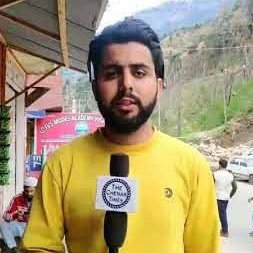
Anzer Ayoob is the Founder and Chief Editor to The Chenab Times
