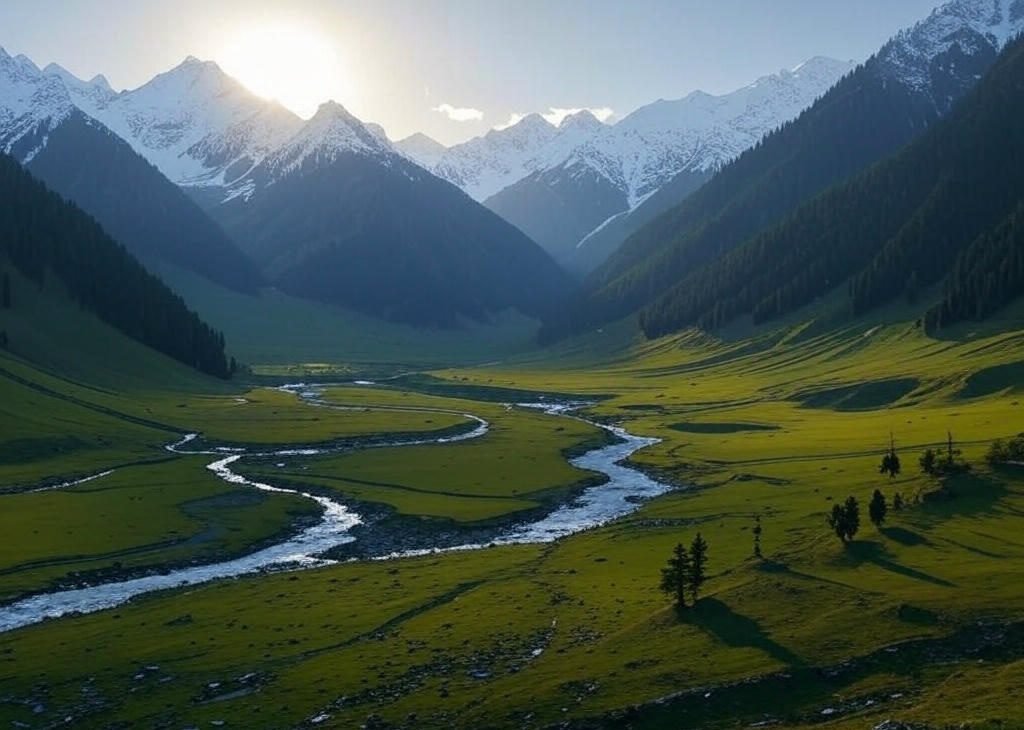
Nestled in the heart of Jammu and Kashmir, where rivers wind through lush meadows and snow-capped peaks touch the sky, lies the serene valley of Pahalgam. For generations, this haven has been a sanctuary of peace—a place where people come to breathe, reflect, and find solace in nature’s beauty. But on one tragic day, the calm of this valley was shattered by a horrific act of terror.
What should have been a tranquil retreat turned into a scene of unimaginable horror. Tourists seeking peace were met with violence. Families were torn apart, lives were lost, and a wave of grief washed over the nation. The pain is raw. The sorrow is profound. Yet this attack was more than a loss of life—it was an assault on the very essence of our shared humanity.
Terror doesn’t just target the body; it seeks to wound the spirit. It aims to plant fear where there was joy, division where there was unity. But those who believe violence can break our collective resolve are gravely mistaken. Time and again, we’ve proven that no act of hatred—no matter how vile—can extinguish the light of our unity, compassion, and determination to stand together.
The attackers may have thought their brutality would spread terror. But they will never grasp this truth: the spirit of a united people is unbreakable. They failed—and they will always fail—because our strength lies not in fear, but in resilience.
Let’s be clear: terrorism has no religion. No true faith—whether Islam, Christianity, Hinduism, Sikhism, or any other—condones the slaughter of innocents. The Holy Quran declares, “Whoever kills a person… it is as though he has killed all mankind.” This is the moral compass of Islam—and of every major religion. Those who murder in the name of faith betray not only humanity but the very principles they claim to uphold.
In moments like these, it’s easy to sink into despair. But we must choose a higher path. We must let our grief unite us, not divide us. We mourn the victims not just with tears, but with solidarity. Our pain must not fuel hatred—it must inspire change. Let’s turn mourning into action, heartbreak into hope, and sorrow into strength.
To those who seek to tear us apart with bullets and bombs, we say:
You may try to dim our light, but you will never extinguish our flame.
This is our vow. This is our stand.
Let our grief fuel a deeper commitment to justice. Let it remind us that the future of Kashmir—of India, of humanity—will not be shaped by the hands of violence, but by those who build bridges, heal wounds, and dare to dream of peace.
Kashmir is more than a place on a map.
It’s a living symbol of what’s possible when peace and nature intertwine. A land of poets and shepherds, of faith and beauty, of quiet strength and resilience. Those who seek to tear Kashmir apart forget that its essence cannot be touched by hate. They cannot steal its spirit. That belongs to the world—to all of us.
We must protect that spirit, not just for the people of Kashmir, but for generations yet to come. Let Kashmir remain what it has always been in our hearts: a paradise of peace, a reflection of harmony, a vision of what the world can be when we choose love over fear.
In these divided times, when walls and wounds often separate us, we’re reminded of the urgent need for dialogue, understanding, and compassion. We cannot let the madness of violence become our norm. Instead, let the bonds of peace unite us—across religions, borders, and all that seeks to divide us.
Let the memory of those lost in Pahalgam be more than a tragedy. Let it be a turning point. Let their legacy inspire a renewed commitment to peace, a louder call for unity, and a deeper love for every life, every faith, every corner of this diverse and beautiful nation.
Let us reject the poison of hate and raise the banner of humanity.
As we look to Kashmir’s future, let’s do more than mourn. Let’s dream—and act. Let’s make Kashmir not a battlefield, but a beacon. Not a victim, but a voice. A voice that declares: We will not bow to fear. We will not be divided. We will rise—again and again—stronger, united, and unbroken.
Because, in the end, true power lies not with those who destroy, but with those who choose to build.
(The author is a student based in Kishtwar. Views expressed are his own.)
❤️ Support Independent Journalism
Your contribution keeps our reporting free, fearless, and accessible to everyone.
Or make a one-time donation
Secure via Razorpay • 12 monthly payments • Cancel anytime before next cycle


(We don't allow anyone to copy content. For Copyright or Use of Content related questions, visit here.)
Ahmed Umair Zargar is a law student and contributor at The Chenab Times.