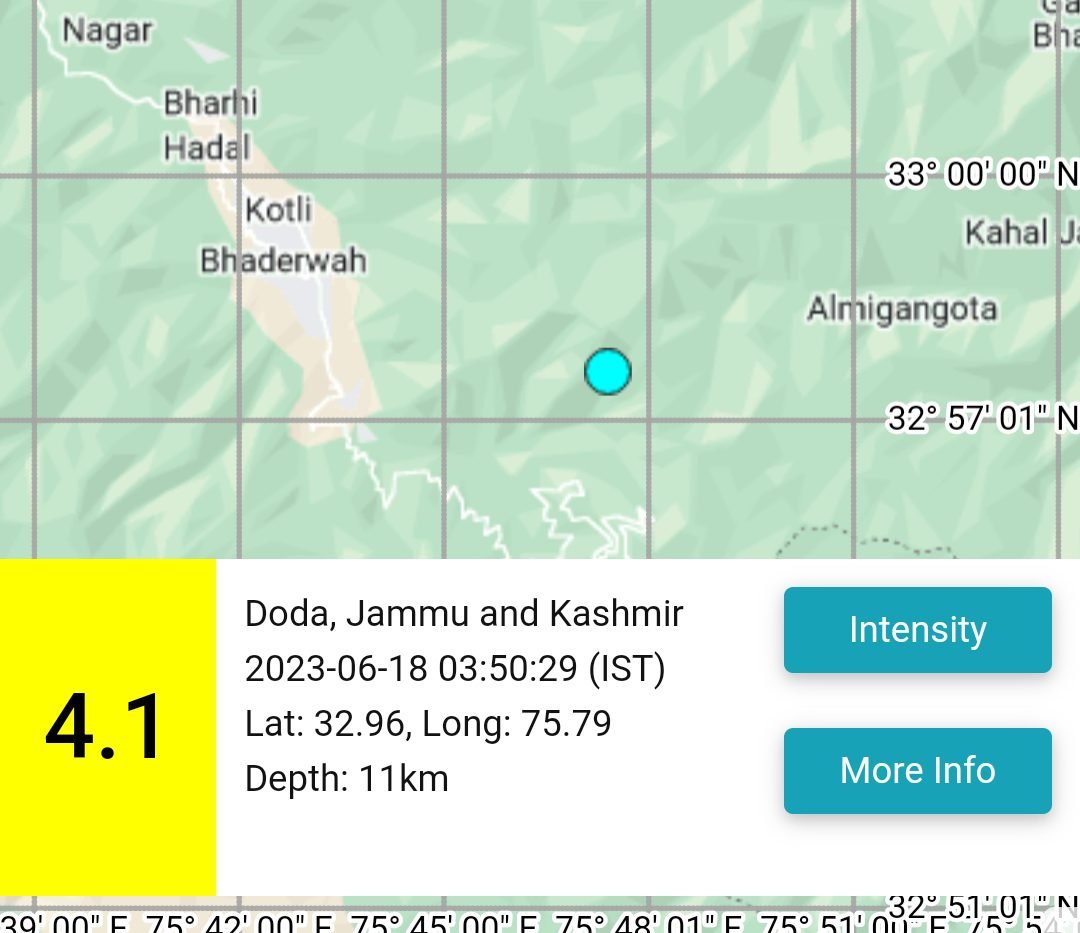
The recent series of earthquakes in the erstwhile Doda region of Jammu and Kashmir has left the local population questioning the cause and expressing concerns about the potential role of massive dam construction projects. Experts have long cautioned against the construction of large dams in the Chenab Valley, citing the region’s geological instability. The authorities, however, seem to have turned a deaf ear to these concerns, and the consequences are becoming increasingly evident.
In an interview with Prof. G M Bhat, a senior geologist and seismic expert from Jammu University’s Department of Geology, he had expressed concern over the increasing threat of breaches due to earthquakes or cloudbursts in the glacial lake areas. Prof. Bhat highlighted that the frequency of local earthquakes and cloudbursts in the Chenab Valley has been on the rise in the past decade. He warned that if such events were to occur near lakes or dam sites, the collective volume of water released could devastate downstream habitations.
“Chenab Valley falls in seismic zone 4, which is highly vulnerable to major earthquakes,” Prof. Bhat stated. He emphasized that given the frequency of earthquakes in the region, there is a possibility that dams could be breached. To mitigate the risk of a major catastrophe, he recommended the construction of small hydroelectric projects with manageable reservoirs, enabling easier control of water flow.
In response to The Chenab Times’ inquiry regarding the recent earthquakes in the Doda region, G M Bhat offered a thought-provoking observation. He remarked, “The same statement is valid today as well. It appears to be a repeat of the 2013 event.” Bhat’s statement suggests a disconcerting pattern of seismic activity reminiscent of a previous incident in 2013. This raises concerns about the region’s vulnerability to earthquakes and emphasizes the need for thorough investigation and analysis to understand the underlying factors contributing to this recurring phenomenon. The implications of these recurring earthquakes on the safety and well-being of the local population cannot be understated, necessitating immediate attention and action from the relevant authorities.
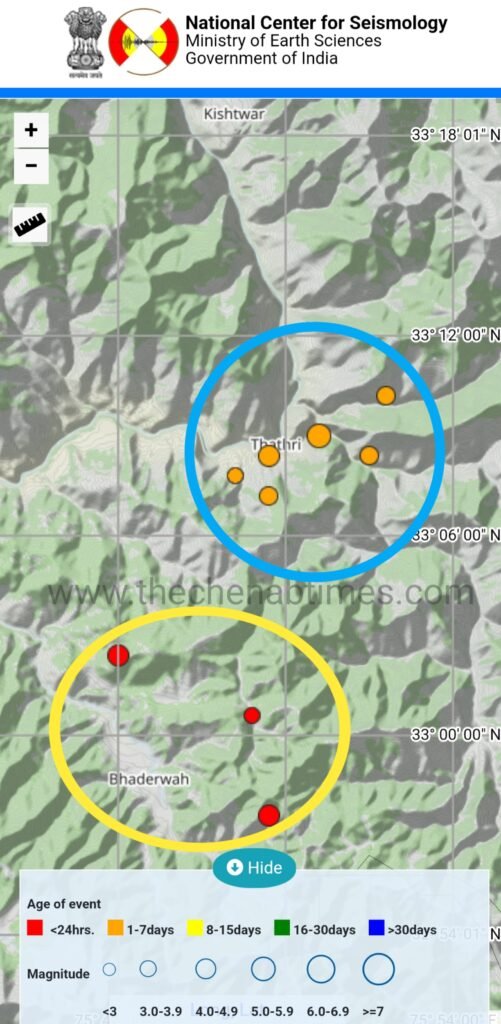
One cannot help but wonder why these earthquakes are occurring with alarming frequency in the erstwhile Doda region. Is there a direct correlation between these seismic events and the construction of massive dams? The experts have long cautioned against the construction of large dams in the Chenab Valley, highlighting the region’s geological instability. However, it appears that the authorities have chosen to overlook these warnings, and the consequences are now becoming increasingly evident.
While some locals, grappling with unemployment and economic depression, may welcome the dam projects as a potential source of job opportunities, the long-term implications of such developments cannot be ignored. The environment, which sustains the lives and livelihoods of the local population, is being put at risk. Disturbing reports from The Chenab Times indicate that these projects are polluting the Chenab River as construction materials are directly dumped into its waters. Such negligence is not only detrimental to the ecosystem but also exacerbates the region’s vulnerability to natural disasters.
Moreover, the unmonitored construction of highways and other infrastructure projects in the area raises serious questions about the authorities’ commitment to preserving the geological stability of the region. One striking example is the National Highway, where contractors have allegedly cut more than 30 meters of mountainous terrain instead of the designated approximately 3 meters, leading to irreversible damage. The consequences of such reckless construction practices are evident in the unstoppable landslides in Ramban. Unfortunately, a similar pattern seems to be unfolding in the districts of Doda and Kishtwar, where the construction of highways disregards the importance of maintaining geological stability.
As concerned citizens, we can only raise these questions and highlight the evident issues. It is disheartening that while everyone is aware of the potential causes and consequences, there is a disturbing lack of accountability and transparency from the responsible authorities. The welfare of the local population, the preservation of the environment, and the overall stability of the region should be paramount considerations in any developmental endeavor.
It is high time that those in power address these concerns and provide the necessary explanations and corrective actions. The voices of experts and the local population, who bear the brunt of these seismic events, must not be disregarded. By acknowledging the warnings and taking appropriate measures to rectify the mistakes of the past, we can strive towards a safer and more sustainable future for the erstwhile Doda region. The time for answers and action is now.
❤️ Support Independent Journalism
Your contribution keeps our reporting free, fearless, and accessible to everyone.
Or make a one-time donation
Secure via Razorpay • 12 monthly payments • Cancel anytime before next cycle


(We don't allow anyone to copy content. For Copyright or Use of Content related questions, visit here.)

Anzer Ayoob is the Founder and Chief Editor to The Chenab Times