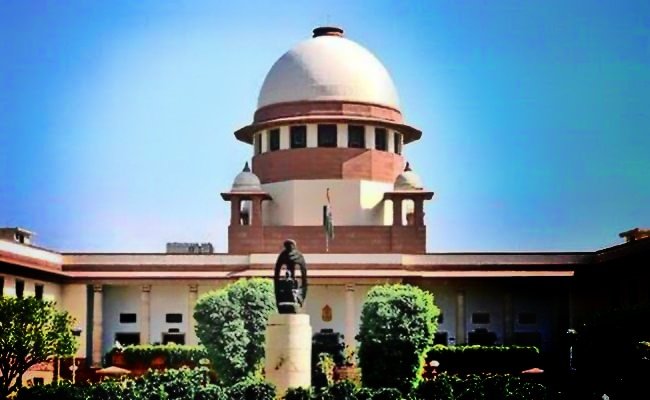
In a significant decision, the Supreme Court of India has affirmed the Rajasthan High Court’s ruling that B.Ed. (Bachelor of Education) degree holders are ineligible for appointment as primary school teachers. The ruling emphasizes that the fundamental right to education in India, as guaranteed under Article 21A of the Indian Constitution and the Right to Education Act, 2009, encompasses not only ‘free’ and ‘compulsory’ education for children below 14 years of age but also underscores the importance of ‘quality’ education.
A bench comprising Justice Aniruddha Bose and Justice Sudhanshu Dhulia upheld the view that B.Ed. degree holders do not meet the essential pedagogical threshold required for teaching primary classes, which is imperative for imparting ‘quality’ education to young learners. The decision comes in response to a dispute stemming from a notification issued on June 28, 2018, by the National Council for Teacher Education (NCTE), which had allowed B.Ed. graduates to be considered for the position of primary school teachers.
The core of the dispute was rooted in a notification by the Board of Secondary Education, State of Rajasthan, which excluded B.Ed. degree holders from the list of eligible candidates for the Rajasthan Teacher Eligibility Test (RTET). This action sparked a legal challenge before the Rajasthan High Court, resulting in the court quashing the NCTE notification and asserting that B.Ed. qualified candidates were unqualified for primary school teaching positions.
Senior Advocate PS Patwalia and Senior Advocate Meenakshi Arora represented the B.Ed. qualified candidates, arguing that the High Court failed to consider that the NCTE notification was a policy decision endorsed by the Central Government. Conversely, Senior Advocate Kapil Sibal and Senior Advocate Dr. Manish Singhvi, representing diploma holders in Elementary Education (D.El.Ed.), contended that the NCTE, as an expert body, should exercise independent decision-making based on objective realities rather than merely following government directions.
In its ruling, the Supreme Court highlighted the historical context of the right to free and compulsory education for children in India, emphasizing that the framers of the Indian Constitution viewed education as a cornerstone of social progress. The court emphasized that elementary education must not only be ‘free’ and ‘compulsory’ but also ‘meaningful’ and of ‘quality’ to be truly effective. It also underlined the significance of Article 21A of the Constitution and the Right to Education Act, which lay down norms and standards for delivering ‘quality’ education at the elementary level.
The court noted that a good teacher is paramount to ensuring ‘quality’ education, and any compromise on teacher qualifications would inevitably lead to a compromise in the educational experience. Addressing the qualifications, the court highlighted that the NCTE, as the academic authority, had initially prescribed a diploma in elementary education (D.El.Ed.) as the necessary qualification for primary school teachers. This training was specifically designed to handle primary level students and their pedagogical needs.
The court pointed out that a B.Ed. qualification primarily prepared individuals for teaching secondary and higher secondary level students, not for teaching primary level students. Consequently, the inclusion of B.Ed. as a qualification was seen as potentially compromising the ‘quality’ of primary education.
In a crucial aspect of the ruling, the court held that judicial review can be exercised against policy decisions that are contrary to the law, arbitrary, and irrational. It asserted that the decision to include B.Ed. as a qualification for primary school teachers, even if viewed as a policy decision, contradicted the purpose of the Right to Education Act and the fundamental right enshrined in Article 21A.
The Supreme Court not only struck down the NCTE’s decision to include B.Ed. as a qualification for primary school teachers but also criticized the procedural flaws in the process. The court deemed the NCTE’s decision as not an independent one but rather a reflection of government direction. As a result, the notification was quashed, upholding the Rajasthan High Court’s judgment.
(Inputs from Live Law)
❤️ Support Independent Journalism
Your contribution keeps our reporting free, fearless, and accessible to everyone.
Or make a one-time donation
Secure via Razorpay • 12 monthly payments • Cancel anytime before next cycle


(We don't allow anyone to copy content. For Copyright or Use of Content related questions, visit here.)

The Chenab Times News Desk