Home Blog Page 5

Jammu and Kashmir Receives Widespread Rainfall for Second Consecutive Day

0

Srinagar, Jammu: Jammu and Kashmir experienced widespread rainfall for the second consecutive day on Saturday as a fresh Western Disturbance influenced the region, leading to a noticeable drop in temperatures.

The Meteorological Department (MeT) indicated that weather conditions are anticipated to improve gradually from Sunday, with a reduction in rainfall activity, although isolated showers may persist.

According to details received by The Chenab Times, rainfall commenced on Friday afternoon across Srinagar and other parts of Kashmir, continuing intermittently through the night and into Saturday. MeT data revealed that Srinagar recorded 25.1 mm of rainfall, Qazigund 18.8 mm, Pahalgam 12 mm, Kupwara 14.1 mm, Kokernag 12.8 mm, and Gulmarg 32.2 mm by Saturday evening. In the Jammu region, Ramban registered 24 mm of rainfall, Batote 53.8 mm, Poonch 45.5 mm, Rajouri 61 mm, Jammu 14.4 mm, Reasi 34.5 mm, Katra 32.2 mm, Bhaderwah 26.8 mm, and Banihal 19.7 mm.

Daytime temperatures saw a significant decrease throughout Kashmir. Srinagar recorded a maximum temperature of 16.3 degrees Celsius, Pahalgam 10.2 degrees Celsius, and Gulmarg 5.3 degrees Celsius, all falling below the seasonal normal. Temperatures in the Jammu region also plummeted below average.

An official from the MeT department stated that the rains were expected to continue until Saturday evening in the plains of Kashmir, with light snowfall anticipated in higher reaches. Higher-altitude areas and critical mountain passes, including Zojila, Sinthan Top, Margan Top, Mughal Road, Sadhna Top, and Razdan Top, received fresh light snowfall, which subsequently hampered traffic movement. Several roads, such as the Mughal Road, Kokernag-Sinthan Top road, Gawran-Margan Top road, and the Bandipora-Gurez road, were temporarily closed due to snow accumulation.

Fresh snowfall was also reported from the tourist resort of Sonmarg, Gulmarg, and the twin Chenab valleys of Marwa and Warwan in Kishtwar district. Higher reaches of Ladakh, including Leh, Kargil, and Nubra Valley, also experienced snowfall. Incidents of shooting stones and landslides were reported at multiple locations in Ramban along the Srinagar-Jammu National Highway, causing traffic disruptions for several hours.

Weather conditions are projected to improve gradually from Sunday, with the possibility of brief showers in isolated areas. However, information was available with The Chenab Times that another Western Disturbance is expected to affect Jammu and Kashmir from April 7 to 9, bringing a new spell of widespread rain and snowfall in higher reaches. Director MeT Centre Srinagar, Mukhtar Ahmad, advised that the region would continue to experience unstable weather due to successive Western Disturbances until April 10. He further predicted partly cloudy conditions with light rain at isolated places on April 5-6, followed by a more significant Western Disturbance from April 7-9 bringing light to moderate rain and snowfall in higher reaches, accompanied by thunder and gusty winds. A brief spell of light rain or snow is likely at isolated places on April 10-11, before a period of generally dry and cloudy weather from April 12 to 15.

The MeT department has issued a warning for thunderstorms, hailstorms, and gusty winds with speeds of 40-50 kph expected between April 7 and 8. An advisory cautioned that intense heavy showers for brief periods could lead to flash floods, landslides in vulnerable areas, and waterlogging in low-lying regions. Farmers have been advised to suspend agricultural operations, and travellers urged to plan accordingly.

Despite inclement weather and incidents of shooting stones and landslides, the Srinagar-Jammu National Highway remained open for traffic on Saturday, as reported by M M Parvaiz from Ramban. Officials confirmed that intermittent rainfall across the region triggered these incidents at Hingni, Digdool, and other vulnerable points along the Nashri-Ramban-Banihal stretch. Swift clearance operations by road maintenance agencies ensured minimal disruption to traffic movement. Authorities are continuously monitoring the situation, with men and machinery deployed at critical points to manage any emergencies. Commuters have been advised to exercise caution due to the persistent risk of landslides and falling debris.

The Mughal Road was restored on Saturday morning after being closed for vehicular movement on Friday due to snowfall and adverse weather conditions. Sumit Bhargav reported from Rajouri that vehicular movement was temporarily permitted during notified timings from 11 am to 3 pm. Despite the temporary restoration, fresh light snowfall in upper reaches on Saturday evening raised concerns about potential renewed disruptions. Commuters are advised to strictly adhere to regulated timings and exercise caution.

In Kupwara, the main road leading to the Keran sector was blocked near Thandapani on Saturday following a landslide triggered by recent rainfall, as reported by Tarique Raheem. The landslide, which involved an uprooted tree, suspended vehicular movement and caused significant inconvenience. The landslide also damaged electric lines, resulting in power outages in the Keran sector, affecting numerous villages. Deputy Commissioner (DC) Kupwara, Shrikant Suse, confirmed that efforts were underway to reopen the road and restore electricity, with the road eventually being reopened for traffic movement in the late evening.

The 85-km Bandipora-Gurez road, particularly at Razdan Top, faced risks due to inclement weather, snow, and high winds, as per officials speaking to Greater Kashmir. The road, which had been open for commuters, was closed on Friday evening. An operation was launched by the Border Roads Organisation (BRO) and police to rescue 38 vehicles stranded at Razdan Top due to heavy snowfall. OC BRO Aman Trivedi stated that all stranded vehicles belonged to locals traveling from Gurez towards Bandipora. Following the overnight rescue, commuters were safely escorted across the pass. The route remained closed to traffic on Saturday, with ongoing snowfall at Razdan Pass creating perilous driving conditions despite relatively light fresh snowfall, exacerbated by high winds causing snow accumulation. Snow clearance operations were prioritized on Saturday, with efforts to reopen the road by Sunday morning. DC Bandipora Indu Kanwal Chib indicated that Standard Operating Procedures (SOPs) for travel on the road would be issued with strict adherence to cutoff timings amidst the inclement weather.

Jammu and Kashmir Legislature Passes Jan Vishwas Amendment Bill, Private Universities Bill

0

SRINAGAR: The Legislative Assembly of Jammu and Kashmir concluded its budget session by passing two significant pieces of legislation: the ‘Jammu and Kashmir Jan Vishwas Second (Amendment of Provisions) Bill, 2026’ and ‘The Jammu and Kashmir Private Universities Bill, 2026’. The bills were passed through a voice vote on Saturday, marking a key development in the region’s legislative agenda.

According to details received by The Chenab Times, the Jan Vishwas Bill, aimed at decriminalizing minor offenses and promoting ease of doing business and living, was introduced by the Minister for Agriculture, Javid Ahmed Dar, on behalf of the Chief Minister. This amendment seeks to align the Union Territory’s legal framework with a national initiative to rationalize offenses, thereby reducing compliance burdens on businesses and citizens.

The Jammu and Kashmir Jan Vishwas Second (Amendment of Provisions) Bill, 2026, officially L A Bill No 07 of 2026, builds upon the Jammu and Kashmir Jan Vishwas (Amendment of Provisions) Ordinance, 2025, which was promulgated on December 16, 2025. That ordinance had already decriminalized minor offenses within five specific acts. The current bill further extends this decriminalization to 18 different acts within Jammu and Kashmir. The amendments propose substituting minor imprisonment penalties with compounding fines and increasing existing fines where they were deemed inadequate. The rationale behind these changes is to foster a more business-friendly environment and simplify daily life for residents.

During the assembly proceedings, Minister Javid Ahmed Dar addressed concerns raised by members who had proposed amendments to the bill. He assured them that their points had been taken into consideration and requested the withdrawal of their amendments, which was subsequently done by legislators Nizam-ud-din Bhat, Balwant Singh Mankotia, Pirzada Farooq Ahmad Shah, and Tanvir Sadiq. Following their withdrawal, the bill was passed unanimously via a voice vote.

The second bill to receive legislative approval was ‘The Jammu and Kashmir Private Universities Bill, 2026’ (L A Bill No 08 of 2026). This bill, introduced by the Minister for Education, Sakina Itoo, lays the groundwork for the establishment and regulation of private universities within the Union Territory. Its primary objective is to ensure the establishment of these institutions, regulate their operations, and maintain academic standards to provide quality education and safeguard the interests of students.

The Minister for Education emphasized that the bill incorporates concerns raised by members regarding the higher education sector. She stated that the legislation is expected to stimulate the higher education landscape in Jammu and Kashmir, offering local students more accessible options for higher studies and reducing the need to travel outside the region for advanced education. While assuring that some proposed amendments would be considered as the implementation progresses, she highlighted the bill’s aim to create a robust regulatory framework.

The proposed regulatory framework, as detailed by the Minister, includes provisions for establishing a Regulatory Authority to oversee private universities, ensuring accountability through prescribed governance structures, and mandating compliance with University Grants Commission (UGC) regulations. Furthermore, the bill addresses student welfare by providing for reservations for local students, offering scholarships for the needy, prohibiting capitation fees and other malpractices, and ensuring student protection in the event of a private university’s dissolution. The legislative intent is to create an environment conducive to establishing high-quality private universities while upholding educational standards and student rights.

Legislators Mir Saifullah, Nizam-ud-din Bhat, Pirzada Farooq Ahmad Shah, and Tanvir Sadiq, who had put forth amendments to the Private Universities Bill, withdrew them following assurances from the Education Minister. However, an amendment proposed by BJP legislator Balwant Singh Mankotia was pressed for a vote and subsequently rejected by the House.

The Speaker then called for a voice vote on the Private Universities Bill, which was passed by the Assembly.

Jammu and Kashmir Patients Gain Access to Advanced Neurological Treatment at Medanta

0
Close-up of a religious ceremony with lit candles and an Orthodox prayer scroll.
Photo by Photography Maghradze PH on Pexels

SRINAGAR: Medanta – The Medicity, a prominent healthcare facility, is increasingly becoming a vital destination for patients from Jammu and Kashmir seeking advanced neurotechnology services. This development signals a growing opportunity for specialised medical treatments to cater to regions with limited access to such care.

According to details received by The Chenab Times, Medanta’s Deep Brain Stimulation (DBS) program, also referred to as “brain pacemaker surgery,” is drawing patients from the Union Territory for the treatment of complex neurological conditions. These include Parkinson’s disease, dystonia, epilepsy, essential tremor, and obsessive-compulsive disorder (OCD).

The hospital has incorporated cutting-edge technologies in its neuro-treatment protocols. These advancements include sophisticated imaging techniques, artificial intelligence-driven brain targeting systems, and real-time neurostimulation capabilities. Such innovations are not only aimed at improving patient outcomes but also at extending Medanta’s reach to populations in areas like Jammu and Kashmir, where highly specialised medical interventions have historically been less accessible.

Neurological disorders represent a significant portion of the overall disease burden in India, accounting for approximately 10% of the total. This prevalence fuels a continuous and growing demand for advanced therapeutic options like DBS. Medanta’s services are further enhanced by the integration of remote programming and adaptive DBS technology. This allows for reduced follow-up travel requirements for patients, making the treatment regimen more manageable and cost-effective for individuals travelling from outside the immediate hospital vicinity.

The positive outcomes observed in patients from Jammu and Kashmir, including those from districts such as Jammu and Udhampur, underscore the clinical effectiveness of the DBS therapy. This success is also contributing to an expanding referral network, positioning Medanta’s DBS treatment as a noteworthy contributor to the evolving landscape of medical value travel within India. The enhanced accessibility and technological sophistication offered by Medanta are providing a new avenue for neurological care for patients who previously faced considerable barriers in accessing such specialised medical services.

J&K Bank Commissions ATM in Remote Khawas Block of Rajouri

0
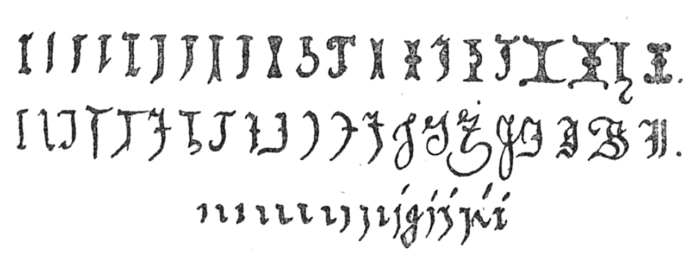
Forms of I and J in Alphonse Chassant, Dictionnaire des abréviations latines et françaises, 1876
Forms of I and J in Alphonse Chassant, Dictionnaire des abréviations latines et françaises, 1876 — Louis Alphonse Chassant / Public domain

Jammu and Kashmir: J&K Bank has expanded its digital banking footprint with the commissioning of a new Automated Teller Machine (ATM) in the aspirational block of Khawas, located in the Rajouri district of Jammu and Kashmir. The initiative aims to enhance ease of banking and financial inclusion for residents in remote areas.

Information was available with The Chenab Times that the new ATM was inaugurated by Dr. Muniraju, Deputy Advisor at NITI Aayog. The ceremony was attended by Additional District Development Commissioner (Rajouri), Malikzada Sheraz, Lead District Manager (Rajouri), Ravinder Singh Nagra, along with bank officials, public representatives, and customers. Members of the legislative assembly, Javed Iqbal from Budhal, and Abhishek Sharma from DDC Rajouri, participated in the inauguration virtually.

During the event, dignitaries commended J&K Bank’s commitment to extending digital banking infrastructure to underserved regions. They highlighted the crucial role such installations play in bolstering financial inclusion and ensuring that populations in aspirational blocks gain access to contemporary banking facilities conveniently. The public was encouraged to leverage the bank’s digital services effectively.

The installation of this ATM is expected to directly benefit the populace of Khawas block, thereby improving access to accessible and convenient banking services within the region. This development marks a significant step in strengthening the banking network in this aspirational area.

With the addition of the Khawas ATM, the total number of ATMs operating within the Rajouri Zone, which encompasses the districts of Rajouri and Poonch, has now reached 85. Attendees at the commissioning event expressed appreciation for the bank’s ongoing endeavors to enhance customer convenience and pledged their support for such beneficial initiatives.

Jammu and Kashmir Tourism Thrives Amid Government Action on Overcharging Complaints

0
Stunning aerial shot of Jamia Masjid in Srinagar, showcasing its distinct architecture and surrounding urban landscape.
Photo by Imad Clicks on Pexels

Srinagar, Jammu and Kashmir – The tourism sector in Jammu and Kashmir is demonstrating resilience, with the government asserting that isolated complaints of tourist harassment and overcharging have not led to a significant decline in visitor numbers.

Information was available with The Chenab Times that the administration is actively addressing such issues through established mechanisms, including grievance redressal systems and capacity-building programs for tourism stakeholders.

The government’s response, presented in the Assembly to a question by National Conference legislator Tanvir Sadiq, emphasized the critical role of visitor experience in sustaining a robust tourism economy. It acknowledged that unprofessional conduct, including overcharging, can negatively impact a destination’s image but maintained that incidents have not occurred on a scale sufficient to affect overall tourist inflow into the Union Territory.

While isolated complaints regarding service quality and pricing do surface periodically, they are managed in accordance with extant regulations. The government highlighted its ongoing commitment to enhancing service standards through regular training and capacity-building initiatives for those involved in the tourism industry. These programs encompass a wide array of areas, from hospitality and etiquette to specialized skills such as guiding, front office operations, and risk management.

However, the administration currently has no proposal under consideration for mandatory certification for all tourism stakeholders. Instead, efforts are focused on strengthening existing training, registration, and regulatory frameworks. Licensing and registration processes are already governed by relevant legislation, but a specific mandate for rating or certification of all participants in the sector is not presently being pursued.

To facilitate the reporting and resolution of grievances, a comprehensive system is operational. This includes Tourist Reception Centres, dedicated tourism helplines, online grievance portals, email services, and the Tourist Police. Complaints received through these channels are meticulously examined, and appropriate action is taken based on established rules. Since January 2025, the authorities have received 508 complaints, with 413 of these having been resolved.

These measures are being implemented as part of a broader administrative strategy to foster sustained growth in the tourism sector, which remains a vital contributor to livelihoods and economic activity in Jammu and Kashmir.

Punjab Government Studying Root Causes to Tackle Corruption and Drugs: Dhaliwal

0
Crime News
Image showing a crime scene. (Photo for representation purposes only)

AMRITSAR: Punjab’s ruling Aam Aadmi Party (AAP) has intensified its campaign against societal ills, with senior leader Kuldeep Singh Dhaliwal stating that the state government is actively investigating the fundamental causes of corruption, drug trafficking, and gangsterism. The government, led by Chief Minister Bhagwant Mann, is committed to eradicating these issues through a scientific approach and aims to usher in a comprehensive transformation by the 2027 Assembly elections.

Information was available with The Chenab Times that Dhaliwal made these remarks while addressing public gatherings in villages within the Ajnala constituency as part of the initiative “Four Magnificent Years with Bhagwant Mann.” He articulated a strong critique of previous administrations, asserting that their policies had fostered the growth of unemployment, drug abuse, and crime, thereby deepening societal problems. Dhaliwal claimed that the current government has successfully begun to dismantle this cycle over its initial four years and is now prioritizing the identification and elimination of the underlying reasons for these persistent issues. He indicated that decisive measures would be implemented in the coming years to ensure the permanent eradication of these challenges.

In detailing the government’s achievements, Dhaliwal highlighted the ongoing anti-drug campaign that commenced in March 2025. He reported that this campaign has led to the seizure of properties valued at Rs 760 crore and confiscated drug proceeds amounting to Rs 15 crore. The operations have also resulted in the arrest of over 92,000 individuals involved in drug trafficking, with seizures including 5,480 kg of heroin. Furthermore, 64 hawala operators were apprehended during these efforts.

The AAP leader emphasized that the government’s strategy extends beyond immediate enforcement actions. The focus on understanding the root causes, he explained, is crucial for developing sustainable solutions that address the socio-economic and psychological factors contributing to the prevalence of drugs and crime. This includes examining issues such as unemployment, lack of opportunities, and the role of organized criminal networks, which previous governments allegedly allowed to flourish.

Dhaliwal pointed to the achievements in curbing the drug menace as evidence of the government’s commitment and effectiveness. The substantial value of seized assets and finances, coupled with the large number of arrests and significant quantities of narcotics intercepted, demonstrates a robust and determined effort. The apprehension of hawala operators, he added, targets the financial infrastructure supporting these illegal activities, aiming to disrupt their operations at multiple levels.

The initiative “Four Magnificent Years with Bhagwant Mann” aims to showcase the government’s performance across various sectors and engage directly with the electorate to gather feedback and address concerns. The dialogue programs in villages are designed to foster a sense of community involvement and transparency in governance. Dhaliwal asserted that the AAP government is dedicated to fulfilling its promises and creating a drug-free, corruption-free, and crime-free Punjab.

The approach of studying root causes is a departure from conventional methods that often focus solely on punitive measures. By delving into the underlying issues, the Punjab government seeks to implement more effective and long-term strategies. This includes potential interventions in education, employment generation, and rehabilitation programs to support individuals affected by drug addiction and to prevent future involvement in criminal activities.

Dhaliwal further stated that the government is committed to a complete overhaul of the system, promising a “revolution” after the 2027 elections. This vision encompasses broader reforms aimed at improving governance, enhancing public services, and fostering economic development across the state. The emphasis remains on creating a Punjab where citizens can live without fear of crime or the pervasive threat of drugs, and where opportunities are available to all.

Decomposed Body Discovered Stuffed in Plastic Bag Near West Delhi Factory

0
Crime News
Image showing a crime scene. (Photo for representation purposes only)

Authorities in Delhi have launched an investigation following the discovery of a decomposed body, found stuffed inside a plastic bag near a factory in the western part of the city. The grim find has prompted a police inquiry into the circumstances surrounding the death and the subsequent disposal of the remains.

Information was available with The Chenab Times that the body was located on Tuesday evening by sanitation workers who were clearing debris in the vicinity of the industrial unit. The state of decomposition suggests the body had been there for a considerable period, complicating immediate identification efforts and raising questions about the timeline of events.

The Delhi Police were alerted immediately after the discovery, and a team of forensic experts was dispatched to the scene. Preliminary examination indicated signs that pointed towards foul play, although officials have refrained from making definitive statements pending further investigation and autopsy reports. The recovered remains have been sent for a post-mortem examination to ascertain the cause of death and to collect any potential forensic evidence.

The area where the body was found is known for its industrial establishments, with several factories and workshops operating in close proximity. This environment presents a complex scenario for investigators, as it involves a transient population of workers and the potential for numerous witnesses or persons of interest. Police have begun interviewing individuals working in the vicinity and reviewing any available CCTV footage from nearby establishments that might shed light on suspicious activities.

The identity of the deceased remains unknown, and efforts are underway to establish it through forensic analysis and by cross-referencing missing person reports across the city. Investigators are exploring all possible angles, including personal enmity, financial disputes, or other criminal motives that could have led to such a violent act. The use of a plastic bag to conceal the body suggests an attempt to hide the crime and delay its discovery.

Local residents and factory owners in the area have expressed shock and concern over the incident. While the specific factory near which the body was found has not been officially named, police have indicated that they are thoroughly examining the operations and personnel of all units in the immediate vicinity. The discovery has heightened security concerns in the industrial belt, with calls for increased police patrolling and surveillance.

The investigation is being conducted by the Delhi Police Crime Branch, which is known for handling complex and sensitive cases. They are expected to meticulously piece together evidence, including forensic findings, witness testimonies, and digital footprints, to apprehend those responsible. The recovery of the body marks the beginning of a challenging investigation aimed at bringing closure to the victim and ensuring justice.

The decomposition level of the body presents a significant challenge for forensic pathologists. However, advancements in forensic science allow for DNA profiling and other identification techniques that can be crucial even in advanced stages of decomposition. These efforts are vital for the deceased’s family, if identified, and for the legal proceedings against any perpetrators.

In recent times, the national capital has seen instances of crime that have raised public safety concerns. The discovery of this decomposed body adds another layer to the ongoing dialogue about law and order. Authorities have assured the public that a thorough investigation will be conducted and that all necessary measures will be taken to ensure the safety and security of the city.

Further details are expected to emerge as the investigation progresses and the autopsy report becomes available. The police have appealed to the public for any information that might assist them in identifying the victim or providing clues related to the crime.

Two Arrested in Delhi for Cheating Man of ₹1.25 Lakh Posing as Customer Care Executives

0
Crime News
Image showing a crime scene. (Photo for representation purposes only)

Two individuals have been apprehended in connection with allegedly defrauding a Delhi resident of ₹1.25 lakh by impersonating customer care executives. The arrests were made following a complaint lodged by the victim who was lured into revealing sensitive financial information.

Information was available with The Chenab Times that the incident unfolded when the complainant received a phone call from someone claiming to be from the customer care department of a financial institution. The caller insisted that there was an issue with the complainant’s account and that immediate action was required to resolve it. The accused then guided the victim through a series of steps, which ultimately led to unauthorized transactions being carried out from his bank account.

Investigators stated that the modus operandi involved phishing techniques, where fraudsters gain the trust of victims by posing as legitimate representatives of service providers. These impersonators often leverage fear or urgency to coerce individuals into divulging One-Time Passwords (OTPs), card details, or other personal and financial data. Once this information is obtained, the criminals proceed to siphon funds from the victim’s accounts.

The cyber cell of the Delhi Police, upon receiving the complaint, launched an investigation. Technical analysis and surveillance were employed to track down the perpetrators. The arrested individuals are reportedly part of a larger network involved in such online financial frauds. Authorities are examining their digital footprint and financial transactions to ascertain the full extent of their operations and if any other individuals have been targeted.

The police have also issued a stern warning to the public, urging them to exercise extreme caution when receiving unsolicited calls from individuals claiming to be from banks, financial institutions, or customer care services. They emphasized that genuine service providers rarely ask for sensitive information like PINs, CVVs, or OTPs over the phone. Citizens are advised to verify the identity of callers through official channels and to never share such details.

This case highlights the persistent threat posed by cybercriminals who exploit common service interactions to perpetrate fraud. Law enforcement agencies are continuously working to combat these sophisticated online scams, but public awareness and vigilance remain crucial in preventing such incidents. The police are likely to provide further details on the investigation and the measures being taken to prevent future occurrences.

Maharashtra Politics Intensifies as Sunetra Pawar Seeks Support in Baramati; Congress Insists on Contesting Bypoll

0
A vibrant youth protest with banners and flags, capturing activism in the urban environment.
Photo by Pedro Inacio on Pexels

The political landscape in Maharashtra’s Baramati constituency is experiencing heightened activity as Sunetra Pawar, wife of NCP (Ajit Pawar faction) leader and Maharashtra Deputy Chief Minister Ajit Pawar, has reportedly reached out to Uddhav Thackeray for support. This move comes amidst ongoing discussions about the upcoming by-election in the constituency, a seat traditionally held by the Pawar family. Adding another layer of complexity, the Congress party has firmly stated its intention to contest the by-election, signaling potential friction within the Maha Vikas Aghadi (MVA) alliance.

The Chenab Times has learned that Sunetra Pawar’s outreach to Uddhav Thackeray, the leader of Shiv Sena (UBT), is aimed at securing political backing for her potential candidature. The Baramati Lok Sabha seat fell vacant following the resignation of Supriya Sule, who is Ajit Pawar’s cousin, after she was elected to the Rajya Sabha. The Pawar family’s deep roots and influence in Baramati make any electoral contest there a closely watched affair.

Sources indicate that while Sunetra Pawar is exploring avenues for support, the Congress party’s stance on contesting the by-election has presented a challenge to the prevailing MVA strategy. The Congress has reportedly conveyed its desire to field its own candidate, a decision that could lead to a multi-cornered contest and potentially divide the opposition vote. This situation is particularly delicate given the MVA’s broader objective of presenting a united front against the ruling Mahayuti coalition in the state.

The Baramati constituency has been a stronghold of the Pawar family for decades, with both Ajit Pawar and his father, Sharad Pawar, having represented it in Parliament. Supriya Sule, daughter of Sharad Pawar, has represented the constituency for the past three terms. Sunetra Pawar, a prominent social worker and businesswoman, has been active in public life, though she has not previously contested a direct election. Her potential entry into the electoral fray signifies a strategic move by the Ajit Pawar faction.

The dynamics within the MVA coalition, comprising Shiv Sena (UBT), Nationalist Congress Party (NCP-Sharad Pawar faction), and Congress, are crucial in determining the electoral outcomes in Maharashtra. Any disagreement over seat allocation or candidature can have ripple effects across alliances. The Congress’s insistence on contesting the Baramati by-election underscores its ambition to expand its electoral footprint and leverage any opportunity to gain ground in crucial constituencies.

The developments come at a time when Maharashtra’s political scene is already in flux, with frequent realignments and strategic maneuvers by various parties. The upcoming by-election in Baramati, a seat of considerable political significance, is likely to become a focal point of these political strategies. The outcome of these internal discussions within the MVA will not only determine the fate of the Baramati by-election but also reflect the strength and cohesion of the opposition alliance as it prepares for future electoral challenges.

Ajit Pawar’s faction of the NCP, which allied with the Bharatiya Janata Party (BJP) and Shiv Sena (Eknath Shinde faction) to form the Mahayuti government, is keen to retain control over the Baramati seat, considering its symbolic importance. Sunetra Pawar’s candidature would be a direct attempt to solidify the faction’s position in its traditional bastion. However, the opposition from the Congress, if it materializes into a fielded candidate, could create a complex electoral scenario.

The Congress party’s decision-making process is likely influenced by its performance in recent elections and its strategy for the upcoming general elections. Contesting a prestigious seat like Baramati, even if it means challenging an ally, could be seen as a move to assert its relevance and electoral strength within the MVA. The party may believe that it has a viable candidate or that contesting will help it mobilize its cadre and voters.

The outreach from Sunetra Pawar to Uddhav Thackeray highlights the delicate political balancing act being performed by the MVA constituents. While the alliance aims for unity, individual party interests and ambitions often come into play, especially in high-stakes contests. Thackeray’s response to Sunetra Pawar’s request will be closely scrutinized, as it could signal his party’s alignment within the MVA and his willingness to support a candidate from a faction that is now part of the ruling coalition.

The election commission is expected to announce the schedule for the Baramati Lok Sabha by-election soon. Until then, the political maneuvering and behind-the-scenes negotiations are likely to continue, shaping the contours of the electoral battle. The decision of the Congress party, the overtures to Uddhav Thackeray, and the Pawar family’s strategic calculations will all play a significant role in the final outcome of this pivotal by-election in Maharashtra.

Delhi: Girl Succumbs to Stabbing Injuries After Attacker Dies by Suicide

0
Crime News
Image showing a crime scene. (Photo for representation purposes only)

A young girl, who was critically injured in a stabbing incident, has succumbed to her wounds at a hospital in Delhi. The assailant, who attacked the girl, died by suicide hours later.

According to details received by The Chenab Times, the girl was admitted to a hospital in the national capital with severe injuries. Despite efforts by medical professionals, she passed away on Saturday. The incident, which occurred on Friday, has sent shockwaves through the community.

Information was available with The Chenab Times indicating that the perpetrator of the attack died by suicide a few hours after the assault. The motive behind the attack and the subsequent suicide remains under investigation by the authorities.

The Delhi Police have initiated a comprehensive inquiry into the matter, gathering evidence and speaking to potential witnesses. The investigation aims to establish the sequence of events leading to the tragedy and the relationship, if any, between the victim and the assailant. Details about the victim’s identity and age have not been immediately released pending notification of her family.

Hospitals in Delhi often see cases of violent crime, with emergency rooms frequently dealing with the aftermath of assaults. This particular incident highlights the serious concerns regarding such incidents and the need for continued efforts to ensure public safety. The police are expected to release further details as the investigation progresses.

The legal framework in India provides stringent penalties for violent crimes, including murder and attempted murder. In cases involving suicide, while the immediate focus shifts to the criminal act, the underlying psychological and social factors are often a subject of broader discussion and concern.