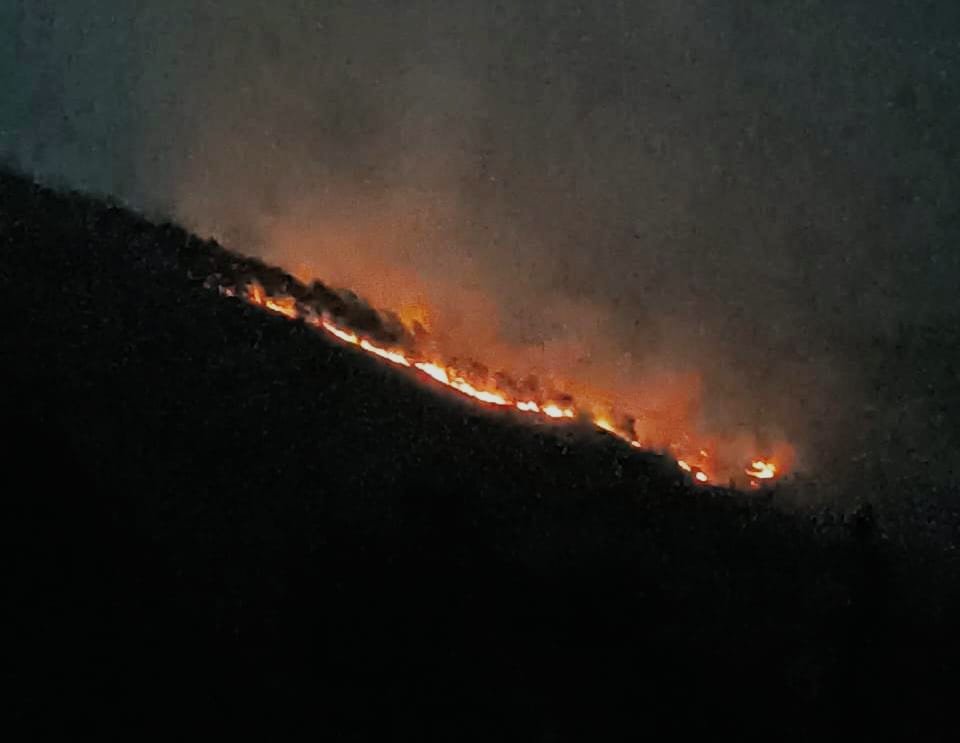
In the heart of the Chenab Valley, an unsettling narrative unfolds as forest fires continue to wreak havoc during the winter season. Much like the indispensable role of lungs in sustaining human life, forests play a crucial role in maintaining the delicate balance of our ecosystem. However, in this era of progress, the significance of these green havens seems to be overshadowed.
Annually, wildfires plague the Doda and Kishtwar districts of the Chenab Valley, inflicting escalating damages. Despite the winter season being underway, the absence of precipitation has created drought-like conditions, polluting the environment and igniting devastating fires in the woodlands, leading to a hazardous combination of smoke and ash.
Recent weeks have seen numerous locations in the Doda and Kishtwar districts succumb to these fires, causing irreparable harm to lush greenery, trees, and wildlife. The exact extent of the damage remains elusive due to a lack of up-to-date information, but the gravity of the situation is undeniable.
Unraveling the Mystery: Why are Forests Burning?
Answering this question is complex, but if one word were to encapsulate the response, it would be “ignorance.” Despite our contemporary knowledge, there are still those who attribute forest fires to misguided beliefs, such as the notion that fires create smoke, which later turns into clouds and leads to rainfall. However, this claim is baseless, and the reality is far removed from such notions.
The Forest Department of Jammu and Kashmir, in its 2021 publication titled “Forest Fire Risk Zonation and Vulnerability Assessment, Forests of Jammu and Kashmir,” sheds light on the existence of two major Forest Divisions in the Doda district: Doda Forest Division and Bhaderwah Forest Division.
Doda Forest Division and Bhaderwah Forest Division
In the Doda Forest Division, three Forest Ranges—Kuntwara, Siraj, and Thakrai—comprise a total of 50, 144, and 124 Forest Compartments, respectively. Similarly, in the Bhaderwah Forest Division, four Territorial Forest Ranges—Bhalesh, Chiralla, Kellar, and Neeru—encompass varying numbers of Forest Compartments, each covering extensive areas.
Despite these divisions, the continuous reduction of forest areas persists, driven by a combination of public misunderstanding and challenging circumstances. Obtaining accurate figures on the ongoing losses in the enchanting forests of the Chenab Valley remains a considerable challenge.
In light of the latest data, it is evident that the captivating jungles of the Chenab region face alarming threats. As we witness the consequences of wildfires, the once-charming snow-covered mountains now stand as a stark reminder of the perilous situation.
What is the concerned department doing?
While addressing the prevalent issue of forest fires in Doda, it’s noteworthy to express some concerns about the perceived level of activity from the Forest Department. Despite the pressing nature of the situation, there seems to be a discernible gap in the department’s responsiveness and efficacy.
The ongoing awareness programs, though initiated, may not be resonating as effectively as desired. The need to dispel myths and provide accurate information is crucial, and the department needs to reassess its approach to ensure maximum impact. Furthermore, the lack of legal actions or arrests concerning individuals responsible for starting forest fires raises questions about the department’s enforcement capabilities.
It’s important to highlight these concerns constructively, encouraging the Forest Department to enhance its efforts and ensure a more robust and impactful response to the escalating issue of forest fires in the region.
It is undeniable that our environment is in jeopardy, our forests are diminishing, and humanity is at risk. A concerted effort, led by government intervention and the proactive role of the Forest Department, is essential to address this pressing issue. While controlling these situations is beyond human control, making a dedicated effort is well within our capacity. As stewards of creation, it is our responsibility to act with wisdom and urgency, for if our eyes do not open today, it may be too late tomorrow.
❤️ Support Independent Journalism
Your contribution keeps our reporting free, fearless, and accessible to everyone.
Or make a one-time donation
Secure via Razorpay • 12 monthly payments • Cancel anytime before next cycle


(We don't allow anyone to copy content. For Copyright or Use of Content related questions, visit here.)

Farid Ahmed Naik is Executive Editor for The Chenab Times and first Sarazi language news reporter. He also covers Crime and Politics on CT. Read More…