The year was 2015, I was travelling from Jammu to Bhaderwah with my family. We encountered a series of roadblocks on NH244 (Batote-Kishtwar) highway due to heavy rains. By evening we arrived at Ragi Nallah where a multitude of vehicles including buses, private cars, taxis, and even an army convoy were stranded due to the blockade. Despite efforts, machinery to clear the debris couldn’t reach us due to uninterrupted downpour. With no nearby shops, passengers had to manage with whatever they had. A few kilometers away, few shops that were available quickly ran out of supplies as people sought sustenance for the night. The night was grueling as plummeting temperatures and incessant rain made it impossible to venture outside the vehicles. It felt akin to spending a night in confinement.
The following morning, as dawn broke, we witnessed a group of individuals approaching from the opposite end of the road where the landslide had occurred. About ten people laden with bags were making their way towards us. Later we learned that this group is associated with an NGO named Ababeel. The first among them who reached the spot was the founder of this organization — Hassan Babur Nehru — a lawyer by profession. Carrying food in bags, he and his companions commenced distributing food among the stranded travelers. They were the first to extend help. That time, I suppose, both the operators of JCB machines supposed to clear debris and ‘administration’ might have been fast asleep. This article is about Ababeel — the work this organization has been doing, their impactful behavior, and unique approach to social service. Towards the end, I will delve into what prompted me to write this piece.
The Founding Moment and Subsequent Growth
Established in 2015 in Doda, Ababeel is a prominent NGO in Chenab Valley. Following the devastating floods that struck Kashmir in 2014, a cohort of young individuals from the Chenab Valley’s Doda committed themselves to aid the affected people in Kashmir. Through local fundraising efforts in district Doda, they procured essential supplies and subsequently distributed relief package to flood-stricken areas such as Shopian, Kulgam, and Pulwama. However, upon reaching Kashmir, some associates proposed labeling the relief packages with a distinct name to signify the support extended from Doda area. It was in this context that the suggestion arose to label the relief packets under the name “Ababeel”. Consequently, the organization officially adopted this name upon its registration on July 21, 2015. This act of reaching out to people in Kashmir was not mere formality or ostentation but rather a demonstration of solidarity, emphasizing the enduring historical ties between the regions. This longstanding connection persists due to various reasons, common ethnicity being a cohesive and pivotal element.
The emblem of the Ababeel Charitable Trust features a depiction of a Swallow bird alongside its Arabic name “Ababeel” in script. The story of Ababeel recounted in the Holy Quran narrates the attempt by Abraha, the Yemeni ruler, to demolish the Kaaba in Mecca using an army equipped with elephants. Despite his force nearing victory, divine intervention occurred as Allah dispatched flocks of birds—referred to as Ababeel—to carry stones in their beaks and claws, thwarting the assault. This remarkable event serves as a testament to Allah’s omnipotence and safeguarding of His sacred sanctuary, the Kaaba, illustrating the manifestation of divine intervention in moments of adversity.
Over time, Ababeel expanded its reach establishing units in Kishtwar, Bhaderwah, Gandoh, Thathri, Chatroo, and Jammu. In my opinion, it stands out as the sole NGO in the Chenab Valley with an active and extensive outreach. Initially focused on aiding the impoverished and underprivileged across various communities, Ababeel has progressively broadened its scope to encompass diverse realms of social welfare. Its members have dedicated years to meticulously identifying genuine beneficiaries which is a crucial endeavor in ensuring that aid reaches those who are in dire need, particularly the most marginalized segments of society.
Outreach and Contribution
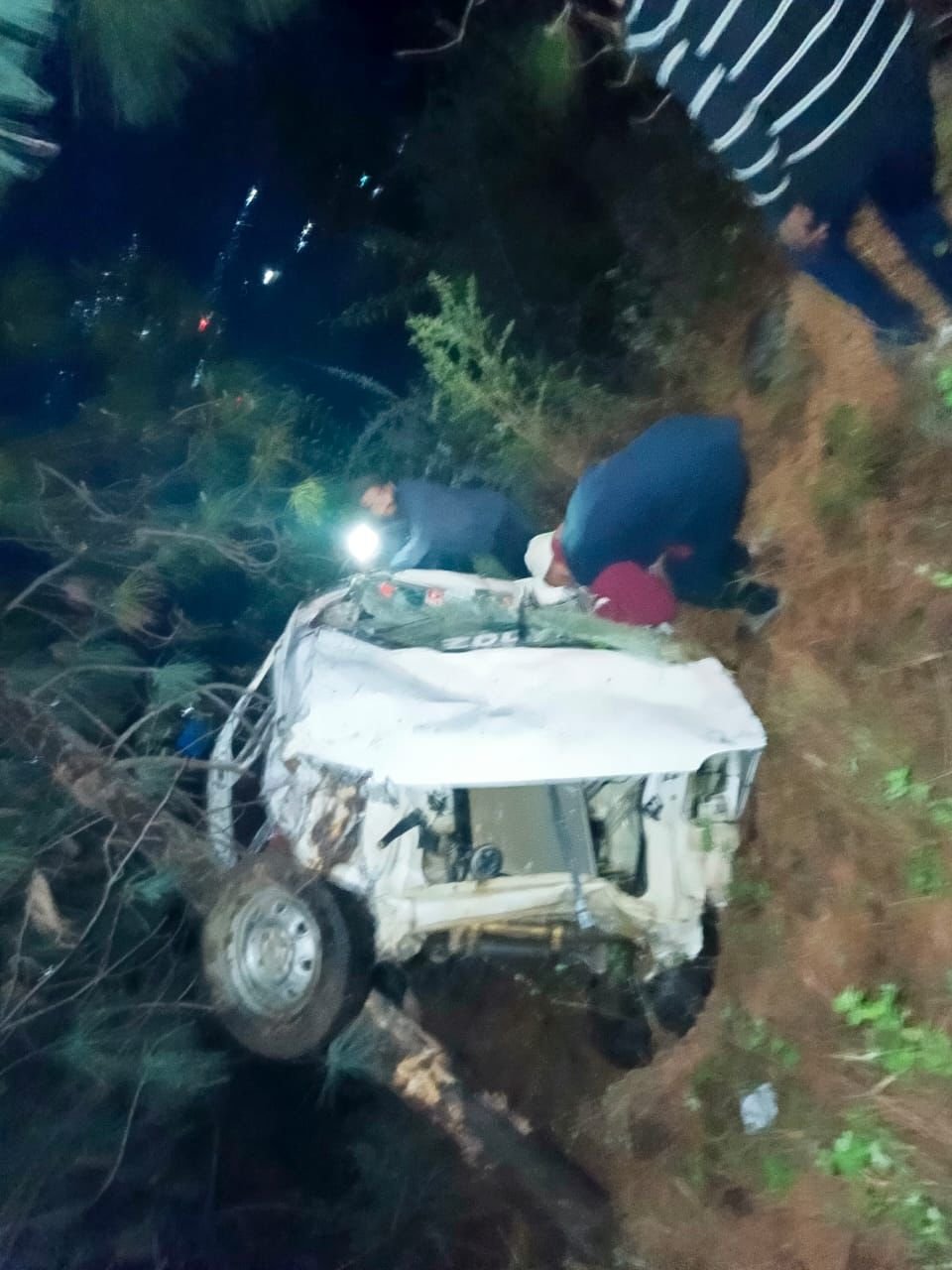
From carrying food items across challenging terrains to reaching communities beyond the reach of ‘administration’, Ababeel exemplifies unparalleled dedication in their endeavors. Their most noteworthy contribution lies in their swift response to emergencies such as road accidents — a frequent occurrence in our region. In a landscape characterized by rugged roads and frequent mishaps, Ababeel stands out as the sole NGO fully equipped to conduct rescue operations. Their vigilant volunteers consistently respond to accidents, often the first to arrive on the scene. Collaborating closely with local authorities, they contribute significantly to rescue efforts utilizing their manpower and ambulance fleet with remarkable efficiency. Notably, in case of referral from district hospitals, they transport patients to hospitals in Srinagar and Jammu without charging a single penny. From initial rescue to hospital transportation and facilitating blood donations, Ababeel’s multifaceted efforts underscore their extraordinary commitment to serving people. Ababeel’s proactive assistance in this sphere is invaluable.
The healthcare and education sectors in our region have long been struggling. The erstwhile district Doda (now Doda, Kishtwar, and Ramban) has consistently been identified as one of the least developed areas, falling behind on various development benchmarks. While the establishment of the Government Medical College (GMC) in Doda may have brought some changes, additional support such as what Ababeel has been providing remains essential. Their investment in fully equipped ambulances is commendable. I recall how they initiated crowdfunding for their first ambulance by quickly gathering the necessary funds in a matter of weeks. This not only reflects their dedication to fundraising but also underscores the trust people have in both the organization and its leadership. Subsequently, ambulances were also procured for units in Kishtwar, Bhaderwah, and Jammu. Ababeel volunteers serve as mobile blood banks, contributing to both government-managed blood banks and swiftly responding to emergency blood requirement through their established network.
They have been extending assistance to individuals affected by disasters, natural calamities, and unfortunate incidents. They have reached out to victims who were neglected by the administration, either due to red-tapism or lack of willingness to provide aid. This demonstrates how effectively this organization utilizes the donations from the public to assist those in need. Ababeel also plays a significant role in sponsoring the education of needy people. They support students who excel in local educational institutions and aspire to pursue further studies in various fields. The organization fully sponsors these students, covering all their expenses such as books, tuition fees, transportation, and hostel fees. Furthermore, Ababeel aids orphan girls in their marriage by providing marriage kits containing essential items.
In 2016, a volunteer from Ababeel got stuck at the District Hospital in Doda (now Government Medical College). The next day, he shared with his associates that he could not observe the fast due to the absence of arrangements for Sehri at the hospital. Hassan Babar along with a few other volunteers visited the hospital and discovered that it was not just his colleague who had missed Sehri, there were numerous others in a similar situation. Despite having a meager amount in their bank account, they decided to provide both Iftaar and Sehri meals for all those staying at the hospital during Ramadan. This initiative was later expanded to include the District Hospital in Kishtwar and the Government Medical College in Jammu, and it has continued ever since.
Furthermore, this organization is exerting a form of informal control in addressing drug abuse, combating injustices against individuals, monitoring institutions for abuse of power, and actively engaging in educating and socializing the community.
Why this article?
This winter, I engaged in a discussion with my friends about the contemporary issues plaguing our society. Ababeel was also mentioned during this discussion as the organization is known for its proactive approach towards addressing societal challenges. However, a friend expressed skepticism describing Ababeel as more of a ‘façade’ than a genuine organization. Ababeel, he feels, has become synonyms with ‘showoff’. When pressed to elaborate his statement, he fell silent. Another acquaintance who referred to organizational shortcomings in Ababeel’s unit Bhaderwah also parroted his views. Joining our conversation was an acquaintance who criticized the Ababeel unit (Bhaderwah) for allegedly neglecting a legitimate case involving a needy family which according to him were in dire need of assistance.
I attempted to address their concerns individually. To the first, I asked what specific actions by Ababeel could be considered as showboating. “If showcasing videos of food kits is deemed as showboating, then I respectfully disagree,” I responded. These videos serve as a form of advertisement, not for the organization itself, but to reassure donors that their contributions are being utilized effectively to aid the needy. Even if viewed as a promotional effort, there is nothing inherently wrong with that since Ababeel operates as a non-profit organization aimed to help poor and needy, not as a money-making unit. Increased publicity attracts more aid donations, benefiting the impoverished and needy. There is no instance where Ababeel has disclosed the identities of those receiving assistance. Unlike the Social Welfare departments in some districts, Ababeel does not publicize the list of beneficiaries for they take care that beneficiaries must appear in public without shame.
Also, if someone believes that shooting videos while conducting mock drills for rescue operations is an act of showoff, then the person should reconsider his perspective. Similarly, one might perceive activities like purchasing or riding horses, or sharing trekking experiences on social media in the form of videos and photos as acts of showoff. It is important for that person to understand that Ababeel volunteers are not employed by us; they too have personal lives and hobbies outside their volunteer work. They have every right to pursue their interests. It is worth noting that they do not purchase horses using the money received as donations, as some may assume. I left him with so many questions to which he did not respond. I am yet to hear from him.
The other two individuals expressed dissatisfaction with the local unit. In response, I suggested that if they believe the local unit is not performing adequately or is refusing to address genuine cases in their area, they should communicate directly with them. If they find that their concerns are not being heard, they can reach out to volunteers in Doda associated with the organization. Alternatively, they could contact or message the founder, who is just a call away. If the aggrieved are unwilling to take these steps, their act of labelling the organization as failure is completely unjust. Of late, a patient was unable to access Ababeel Ambulance services in Bhaderwah which is concerning. However, the reasons behind this incident are known only to those managing affairs in Bhaderwah; the Doda unit bears no responsibility. With no single unit exerting dominance over others, Ababeel operates on a federal and democratic basis. Blaming the Doda unit for alleged callous attitude of another unit is unfair. Local issues should be resolved locally unless they escalate to a serious level beyond the capabilities of the local unit to handle.
How can we help this organization grow?
With social activism becoming increasingly prevalent, there is a plethora of organizations engaged in social work. It seems like every other individual in our society claims to be a social activist, regardless of their actual involvement in social services. Therefore, those who wish to donate should thoroughly evaluate the operations of the organizations they intend to support. Speaking specifically about Ababeel, I have personally witnessed its remarkable growth and extensive outreach. The nature of their work and execution of unique approaches sets them apart from many other organizations. Ababeel has consistently demonstrated responsible stewardship of the funds it receives as donations. Consistently sharing expenditure details on social media platforms underscores the organization’s commitment to transparency and accountability. Moreover, the organization has taken decisive action to remove volunteers who did not adhere to its principles which highlights its commitment to credibility.
There are several ways individuals can contribute to Ababeel’s mission, and I would like to outline some of the ways. While this list may apply to any NGO and is therefore generic, it still keeps Ababeel in context. One of the most impactful contributions is volunteering time and actively participating in the organization’s activities. However, this may not be feasible for everyone due to personal engagements and constraints. Another significant way to support Ababeel is through monetary donations or assistance in organizing fundraising events which can greatly aid in its growth and sustainability. Additionally, donating goods that the NGO requires for its initiatives can also be a valuable form of support. If direct contributions are not possible, individuals can still advocate for the NGO’s cause and promote social reforms aligned with its mission. Encouraging others to support Ababeel’s work through any of the aforementioned methods can also make a meaningful contribution. Lastly, providing constructive feedback and evaluation on Ababeel’s programs, activities, and impact can help enhance their effectiveness and accountability. However, if an individual chooses not to engage through any of these ways, it may be best for them to refrain from criticizing those who are actively contributing to the organization in various capacities. It would be best for them to stay in ivory tower and stop lecturing those who are doing their bit in helping Ababeel in its programmes.
I am neither actively involved with Ababeel as a member, nor am I soliciting funds on their behalf. Also, I am not here to dissuade individuals from donating to other organizations. However, I have observed instances where some organizations receive significant donations and assistance yet fail to effectively distribute these resources to those in need. Instead, they often prioritize assistance for individuals within their own circles. Of late, a local organization in Bhaderwah which has since time immemorial claimed to represent the community sentiments failed to assist families whose homes were destroyed overnight. Those who criticize Ababeel solely for the sake of criticism should instead examine why this local organization failed to provide aid and also who actually aided the victims. While it is beyond the scope of this article to delve into the details of such organizations however it is imperative that as a community, we support credible organizations like Ababeel to the best of our abilities. Especially in these testing times we must rally behind organizations like Ababeel which possess both the intellect and strength needed, as we are surrounded by modern-day Abrahas who must be confronted and banished.
Touqeer Nazir is a student of Political Science and can be reached at touqeerplssc@gmail.com
(Views expressed are author’s own)
❤️ Support Independent Journalism
Your contribution keeps our reporting free, fearless, and accessible to everyone.
Or make a one-time donation
Secure via Razorpay • 12 monthly payments • Cancel anytime before next cycle


(We don't allow anyone to copy content. For Copyright or Use of Content related questions, visit here.)

Touqeer Nazir is a student of political science and can be reached at touqeerplssc@gmail.com.