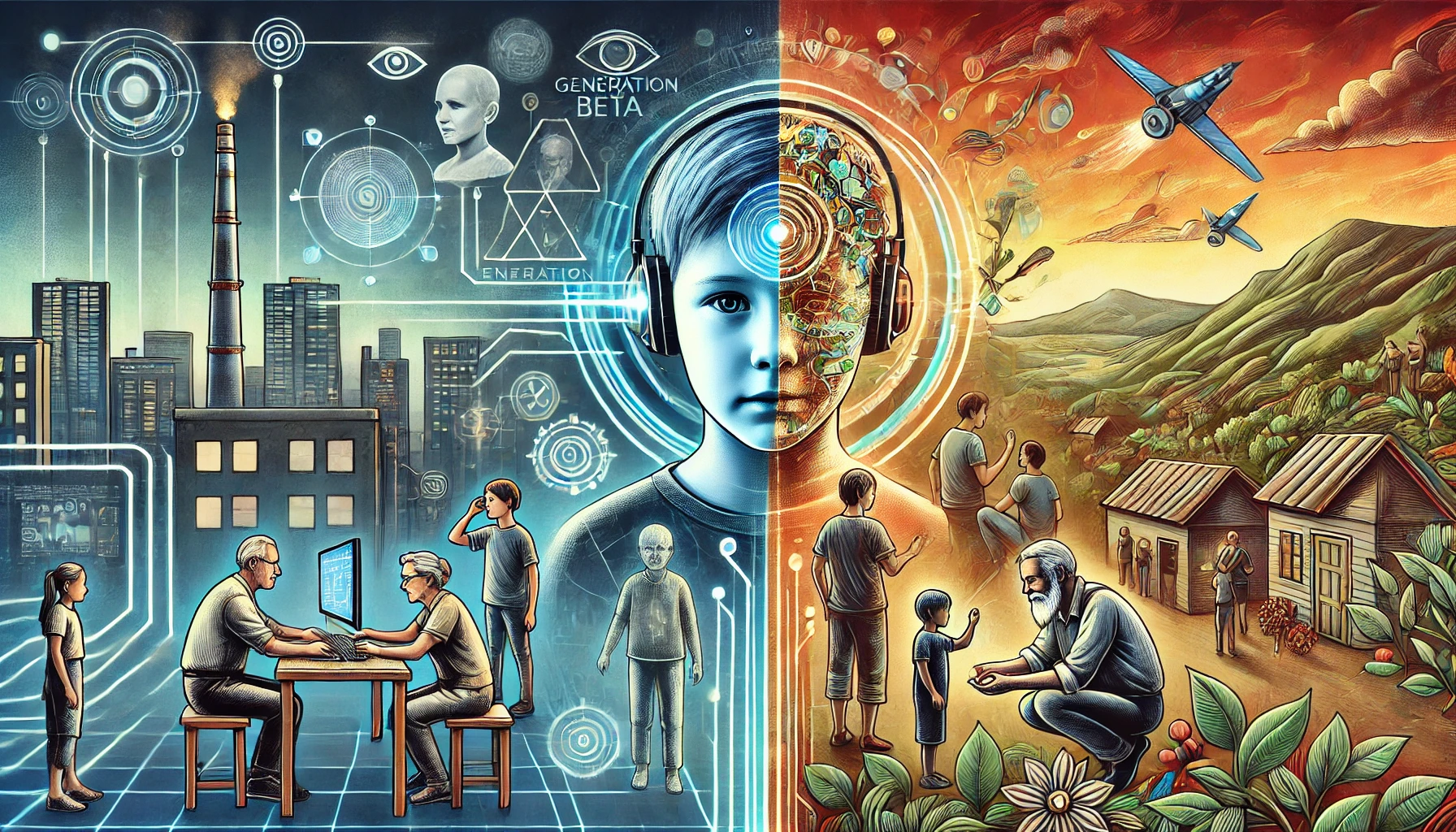
As the calendar ushers in 2025, it also welcomes the birth of a new demographic cohort—Generation Beta, a group projected to span births from 2025 to 2039. This generation, successors to Gen Alpha (2010–2024), will likely constitute 16% of the global population by 2035. According to social researcher Mark McCrindle, Generation Beta represents a fresh chapter in human history, with their name continuing the Greek alphabet tradition initiated with Generation Alpha.
Generation Beta is set to grow up in an era of unprecedented technological integration. Autonomous transportation, wearable health tech, and immersive virtual environments will likely become routine elements of their lives. In contrast to Generation Alpha, which witnessed the rise of artificial intelligence (AI) and smart technologies, Generation Beta will live in a world where AI and automation are fully embedded across education, workplaces, healthcare, and entertainment.
Such advancements promise to redefine daily living and offer immense potential for innovation. However, the seamless fusion of technology into their lives also raises questions about its impact on mental health, privacy, and social dynamics.
While technology offers promise, Generation Beta will inherit a world grappling with climate change, rapid urbanization, and shifting global demographics. These challenges demand adaptability and a collective commitment to sustainability. Gen Beta will face the responsibility of turning eco-consciousness from a trend into an ingrained societal value, a task that previous generations have only partially achieved.
Additionally, the increasing reliance on digital platforms has already altered the fabric of human connection. For Generation Beta, fostering authentic relationships in a hyper-digitalized world will be a critical challenge.
Society and Morality: A Tale of Two Eras
The societal changes witnessed in regions like Jammu and Kashmir offer a lens into the evolving moral landscape. Millennials in J&K remember a time when life revolved around unity, mutual respect, and strong community bonds. Families would frequently visit each other, and societal evils like drugs and adultery were minimal. In contrast, Gen Z has faced a surge in challenges stemming from easy access to explicit content, widespread substance abuse, and a redefinition of cultural norms.
Instances of adolescents using hookahs in public, claiming they are merely “flavors,” highlight how societal evils are being masked and normalized. A culture that once celebrated values now grapples with a generation where smoking, drug use, and explicit lifestyles are often glamorized as markers of individuality.
Even Gen Alpha, many of whom are not yet 15, are increasingly exposed to live-in relationships, early smoking habits, and adult content online. The normalization of such behaviors raises concerns about the moral compass guiding the next generations.
The Road Ahead for Generation Beta
As Generation Beta begins their journey, the question arises: Will society take proactive measures to foster positive values, or will it leave them to navigate these challenges alone? This generation has the potential to bridge the divide between rapid technological progress and timeless human values. Yet, achieving this balance requires deliberate action.
Communities must work collectively to reinforce the importance of ethics, empathy, and genuine human connection. Schools, families, and local organizations must play a pivotal role in teaching values that transcend trends.
In regions like Jammu and Kashmir, a return to the community-driven ethos of the millennial era may serve as an antidote to the growing individualism and societal fragmentation. With conscious efforts, Generation Beta can emerge as not just tech pioneers but also as stewards of a more united, sustainable, and morally grounded society.
Ultimately, Generation Beta’s legacy will depend not only on their technological achievements but also on the values they uphold and the society they choose to shape. The onus lies on today’s world to guide them toward a brighter, balanced future.
❤️ Support Independent Journalism
Your contribution keeps our reporting free, fearless, and accessible to everyone.
Or make a one-time donation
Secure via Razorpay • 12 monthly payments • Cancel anytime before next cycle


(We don't allow anyone to copy content. For Copyright or Use of Content related questions, visit here.)

Anzer Ayoob is the Founder and Chief Editor to The Chenab Times