At least 31 people were killed and 169 injured in a suicide bombing at a Shia mosque in Pakistan’s capital Islamabad on Friday, in one of the deadliest attacks on the Shiite community in the city in over a decade.
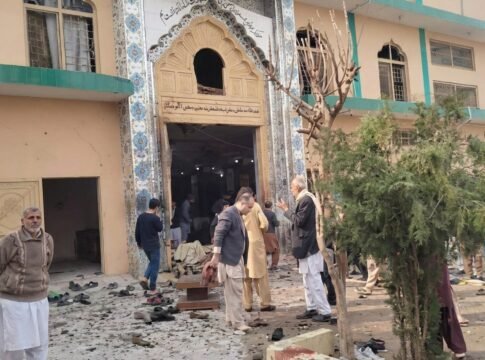
The explosion occurred during Friday prayers at the Khadijatul Kubra mosque-cum-imambargah, also known as Qasr-e-Khadijatul Kubra, located in the Tarlai Kalan area on the southeastern outskirts of Islamabad. The bomber detonated his explosives after being confronted and stopped by security guards at the entrance gate, with some reports indicating he first opened fire before the blast.
The Chenab Times has learned that the attack took place shortly after prayers began, when the mosque was crowded with worshippers. Islamabad’s deputy commissioner, Irfan Nawaz Memon, confirmed the casualty figures, noting that some of the injured were in critical condition and the death toll could potentially rise. Rescue operations involved police, Rangers, and emergency services from Rescue 1122, with victims transported to hospitals including the Pakistan Institute of Medical Sciences (PIMS), where emergencies were declared. Bodies and debris, including shattered glass, littered the prayer hall in scenes captured by local media.
The Islamic State group claimed responsibility for the attack through its channels, according to monitoring groups like SITE Intelligence, describing the assailant as a “martyrdom-seeker” who targeted the Shia congregation. Pakistani authorities initially suggested possible links to networks associated with the Tehreek-e-Taliban Pakistan (TTP), though the TTP denied involvement. Police described the bomber as a foreign national with travel history to Afghanistan, based on forensic analysis, but no immediate confirmation tied the attacker definitively to any group beyond the Islamic State’s claim.
Pakistani leaders swiftly condemned the bombing. Prime Minister Shehbaz Sharif expressed deep grief and directed Interior Minister Mohsin Naqvi to launch a thorough investigation to identify and prosecute those responsible. President Asif Ali Zardari called the targeting of innocent civilians a crime against humanity and prayed for the recovery of the wounded. Foreign Minister Ishaq Dar described it as a heinous violation of Islamic principles, vowing that Pakistan would stand united against terrorism. Senate Opposition Leader Allama Raja Nasir Abbas, a prominent Shia figure, denounced the assault on places of worship as an attack on humanity, religion, and social values.
The incident prompted heightened security measures around the blast site, which was cordoned off by army and paramilitary forces. It marked the second major attack in Islamabad in recent months, following a suicide bombing outside a court building in November that killed 12 people. The attack unfolded amid a broader surge in militant violence in Pakistan, including operations against militants in border regions like Khyber-Pakhtunkhwa, where security forces reported neutralizing several fighters in separate clashes days earlier.
International condemnation was swift. United Nations Secretary-General António Guterres strongly denounced the attack on worshippers. Governments including the United States, United Kingdom, and Iran expressed outrage over the targeting of civilians at a place of worship. Uzbekistan’s President Shavkat Mirziyoyev was on a state visit to Pakistan at the time of the blast.
❤️ Support Independent Journalism
Your contribution keeps our reporting free, fearless, and accessible to everyone.
Or make a one-time donation
Secure via Razorpay • 12 monthly payments • Cancel anytime before next cycle


(We don't allow anyone to copy content. For Copyright or Use of Content related questions, visit here.)

The Chenab Times News Desk