New Delhi secures passage for gas tankers through the world’s most critical oil chokepoint as Iran-United States conflict disrupts global energy supply routes.
Iran has cleared two Indian-flagged liquefied petroleum gas carriers to pass through the Strait of Hormuz, providing partial relief to India’s cooking gas supply chain disrupted by the ongoing Iran-United States conflict.
According to details received by The Chenab Times, the development followed direct telephone conversations between Indian Prime Minister Narendra Modi and Iranian President Masoud Pezeshkian — their first exchange since hostilities between Iran and the United States began. Separately, India’s External Affairs Minister S. Jaishankar also spoke with his Iranian counterpart, Seyed Abbas Araghchi, on the same day.
Prime Minister Modi stated publicly that he had raised two priorities in his conversation with President Pezeshkian: the safety and security of Indian citizens, and the need for uninterrupted flow of goods and energy through the waterway.
Iran’s ambassador to India, Mohammad Fathali, told reporters that Iranian and Indian interests were aligned, describing the two countries as friends with a common fate. He indicated that positive developments on ship movements through the strait were expected within hours, which subsequently materialised with the clearance of the two LPG carriers.
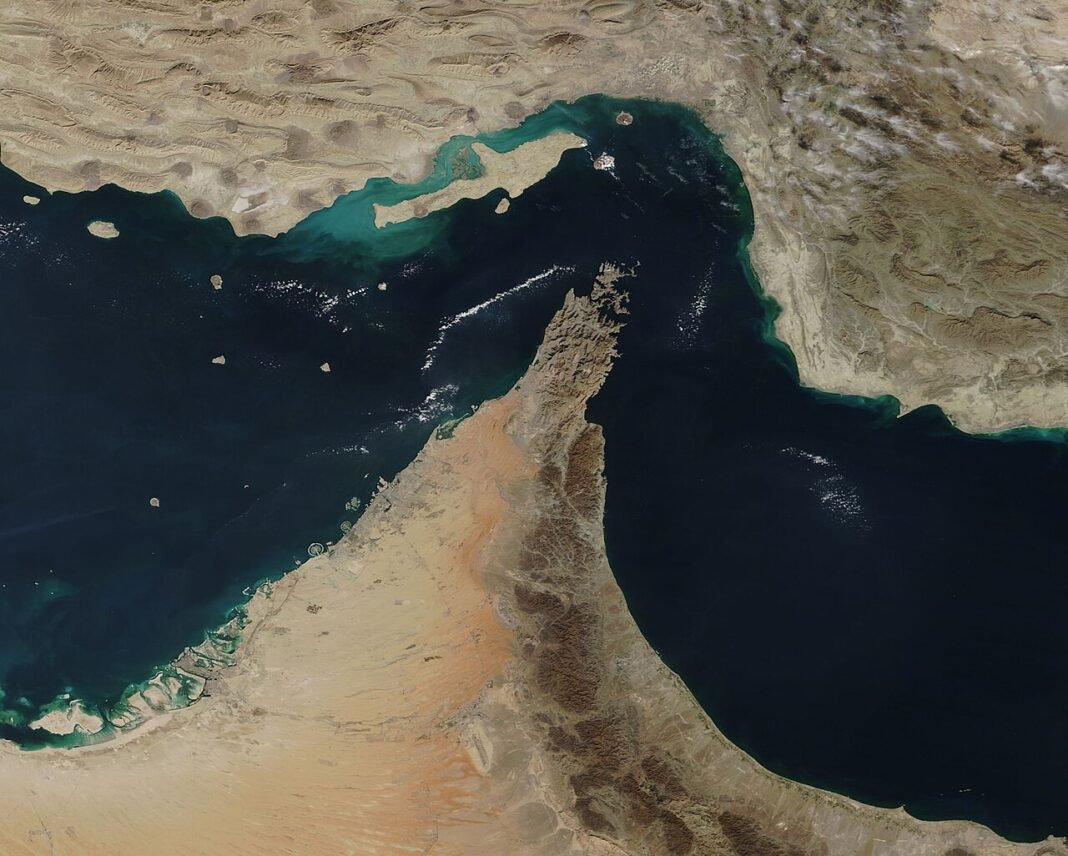
The Strait of Hormuz is among the most strategically significant maritime chokepoints in the world. Nearly half of India’s crude oil imports pass through the narrow waterway connecting the Persian Gulf to the Gulf of Oman. Disruption to traffic through the strait has already removed an estimated 17 million barrels per day from the global oil market, according to reports, raising fears of crude prices reaching 150 US dollars per barrel.
India’s domestic LPG supply has come under measurable pressure in recent days. Delays in tanker arrivals disrupted distribution chains, leading to shortages in several regions and extended waiting times for household and commercial cylinders. India’s Union Petroleum Ministry, however, stated on Friday that LPG deliveries to households, hospitals, and educational institutions were continuing without interruption. Joint Secretary Sujata Sharma said domestic LPG production had risen by 30 per cent compared to levels recorded on March 5, as refineries moved to compensate for import delays.
Indian authorities remain in contact with Tehran to secure safe passage for approximately two dozen Indian-flagged vessels currently positioned west of the Strait of Hormuz, according to people familiar with the matter cited by Indian media. A crude oil tanker carrying Saudi Arabian cargo was also reported to be en route to India after navigating the same passage, with arrival expected on Saturday.
❤️ Support Independent Journalism
Your contribution keeps our reporting free, fearless, and accessible to everyone.
Or make a one-time donation
Secure via Razorpay • 12 monthly payments • Cancel anytime before next cycle


(We don't allow anyone to copy content. For Copyright or Use of Content related questions, visit here.)

Global Affairs Desk at The Chenab Times covers international developments, global diplomacy, and foreign policy issues through fact-based reporting, explainers, and analytical pieces. The desk focuses on major geopolitical events, diplomatic engagements, and international trends, with an emphasis on verified information, multiple perspectives, and contextual understanding of global affairs.