A viral video capturing tourists allegedly smoking at the historic Lohagad Fort in Maharashtra has reignited discussions about visitor behaviour at heritage sites. The incident, which occurred days after a separate controversy involving the same fort, has divided social media users, with some defending the actions of a local man who confronted the tourists.
Confrontation Over Smoking at Heritage Site
Information was available with The Chenab Times that the video, circulating widely online, shows a local resident confronting a group of visitors, reportedly from Delhi, for smoking cigarettes within the premises of Lohagad Fort. The confrontation escalated as the local man questioned the tourists about the legality of smoking at the fort and compared the site to a temple, stating, “This fort is our temple.” He warned them of a police complaint and demanded their cigarettes.
The clip was shared on the social media platform X with a caption that specifically mentioned “Delhi’s public on Lohagad!” and highlighted the legal ban on smoking, tobacco, and alcohol consumption at Maharashtra’s forts. The post also alluded to a previous incident involving the fort, referencing a “Siya Point,” suggesting a connection to a recent, widely reported event.
Mixed Reactions and Accusations
The viral post garnered a surge of mixed reactions. While many users supported the local man’s stance in protecting the heritage site, some criticised his confrontational approach and the act of recording and sharing the video. Comments suggested that the man should have addressed the tourists politely and explained the rules rather than resorting to a public shaming tactic for online visibility.
Conversely, some users defended the confrontation, arguing that residents of Maharashtra have every right to protect their historical and cultural sites. They asserted that the local man was within his rights to correct disrespectful behaviour and that his mention of a police case, rather than demanding money, indicated his genuine concern for the fort’s sanctity.
Further discussions emerged regarding the authenticity of the confrontation, with some questioning why the tourists were allegedly asked to surrender their cigarettes instead of being directly reported to the authorities. These users implied that the incident might have been an attempt at extortion, a practice they termed “hafta wasooli” (extortion of protection money).
The debate also unfortunately veered into regional stereotyping, with several comments targeting people from Delhi and North India. These users made sweeping negative generalisations about their behaviour. In response, others condemned such broad-stroke judgments, urging netizens not to tarnish entire communities based on the actions of a few individuals.
Lohagad Fort’s Historical Significance
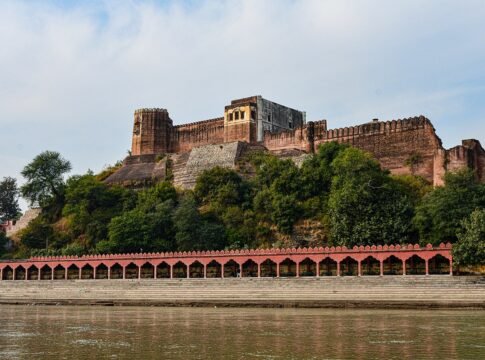
Lohagad Fort, situated at an elevation of approximately 3,389 feet, is a significant hill fort in Maharashtra. Historically, the fort played a crucial role in the region’s defence and administration. It was captured by Chhatrapati Shivaji Maharaj in the 17th century and later served as a secure treasury for spoils from the Surat campaign, underscoring its strategic and economic importance.
The recent incident at Lohagad Fort follows a period of heightened attention due to a separate controversy where a visitor allegedly pushed a tourist, leading to the fort’s temporary closure. This prior event had already drawn national scrutiny to the management and visitor conduct at popular heritage destinations.
The recurring issues at Lohagad Fort highlight a broader concern among heritage enthusiasts and authorities regarding the preservation of historical sites amidst increasing tourism. The debate underscores a need for enhanced visitor awareness campaigns, stricter enforcement of rules, and a balanced approach to addressing transgressions without resorting to vigilantism or causing undue distress to tourists.
The discussion also highlighted the challenge of balancing the rights and responsibilities of local communities in safeguarding their heritage with the rights of tourists to visit and experience these sites. Experts suggest that clear signage, educational materials, and better on-site management could contribute to a more respectful and responsible tourism experience at such valuable historical locations.
❤️ Support Independent Journalism
Your contribution keeps our reporting free, fearless, and accessible to everyone.
Or make a one-time donation
Secure via Razorpay • 12 monthly payments • Cancel anytime before next cycle


(We don't allow anyone to copy content. For Copyright or Use of Content related questions, visit here.)

The Chenab Times News Desk