Home Blog Page 19

Jammu and Kashmir Deputy CM Discusses Industry-Academia Linkages with CII

0
surinder

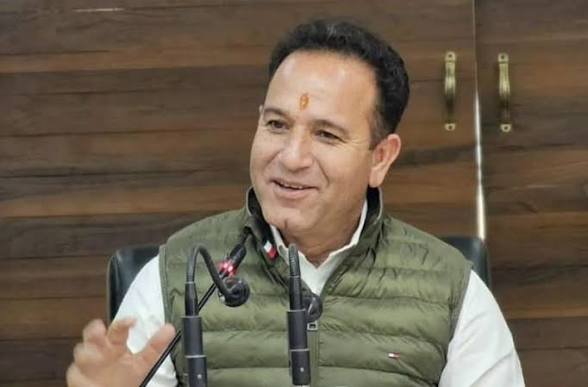
SRINAGAR, Apr 1 — A delegation from the Confederation of Indian Industry (CII) Jammu and Kashmir UT Council met with Deputy Chief Minister Surinder Kumar Choudhary to deliberate on crucial aspects of industrial advancement, skill enhancement, and workforce preparedness within the Union Territory.

The Chenab Times has learned that the meeting, held in Srinagar, focused on fostering closer ties between industrial bodies and educational institutions to better equip the youth for future employment opportunities.

The CII delegation was headed by Iqram Ali Shafiee, who serves as the Chairman of the CII J&K UT Council. Accompanying him were Siddhant Choudhary, the Vice Chairman; Khurshid Dar, Director of CII J&K; and several members, including Sandeep Mengi, Sajad Lone, and Sanan Gojwari. Their discussions aimed at identifying pathways to strengthen the industrial ecosystem of Jammu and Kashmir.

During the proceedings, Deputy Chief Minister Surinder Kumar Choudhary officially released the CII J&K UT Council Annual Report for the 2025–26 period. He commended the CII for its persistent efforts in promoting industrial growth and development across the region. Choudhary emphasized the significant role CII plays in bridging the gap between government initiatives and the needs of the industry.

The core of the discussions revolved around enhancing skill development programs, strengthening the collaboration between the industrial sector and academic institutions, and improving the linkages between industry requirements and the skills possessed by the workforce. The objective is to ensure that the available talent pool aligns effectively with the evolving demands of various industries operating within Jammu and Kashmir.

Members of the CII delegation highlighted the imperative for enhanced coordination among all stakeholders, including government bodies, industry leaders, and educational providers. They stressed that such collaboration is vital for improving the employability prospects of the region’s youth and for underpinning sustainable economic growth throughout the Union Territory. The delegates expressed their commitment to working collaboratively with the administration to achieve these objectives.

The CII, a prominent industry association in India, has been actively involved in Jammu and Kashmir’s development narrative, working to create a conducive environment for industrial expansion and skill augmentation. Their engagement with the Deputy Chief Minister signals a renewed focus on practical, collaborative approaches to address the region’s economic aspirations.

Jammu and Kashmir: Bemina Residents Face Hardship Amidst Dilapidated Roads and Waterlogging

0
Accident news
Image showing accident scene. (For representation purposes only)

Residents of Hamdania Colony and Syed Mohalla in Bemina, on the outskirts of Srinagar, are enduring significant hardship due to poorly maintained roads and a dysfunctional drainage system. The persistent issues have rendered daily life challenging for the local population.

Information was available with The Chenab Times indicating that the areas have been grappling with inadequate road infrastructure, characterized by a lack of proper blacktopping and insufficient drainage facilities. These deficiencies exacerbate the living conditions, particularly during periods of rainfall.

During the monsoon season, the situation deteriorates dramatically, transforming roads into waterlogged expanses filled with mud and deep potholes. Even moderate rainfall leads to severe inundation, creating significant obstacles for both pedestrians and vehicular traffic. The absence of an effective drainage network has further compounded the problem, leading to prolonged waterlogging.

Recent rainfall over the past few weeks has intensified the difficulties faced by locals. Residents report that lanes become completely flooded, making movement a substantial challenge. This recurring issue highlights the ongoing neglect of essential civic infrastructure in the locality.

The problems persist even during drier periods. The absence of proper road surfacing results in the accumulation of dust, contributing to respiratory ailments, allergies, and infections among the residents. The lack of consistent maintenance negatively impacts the overall quality of life in the affected neighborhoods.

Students and working individuals are among the most severely affected segments of the population. Children are often compelled to wear long boots to navigate ankle-deep water on their way to school. Commuters face considerable difficulties traversing pothole-ridden roads, and two- and four-wheeled vehicles frequently encounter struggles, increasing the risk of accidents and vehicle damage.

The persistent waterlogging has also begun to affect residential structures. Seepage has been reported in the walls and lawns of several houses, indicating potential structural damage. Residents have repeatedly appealed to the relevant authorities for immediate intervention to address these critical issues.

Local community members emphasized that timely maintenance and proper road construction are crucial to prevent the recurrence of these persistent problems. They are seeking a permanent solution to improve their living conditions.

In response to the concerns, an official from the Srinagar Municipal Corporation (SMC) assured that necessary steps would be taken. The official stated that road repair work falling under the jurisdiction of the SMC would be addressed accordingly, noting that numerous road projects are currently in the pipeline and awaiting implementation.

Maharashtra Government Closes 68 Lakh ‘Ladki Bahin’ Accounts Over Pending KYC

0
Fire station building in Konaev, Kazakhstan with the national flag on pole against a blue sky.
Photo by Aibek Skakov on Pexels

The Maharashtra government has taken action to close approximately 68 lakh accounts under the ‘Ladki Bahin’ scheme due to the failure of beneficiaries to complete their Know Your Customer (KYC) formalities. This move affects a significant number of accounts that have not fulfilled the necessary documentation requirements.

Details of Account Closures Emerge

Information was available with The Chenab Times indicating that the state government, through its relevant departments, has initiated the process of shutting down these accounts. The primary reason cited for the closure is the non-completion of e-KYC, a mandatory step for the continued operation and disbursement of funds under the scheme.

The ‘Ladki Bahin’ scheme, aimed at providing financial assistance to women in Maharashtra, requires beneficiaries to undertake an e-KYC process to verify their identity and eligibility. This process is crucial for ensuring the scheme’s integrity and preventing fraudulent transactions. However, a substantial number of account holders have not complied with this directive, leading to the current administrative action.

The state government’s decision to close these accounts underscores the importance of regulatory compliance and the need for beneficiaries to stay updated with scheme requirements. While the exact number of beneficiaries impacted directly by these closures has not been detailed, the scale of 68 lakh accounts suggests a widespread issue with e-KYC completion across the state.

Officials from the relevant state departments have reportedly stated that ample opportunities and reminders were provided to the account holders to complete their e-KYC. Despite these efforts, a significant portion of beneficiaries remained non-compliant. The closure of these accounts is expected to streamline the scheme’s operations and reallocate resources more effectively to eligible and compliant beneficiaries.

The ‘Ladki Bahin’ scheme is one of several welfare initiatives undertaken by state governments across India to support vulnerable sections of society. Such schemes often rely on robust verification processes like e-KYC to ensure that public funds reach the intended recipients. The non-completion of these formalities can lead to accounts being flagged and eventually deactivated or closed, as seen in this case.

Further details regarding any potential recourse for those whose accounts have been closed are yet to be announced. It is possible that the government may provide a window for individuals to complete their e-KYC and reapply or reactivate their accounts, though this remains speculative until official clarification is provided. The focus, however, is on the immediate impact of these closures and the government’s adherence to its procedural norms.

The move by the Maharashtra government highlights a broader trend in the implementation of welfare schemes, where digital verification and compliance are becoming increasingly critical. The government aims to ensure that its social welfare programs are administered efficiently and transparently, making the completion of e-KYC a non-negotiable aspect of participation.

The administrative decision to close these accounts is expected to be met with scrutiny and potentially lead to appeals from affected individuals. However, the government’s stance is firm on enforcing the established guidelines to maintain the effectiveness and accountability of the ‘Ladki Bahin’ scheme.

Jammu and Kashmir: Srinagar Smart City CEO Inspects Lal Chowk Civic Services

0

Srinagar, April 1: Faz Lul Haseeb, the Chief Executive Officer of Srinagar Smart City Limited (SSCL), conducted a detailed on-ground inspection of Lal Chowk on Monday to assess and enhance civic service delivery and ensure accountable governance within the prominent commercial hub.

Information was available with The Chenab Times that during the visit, the CEO engaged directly with a spectrum of stakeholders, including traders and shopkeepers operating in the area. The primary objective of these interactions was to gather firsthand feedback on critical civic issues such as sanitation, drainage systems, and the functionality of public utilities. The platform allowed stakeholders to voice their concerns, which were attentively heard and acknowledged by the CEO during the engagement.

In response to the grievances articulated by the local business community and residents, the CEO issued immediate directives to the relevant departmental authorities for the swift and effective resolution of the identified problems. Specifically, the Drainage Wing of the concerned department was instructed to prioritize and urgently address any existing bottlenecks within the drainage network in and around Lal Chowk to ensure its optimal functioning and maintenance.

Furthermore, the Chief Sanitation Officer of the Srinagar Municipal Corporation was directed to escalate sanitation efforts and implement sustained cleanliness measures across Lal Chowk. This directive was given considering the area’s significant status as a high-footfall commercial and public space, necessitating rigorous upkeep to accommodate the daily influx of people.

Officials from SSCL were also tasked with prioritizing the resolution of issues pertaining to electrical infrastructure and allied services. The aim is to guarantee the seamless provision of essential public utility services for traders, commuters, and visitors who frequent the area, thereby improving the overall civic experience in one of Srinagar’s most vital districts.

Jammu and Kashmir Secures Top Rank on NCRB’s CCTNS Dashboard

0

Jammu and Kashmir has achieved a significant milestone by securing the first rank among Union Territories on the National Crime Records Bureau (NCRB)’s Crime and Criminal Tracking Networks and Systems (CCTNS) Pragati Dashboard. This recognition underscores the Union Territory’s advancements in technology-driven policing and efficient data management.

The Chenab Times has learned that the accomplishment is a direct result of the sustained and concerted efforts by the CCTNS team of the Crime Branch, J&K Police. As of March 1st, 2026, the UT’s performance placed it at the forefront in the category of Union Territories, excluding Delhi, which secured the overall first rank nationally among all states and UTs.

The CCTNS Pragati Dashboard’s monthly performance assessment, overseen by the NCRB under the Ministry of Home Affairs, Government of India, evaluates states and UTs on crucial parameters. These include the quality and timeliness of data, accuracy across national policing platforms integrated with the Inter-Operable Criminal Justice System (ICJS) platform, and overall system effectiveness.

According to the Pragati report, Jammu and Kashmir demonstrated strong performance across all key indicators. This included comprehensive connectivity of police stations, full deployment of core CCTNS applications such as the Citizen Services (CAS), timely synchronization of data with the National Data Center (NDC), and effective integration with various ICJS components. Furthermore, the UT has ensured continuous availability of citizen services through its dedicated JK Citizen Portal.

The high ranking on the CCTNS Pragati Dashboard is expected to yield tangible benefits for the public. These include faster registration and tracking of cases, improved accuracy of police records, and seamless access to essential citizen services like verifications and grievance redressal. The enhanced data integration is also anticipated to expedite coordination among different pillars of the criminal justice system.

By effectively harnessing advanced technology and data-driven processes, the Jammu and Kashmir Police are reinforcing transparency, accountability, and public trust. This achievement reiterates their commitment to delivering efficient, responsive, and citizen-centric policing services across the entire Union Territory of Jammu and Kashmir.

Jammu and Kashmir Leads Union Territories in CCTNS Performance Dashboard

0

Jammu and Kashmir has achieved the top rank among Union Territories on the National Crime Records Bureau’s (NCRB) Crime and Criminal Tracking Networks and Systems (CCTNS) Pragati Dashboard. This ranking underscores significant advancements in technology-driven policing and the enhancement of citizen-centric services within the region.

Information was available with The Chenab Times indicating that the Union Territory’s prominent position is a result of continuous and coordinated efforts by the CCTNS team of the Jammu and Kashmir Police’s Crime Branch. As of March 1st, 2026, the UT secured the first rank in its category on the NCRB’s CCTNS Pragati Dashboard, marking a notable achievement in the implementation of technology in policing operations.

While Jammu and Kashmir secured the first rank among Union Territories, Delhi achieved the top position in the overall national ranking, which includes both States and Union Territories. This monthly performance assessment, conducted by the NCRB under the Ministry of Home Affairs, Government of India, evaluates States and UTs based on critical parameters. These include the quality and timeliness of data entry, accuracy across national policing platforms, and the integration with the Inter-Operable Criminal Justice System (ICJS) platform.

The Pragati report highlighted that Jammu and Kashmir demonstrated strong performance across key indicators. These encompassed the connectivity of all police stations, the complete deployment of core CCTNS applications such as the Citizen Access to Police Services (CAS), timely synchronization of data with the National Data Centre (NDC), and effective integration with ICJS components. Furthermore, the UT has ensured the continuous availability of citizen services through its dedicated Jammu and Kashmir Citizen Portal.

This leading ranking on the CCTNS Pragati Dashboard is expected to yield tangible benefits for the public. These include faster registration and tracking of cases, improved accuracy of police records, and more seamless access to citizen services such as verifications and grievance redressal. It also facilitates quicker coordination among the various branches of the criminal justice system.

By leveraging advanced technology and data-driven processes, the Jammu and Kashmir Police are reinforcing transparency, accountability, and public trust. This initiative reaffirms the commitment to delivering efficient, responsive, and citizen-centric policing services throughout the entire Union Territory of Jammu and Kashmir.

Jammu Police Debunk Social Media Rumours of Militants at Palm Island Mall

0
Jammu & Kashmir High Court Bar Association
Photo by Iqbal farooz on Pexels

Jammu police on Wednesday issued a strong denial of social media reports claiming the presence of three militants at the Palm Island Mall, dismissing the information as baseless and misleading. Authorities confirmed that a thorough verification conducted at the site found no suspicious activity or evidence to support the circulating claims.

The Chenab Times has learned that a police spokesperson addressed the matter, stating that some social media accounts and portals were disseminating information regarding the alleged presence of militants at the mall. These reports were explicitly termed as unfounded by the police, who had deployed teams to the location. Following their on-ground verification, no suspicious elements were discovered.

In light of these unsubstantiated rumours, the Jammu police have advised the general public to refrain from paying heed to unverified information circulating on social media platforms. Media houses have also been urged to exercise responsibility and avoid the spread of such rumours, as unverified news items can incite unnecessary panic among the populace.

Furthermore, the police department indicated that necessary legal action would be initiated against the social media accounts and portals found to be responsible for disseminating this irresponsible reporting. This measure aims to curb the spread of misinformation and hold those accountable for creating public alarm without factual basis. The authorities are committed to maintaining public order and trust by ensuring accurate information dissemination.

Jammu and Kashmir: LG Directs Zero Tolerance on Drug Menace

0

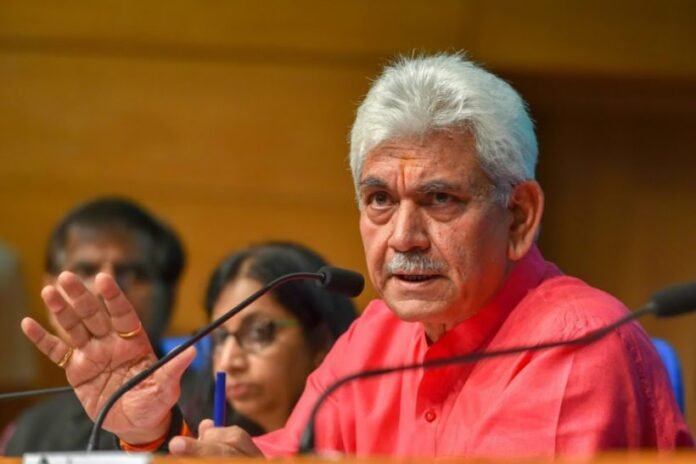
Jammu, Apr 1: Lieutenant Governor Manoj Sinha has mandated a stringent ‘Zero Tolerance’ policy against the drug menace across the Union Territory of Jammu and Kashmir. The directive was issued during a high-level meeting held at Lok Bhavan, Jammu, where he convened with Deputy Commissioners, Senior Superintendents of Police (SSPs), and other senior officials from the Civil and Police administration.

Information was available with The Chenab Times indicating that the Lieutenant Governor underscored the necessity of a comprehensive, multi-pronged strategy. This approach includes bolstering law enforcement capabilities to dismantle drug trafficking networks, implementing intensive mass awareness campaigns to deter potential users, and enhancing treatment, counselling, and rehabilitation services with the ultimate goal of achieving a drug-free Jammu and Kashmir.

“Action against drug abuse must be our top priority. We need a collective mechanism to safeguard our youth and ensure a healthy future for Jammu & Kashmir,” Lieutenant Governor Sinha stated during the meeting. He emphasized the importance of strengthening grassroots intelligence gathering and ensuring coordinated and stringent enforcement actions against drug smugglers.

The meeting also reviewed a series of activities slated for a dedicated three-month campaign under the ‘Nasha Mukt Bharat Abhiyaan’. Lieutenant Governor Sinha urged senior officials to take a leading role in this campaign, ensuring the active participation of all societal sections and stakeholders to transform it into a people’s movement. The initiative aims to foster widespread community engagement in combating drug abuse.

The deliberations highlighted the critical need for a united front against the pervasive issue of drug trafficking and consumption, which poses a significant threat to the region’s youth. Officials were directed to collaborate effectively, pooling resources and intelligence to proactively identify and neutralize drug peddlers and their operations.

Attendees at the high-level meeting included Chief Secretary Atal Dulloo, Director General of Police Nalin Prabhat, Principal Secretary Home Chandraker Bharti, Special Director General (Coordination) S.J.M Gillani, Additional Director General of Police (Headquarters) M.K. Sinha, Additional Director General of Police (CID) Nitish Kumar, Principal Secretary to the Lieutenant Governor Dr. Mandeep K. Bhandari, along with Divisional Commissioners, Inspectors General of Police (IGPs), Deputy Inspectors General (DIGs), Deputy Commissioners, Director Information, SSPs, and other senior officials.

Jammu and Kashmir: Rs 9.78 Crore Road Projects Underway in Beerwah Constituency

0

Jammu and Kashmir: Road construction and improvement projects worth approximately Rs 9.78 crore are currently underway in the Beerwah constituency of Jammu and Kashmir. These initiatives are being implemented under various government programs aimed at enhancing rural and urban connectivity.

The Chenab Times has learned that the Deputy Chief Minister Surinder Choudhary informed the Legislative Assembly on Wednesday that approximately 30 road construction works have been initiated for execution during the 2025-26 financial year. These projects fall under the Pothole and Cities and Towns (CT) programmes, reflecting the government’s commitment to improving infrastructure across the region.

Under the Potholes programme, works estimated at Rs 519.34 lakh are being undertaken. These include the improvement and upgradation of multiple link roads and inner road networks across various localities. Specific areas benefiting from these upgrades include Aarath to Rassu, Checki Kawoosa, Kawoosa Khalisa, Mazhama, Batpora, SK Pora, Shipora, Chayers Khulchi Road, Lalpora, Gooripora, Peth Kanihama, Hajibagh Paripora, Peth Makhama, Bonmakhama, Bonhama, Meri Pora Rathsuna, Cheyra Khalchi Road, Watmagam, Rathsun, and Chewdara. These works are crucial for facilitating smoother local transportation and economic activity.

Further details provided by the Deputy Chief Minister indicated that additional works are currently under execution in the Beerwah constituency. These include the upgradation and improvement of key link roads connecting Narbal, Beerwah to Budgam Road, and Iskanderpora to Loolipora Road. The macadamisation of inner links at Sonapah is also part of these ongoing development efforts, aiming to provide better road surfaces and reduce travel times.

In parallel, the Cities and Towns (CT) programme is also seeing significant investment in the Beerwah constituency. The Deputy Chief Minister stated that 12 works under this programme, with an estimated cost of Rs 459 lakh, have been taken up for the 2025-26 fiscal. These projects are designed to enhance urban infrastructure and connectivity within the towns and cities of the constituency.

The government has also assured that the remaining road construction works in Beerwah will be taken up in the near future, indicating a phased approach to infrastructure development. Regarding specific road projects, it was clarified that no Detailed Project Reports (DPRs) are currently under preparation or consideration for the Pethkoot–Dasan and Hokhlateri roads, either under the NABARD scheme or any other funding avenue. This clarification addresses potential queries about the inclusion of these specific roads in future development plans.

Legislator Shafi Ahmad Wani raised the initial question that prompted this detailed response from the Deputy Chief Minister. During the assembly proceedings, Legislator Saif Ud Din Bhat also posed a supplementary question, engaging further in the discussion on regional development and infrastructure projects.

Jammu and Kashmir: LoP Sharma Accuses NC of Betraying Mandate Over Land Grants Bill

0

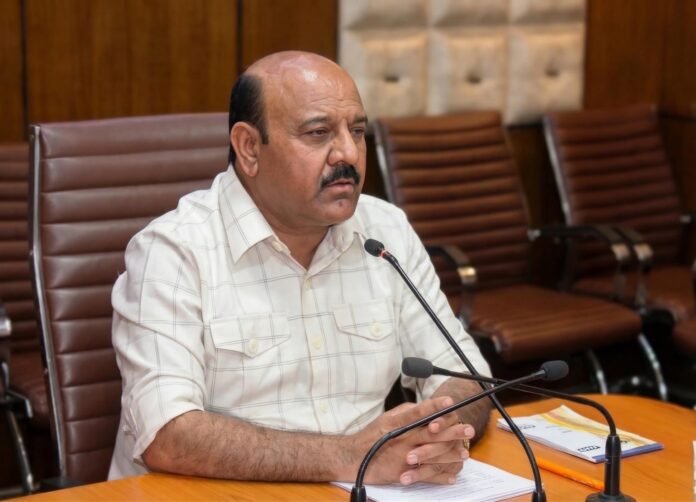
SRINAGAR: Leader of Opposition Sunil Sharma has accused the National Conference (NC) of misusing the public mandate, alleging that a recently introduced private member’s bill seeking amendments to the Land Grants Act is designed to protect elite interests rather than safeguard public assets and the rights of ordinary citizens.

According to details received by The Chenab Times, Sharma stated that those who voted for the NC now feel let down, asserting that their mandate appears to be employed not for public good but to shield the interests of the privileged. He specifically mentioned alleged beneficiaries including “Nedous, the Chief Minister’s personal property, or a circle of influential, cocktail-circuit associates.”

Sharma highlighted concerns surrounding the Chief Minister’s swift permission for the private member’s bill, titled “Amendments to the Land Grants Act.” He suggested that this move could pave the way for the re-leasing of significant government landholdings at prices far below their market value, a practice he claimed has been ongoing for decades.

Questioning the message this action sends to the general populace, Sharma expressed deep disappointment. He argued that instead of prioritizing the protection of public assets and ensuring justice for marginalized communities, the government seems to be facilitating and supporting a select few who have historically profited at the expense of the poor. He characterized the situation as a significant betrayal of public trust.